

Commemorating the one-year anniversary of death: A time for reflection and remembrance
October 7th 2026, 12:00 am
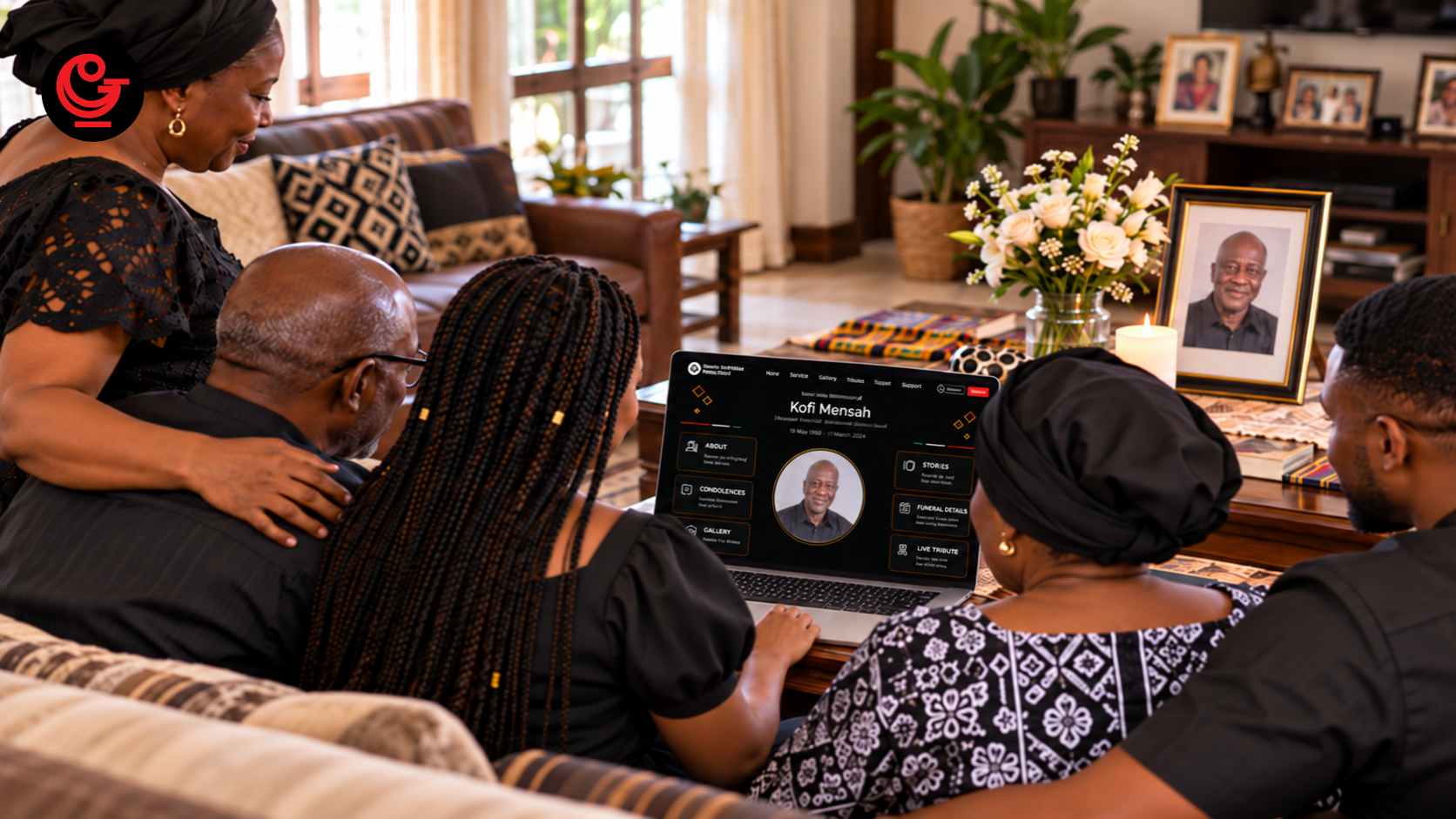
A year after a loved one dies, the family may find itself gathering again.
This time, the atmosphere can feel different from the funeral. The first urgency has passed. There is more space for reflection, photographs, stories, prayer and gratitude for the life that was shared.
For many Ghanaian families, a one-year anniversary in Ghana provides an opportunity to remember the deceased together and acknowledge that their place in the family continues even after the funeral is over.
The remembrance may be simple or extensive. What matters is that the family agrees on its purpose and plans it in a way that feels appropriate.
This guide explains how to organise a one-year remembrance, what information to prepare and how Ghana Memorial Products can help families connect the anniversary to a longer-lasting record of the person's life.
What is a one-year remembrance?
A one-year remembrance marks approximately one year since the death of a loved one.
Families may organise:
a thanksgiving or memorial service;
prayers at home or in church;
a family gathering;
a visit to the grave;
a meal with relatives and friends;
an anniversary announcement;
photographs, tributes or memories shared online.
Not every family observes the anniversary in the same way.
Religious beliefs, family traditions, available resources and the wishes of relatives can all shape the occasion.
For some, it is a large gathering.
For others, a church service and quiet family meal are enough.
Start by agreeing on the purpose
Before booking a venue or designing an anniversary notice, the family should agree on what the remembrance is meant to be.
Is it mainly:
a thanksgiving service?
a family remembrance?
a public memorial gathering?
a graveside visit?
an opportunity to bring the wider family together?
a combination of these?
This decision influences almost everything that follows.
A small family remembrance does not require the same planning as a church service followed by a large gathering.
Agreeing on the purpose first can therefore reduce unnecessary expense and confusion.
Choose the date and programme
The remembrance may fall on the exact anniversary of the death, but families can also choose another practical date around that period.
Consider:
church availability;
travel arrangements for relatives;
work schedules;
venue availability;
family commitments;
relatives travelling from abroad.
Once the date is agreed, prepare a simple programme.
For example:
Opening prayer
Hymn or song
Scripture or reading
Short reflection on the deceased
Family tribute
Prayer or thanksgiving
Announcements
Graveside visit or family gathering, where planned
The actual order should reflect the family's faith and type of remembrance.
If a church is involved, confirm the programme with the officiating minister before printing or sharing it.
Decide who needs to be informed
The family should also decide whether the anniversary is private or open to the wider community.
People to consider informing may include:
extended family;
friends;
church members;
colleagues;
associations;
neighbours;
people who supported the family during the funeral;
relatives living abroad.
Once the list is clear, the family can choose the best communication method.
Prepare a one-year anniversary notice
A one-year anniversary notice can help family and friends understand what is being organised.
It will normally include:
photograph of the deceased;
full name;
date of death or life dates;
wording such as “One-Year Anniversary” or “In Loving Memory”;
date;
time;
venue;
type of service or gathering;
short invitation from the family.
Keep the information clear.
A remembrance notice does not need to carry the entire life story of the deceased.
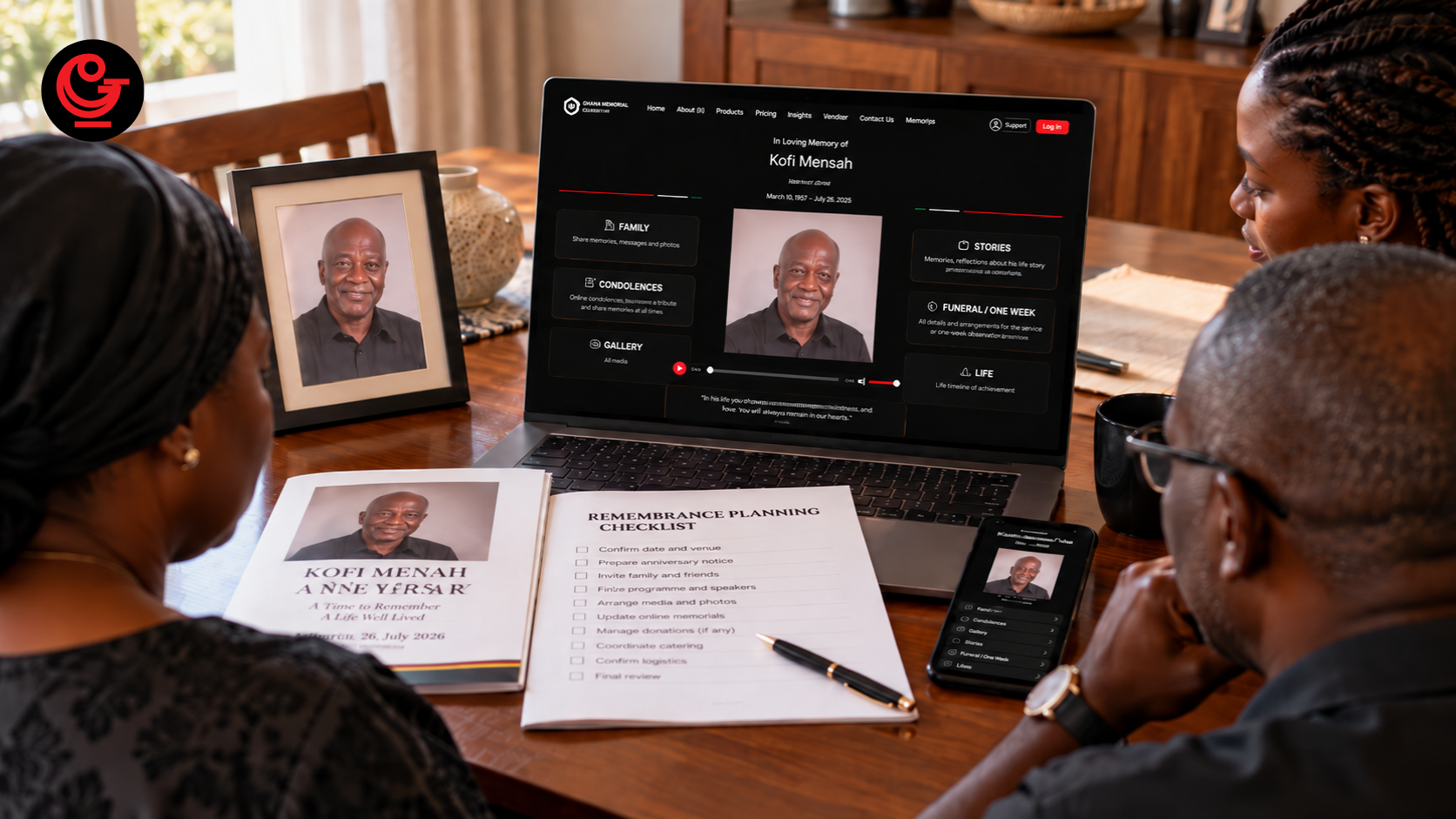
Ghana Memorial Products has a dedicated One Year Anniversary product for anniversary notices. Its current product page describes customisable templates, digital sharing, printable designs, reuse of earlier funeral designs and the option to connect the notice to a Ghana Memorial with a QR code.
Reuse the family's existing funeral materials
The anniversary does not have to begin with a completely new design.
Where appropriate, families can reuse visual elements from:
the One-Week Notice;
Funeral Announcement;
funeral brochure;
memorial photographs.
Using the same portrait, colours or design style can create continuity between the funeral and the later remembrance.
The current GMP One Year Anniversary product is designed to let you reuse earlier designs as a starting point.
Before using an old design, however, check every date and piece of wording carefully.
An anniversary announcement should not accidentally retain funeral information from the previous year.
Plan the practical arrangements
Once the programme is clear, work through the practical needs.
Depending on the size of the remembrance, these may include:
venue;
church arrangements;
seating;
tents or shelter;
food and refreshments;
sound;
photography;
transport;
flowers;
graveside arrangements;
printing;
livestreaming for relatives abroad.
A family does not need all of these.
Choose only what supports the type of remembrance being planned.
Where outside suppliers are needed, families can use Ghana Funeral Services to look for relevant service providers rather than relying on one recommended company.
Plan the grave visit separately
Some families choose the anniversary as a time to return to the grave.
Before the day, check:
whether the grave needs cleaning;
whether the tombstone is complete;
whether inscriptions need attention;
whether flowers will be placed;
how elderly family members will access the site;
whether relatives know the exact grave location.
If the family uses a Tombstone QR Sticker, the grave can also connect visitors directly to the person's Ghana Memorial.
This gives the anniversary another purpose: not only visiting the resting place, but reconnecting with the person's photographs, stories and life history.
Use the anniversary to add to the person's story
A year can bring new perspective.
Family members may remember stories that were not included during the funeral. Additional photographs may have been found. Friends may want to write tributes they never had the opportunity to share.
The anniversary is therefore a good moment to revisit the Ghana Memorial.
A Ghana Memorial can bring together family information, stories, photographs, videos, tributes, a life timeline, funeral information and grave location.
Families can use the anniversary to:
add photographs from different stages of life;
write new stories;
update the Life Timeline;
add family information;
preserve tributes;
record memories from children or grandchildren;
confirm the grave GPS location.
This changes the anniversary from a single event into an opportunity to strengthen the family's record of a life.
Include relatives who cannot travel
Ghanaian families increasingly live across different countries.
Not everyone who wants to participate in a remembrance will be able to travel to Ghana.
Digital sharing can help include them.
Families can:
share the anniversary notice on WhatsApp;
send a link to the Ghana Memorial;
share photographs after the event;
provide livestream information where available;
invite relatives to submit stories or tributes beforehand.
The Ghana Memorial includes a Funeral section, media, stories, tributes and livestream support designed to help relatives participate across distance.
Keep the anniversary within the family's means
A one-year remembrance does not need to become another major funeral expense.
Before making bookings, decide:
what matters most to the family;
how many people are realistically expected;
which costs are essential;
who is responsible for each expense;
whether family contributions are required.
A meaningful remembrance can be a church service, a graveside visit and a meal at home.
The size of the event does not determine the value of the memory.
A practical one-year remembrance checklist
Before the anniversary, confirm:
family has agreed on the purpose;
date is confirmed;
venue or church is confirmed;
programme is approved;
anniversary notice is prepared;
family and guests have been informed;
service providers are booked where required;
grave visit is organised where relevant;
photographs and tributes are collected;
Ghana Memorial is updated;
responsibilities and budget are clear;
relatives abroad have a way to participate.
Assigning one person to maintain the final details can help prevent different versions of the programme or notice from circulating.
Remembrance does not end after one year
The anniversary is important because it creates a deliberate moment to remember.
But remembrance itself does not need an end date.
Photographs can continue to be added. Stories can be recorded. Grandchildren can learn about relatives they may never have met. A tombstone can mark the resting place, while a digital memorial preserves more of the person behind the name.
This is where tradition and technology can work together.
The family still gathers.
The prayers are still said.
The grave can still be visited.
But relatives can also keep the memories accessible wherever they are.
With a Ghana Memorial, families can keep building that record long after the anniversary gathering ends.
Written by: David Owusu Asante
Related Articles
Purpose and decisions of a one-week funeral observance in Ghana
Browse the post to know more and explore detailed insights on this topic.
Read MoreFuneral Weekend in Ghana: A Family Guide
Browse the post to know more and explore detailed insights on this topic.
Read More