

Death records in Ghana: How to search and obtain a death extract
October 8th 2026, 12:00 am

A death certificate may be needed long after a funeral has taken place.
A family may be administering an estate, dealing with an insurance company, tracing an older family record or simply discovering that an important document can no longer be found.
When that happens, the first question is often: How do we retrieve a death record in Ghana?
The answer depends on whether the death was already registered and what document you actually need.
Ghana's Births and Deaths Registry is the official authority responsible for the National Register of Deaths. Families can request a search of the records and, where appropriate, obtain a certified copy of an existing death entry, commonly referred to by the Registry as a Death Extract.
This guide explains the difference and the practical steps families should take.
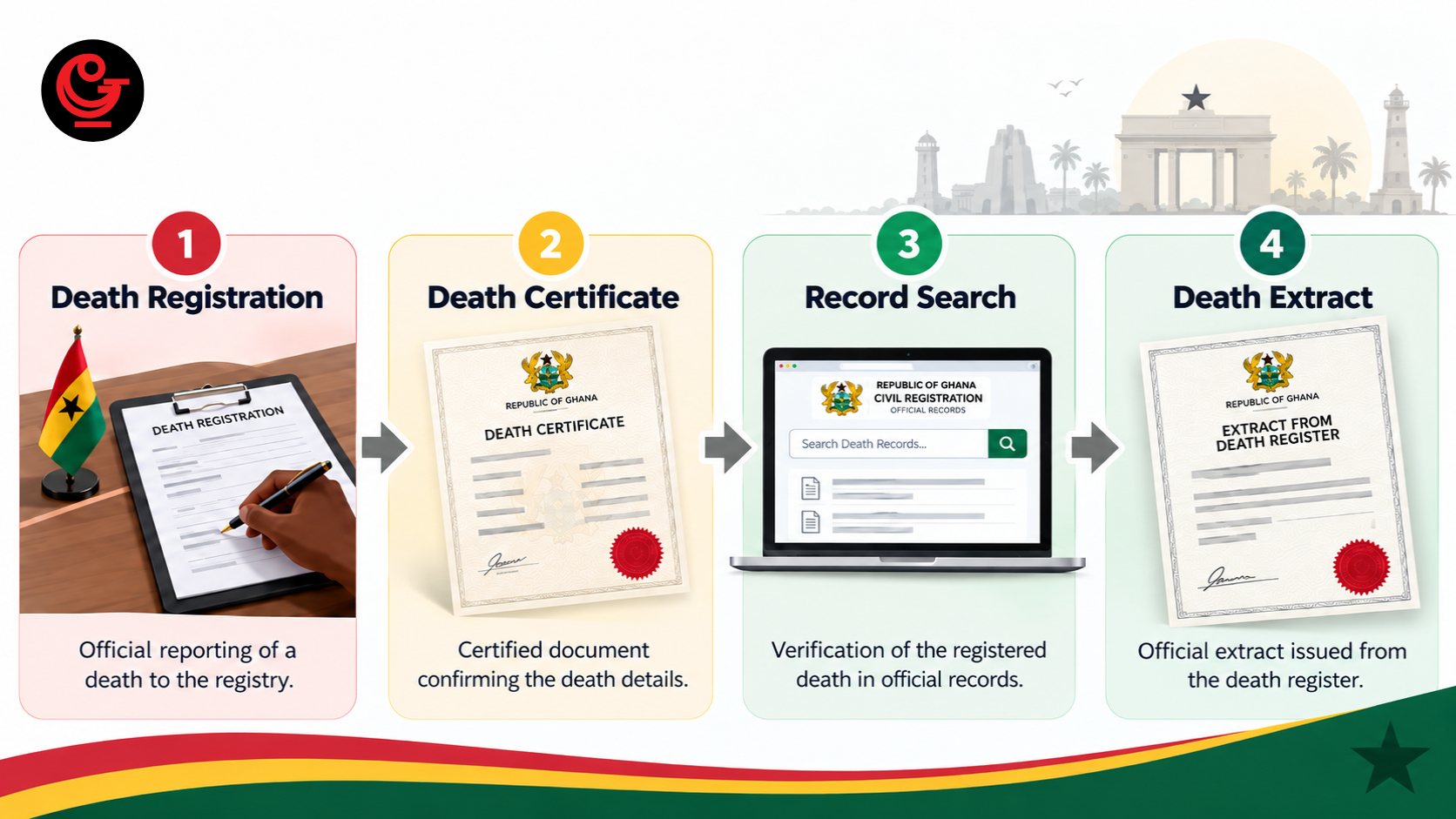
First: registration, search and retrieval are different
These terms can easily become confused.
Death registration
Death registration is the original process of formally recording a death in Ghana.
The Births and Deaths Registry states that death registration takes place in the district where the death occurred. The process normally relies on the appropriate medical cause-of-death documentation or, where required, a coroner's report.
If the death has never been registered, it must first go through the appropriate registration procedure.
For that process, see GMP's separate guide on How to obtain a death certificate in Ghana
Search of a death record
If you are not certain whether the death was registered, Ghana's Registration of Births and Deaths Act, 2020 (Act 1027) allows a person to submit a written application asking the Registrar or District Registrar to search for a death record.
The search report can confirm:
whether the death is registered; and
the registration number if a record is found.
Importantly, the Act states that the search report does not provide further information from the record.
This makes a search useful when the family first needs to establish whether an official record exists.
Death Extract
The Births and Deaths Registry describes a Death Extract as a certified true copy of the entry in the Register of Deaths.
This is different from simply receiving confirmation that a record exists.
A Death Extract reproduces the official registered entry and may therefore be required when a family needs formal documentary evidence from the register.
When might a family need to retrieve a death record?
An existing death record may be needed for matters such as:
estate administration;
probate or letters of administration;
insurance claims;
pension or employment benefits;
bank or financial matters;
property administration;
family-history research;
replacement of a lost document;
verification of an older death.
However, different institutions can require different documents.
A bank, insurer, court or pension administrator may ask for a death certificate, Death Extract or other supporting documents.
Ask the organisation receiving the document exactly what it requires before applying.
This can prevent families from paying for or waiting for the wrong document.
Step 1: Gather the information you already have
Before approaching the Births and Deaths Registry, collect as much accurate information as possible.
Useful information can include:
full name of the deceased;
alternative spellings of the name;
date of death;
approximate date of death if the exact date is unknown;
place of death;
district where the death occurred;
age of the deceased;
registration number, if known;
old death certificate or photocopy, if available;
funeral programme;
obituary or death notice;
mortuary documents;
tombstone information.
Older family records may contain spelling differences, so check existing documents carefully before submitting the request.
Step 2: Identify where the death was registered
Under Act 1027, deaths are registered by the District Registrar in the district where the death occurred.
Therefore, knowing the place of death can be more useful than knowing where the deceased normally lived or where the funeral took place.
If the family does not know the registration number, provide the Registry with the most accurate identifying information available and ask what type of search is appropriate.
Step 3: Ask for a search if you are unsure whether the record exists
Act 1027 allows an application for a search of:
a registered death; or
a burial or other disposition record held by the Registry.
The search is subject to the prescribed fee. If a record is found, the Registry's report should confirm that fact and provide the registration number.
A search may be particularly useful where:
the original certificate has been lost;
the death occurred many years ago;
relatives are uncertain whether registration was completed;
the registration number is unavailable.
Do not expect a basic search report to disclose the full death record.
Step 4: Request the appropriate certified record
If the family needs the actual registered information, ask the Births and Deaths Registry about obtaining a Death Extract or certified copy of the entry in the Register of Deaths.
The Registry's current services page specifically identifies the Death Extract as the certified true copy of the death-register entry.
Access is not simply an unrestricted public-record service.
Act 1027 identifies certain people responsible for providing death-registration information, including specified relatives and other persons with direct knowledge of the death. A person outside the categories identified in section 28 who wants a certified copy may need to apply to the High Court and demonstrate a compelling reason for obtaining it.
For that reason, someone carrying out general genealogical or third-party research should not assume they can automatically obtain a deceased person's complete record.
What if the death was never registered?
Retrieval cannot replace registration.
If the Registry cannot find a record because the death was never registered, the family may need to complete a late death registration.
The current Births and Deaths Registry guidance states that late registration may require supporting evidence such as:
attestations from relatives;
identification documents;
mortuary receipts;
an obituary;
funeral programme;
tombstone photograph;
other evidence supporting the death details.
For deaths being registered after more than 12 months, the Registry describes an additional verification and authorisation process involving the National Office.
This is different from retrieving an existing certificate.
What if the original death certificate is missing?
Do not assume that losing the paper certificate means the death has to be registered again.
First ask the Births and Deaths Registry to establish whether the original registration exists.
If it does, the Registry can advise whether you need:
a record search;
a Death Extract;
another certified document; or
another service appropriate to the circumstances.
Keep any old photocopies or document numbers. Even an incomplete copy may help identify the correct record.
Use the official Births and Deaths Registry
The Births and Deaths Registry is the government body established under Act 1027 to maintain Ghana's national birth, foetal-death and death registers. Its structure includes national, regional, district and sub-district offices.
Because fees and digital payment arrangements can change, check the Registry's current notices before making a payment.
Keep family administration organised
Death records are only one part of the administrative work a family may need to handle.
Other tasks can include:
burial documentation;
mortuary records;
funeral budgeting;
payments;
insurance correspondence;
estate documents;
pension matters;
funeral announcements and programmes.
Keeping one checklist of completed and outstanding tasks can reduce confusion between family members.
The free Ghana Memorial Products Funeral Planner includes planning guides, checklists, a budget planner and an expense tracker to help families organise these responsibilities.
Families should still obtain official documents from the relevant government authority.
GMP's role is to help families understand the process and keep the wider funeral administration organised.
A simple way to decide what to do
If you are dealing with an old or missing death record, begin with three questions:
Was the death registered?
If you are unsure, request a search.
Do I need confirmation or the full registered entry?
A search and a Death Extract serve different purposes.
Who is asking for the document?
Confirm whether the receiving organisation needs a death certificate, Death Extract or another document.
Starting with those questions can save families unnecessary trips, applications and delays.
When in doubt, contact the Births and Deaths Registry directly and use the official record as the starting point.
Written by: David Owusu Asante
Related Articles
How to obtain a death certificate in Ghana
Browse the post to know more and explore detailed insights on this topic.
Read MoreHow to obtain a burial permit in Ghana
Browse the post to know more and explore detailed insights on this topic.
Read More