

Tombstones in Ghana: Types, Materials, Prices & Timing
February 4th 2026, 12:00 am
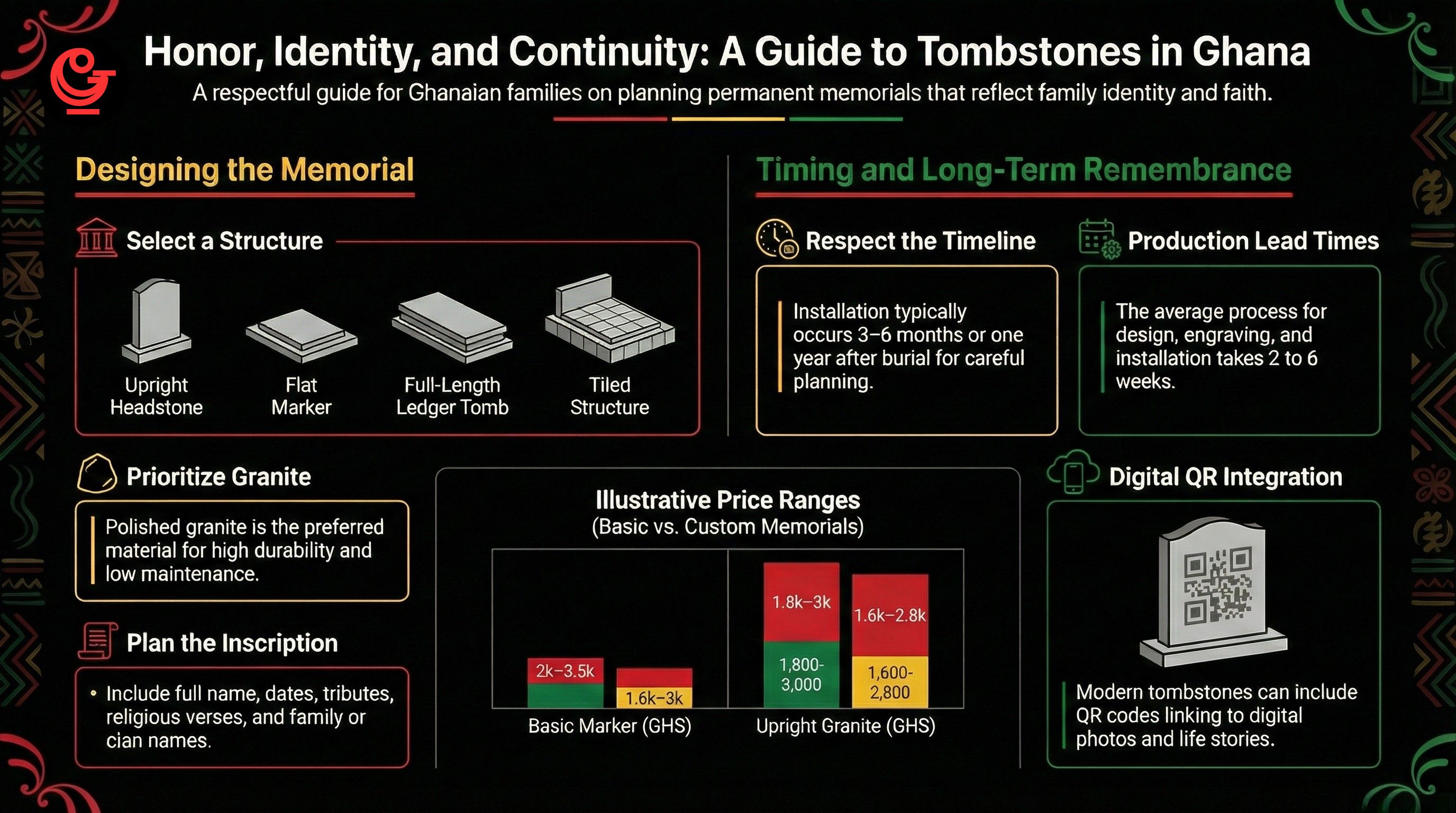
In Ghana, burial is not only a moment of farewell. It is an act of respect, identity, and continuity. Families take time to choose how a grave will be marked, knowing that the tombstone will speak quietly on their behalf for many years. Long after the funeral rites have ended and mourners have returned home, the tombstone remains. It marks a resting place, carries a name, and reflects how a family chooses to remember their loved one.
This guide explains tombstones in Ghana in practical terms. It covers common types, materials used, price ranges by city, typical inscriptions, when tombstones are usually placed after the funeral, production timelines, where families can order them, and how a tombstone QR sticker can extend remembrance beyond the stone itself.
Watch the video to gain insights into how digital tools, such as QR codes, are now linking graves to online memorials.
Why Tombstones Matter in Ghana
Tombstones play a central role in how remembrance is expressed in Ghana. They provide a physical point of return for families and a clear sign that a life is acknowledged and respected.
A tombstone in Ghana serves several purposes. It identifies the grave. It honours the deceased. It reflects family care, faith, and respect. In many communities, especially where extended families are involved, the tombstone also helps future generations locate and remember ancestors.
While funerals are often large and ceremonial, the tombstone is quiet and permanent. It remains long after posters fade and funeral programmes are stored away. For this reason, families usually take time to plan and install it carefully.
What Is a Tombstone?
A tombstone is a permanent marker placed on or over a grave. In Ghana, the term is used broadly and may refer to different forms of grave markers.
Common related terms include:
Headstone – an upright stone placed at the head of the grave
Grave marker – a flat stone laid on the ground
Ledger tomb – a slab covering the full length of the grave
Tomb structure – a built enclosure, often tiled or rendered
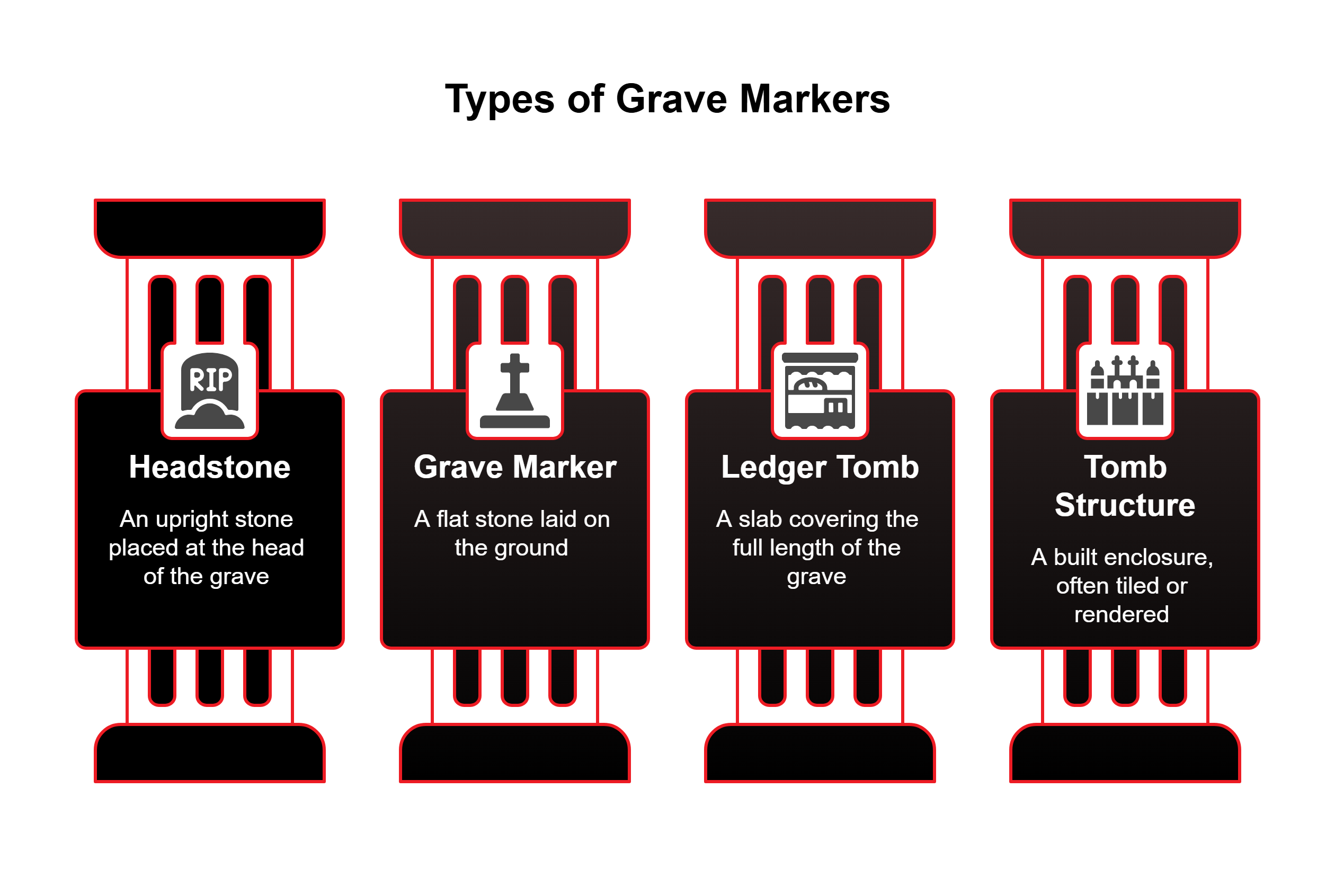
The choice depends on cemetery rules, family preference, tradition, and budget.
Common Types of Tombstones in Ghana
Families in Ghana typically choose from the following options:
Flat Grave Markers
These lie flat on the grave surface. They are simple and discreet, and are often required in public cemeteries where upright stones are restricted.
Upright Headstones
This is the most common option. The stone stands vertically and allows space for names, dates, and inscriptions. Granite upright tombstones are widely used in cities such as Accra and Kumasi.
Ledger Tombs
A ledger tomb covers the full grave with a stone slab. It provides a clean finish and helps protect the grave from erosion.
Tiled or Rendered Tomb Structures
These are built with blocks or concrete and finished with tiles or paint. They are common in private cemeteries and family burial grounds.
Mausoleums and Custom Structures
These are less common and are usually reserved for chiefs, elders, or prominent families. They are custom-designed and priced individually.
Materials Commonly Used for Tombstones in Ghana
The material chosen affects appearance, durability, and cost.
Material | Description | Durability | Notes | |||
Granite | Hard natural stone, polished | Very High | Most durable option | |||
Marble | Smooth and light-coloured | Medium | Requires regular care | |||
Concrete | Cast or rendered | Medium | Cost-effective | |||
Tiled Finish | Ceramic or porcelain tiles | Medium | Decorative | |||
Metal Plaques | Aluminium or steel plates | High | Often combined with stone |
Granite is the preferred choice for families seeking long-term durability and low maintenance.
Tombstone Prices in Ghana (By City)
Tombstone prices vary by city, material, and design complexity. The table below gives a general indication of current market ranges.
City | Basic Marker (GHS) | Uprite Granite (GHS) | Custom / Tiled Tomb (GHS) | |||
Accra | 2,000 – 3,500 | 4,500 – 9,000 | 8,000 – 18,000+ | |||
Kumasi | 1,800 – 3,000 | 4,000 – 8,000 | 7,000 – 15,000+ | |||
Takoradi | 1,700 – 2,800 | 3,800 – 7,500 | 6,500 – 14,000+ | |||
Cape Coast | 1,600 – 2,500 | 3,500 – 7,000 | 6,000 – 13,000+ |
Prices are indicative and may vary depending on engraving detail, transport, and supplier.
What Is Usually Written on a Tombstone?
Tombstone inscriptions in Ghana follow clear and established patterns.
Common elements include:
Full name of the deceased
Date of birth and date of death
A short tribute, such as “Beloved Mother” or “Forever Remembered”
A Bible verse, Quran verse, or proverb
Family or clan name
.png)
English is the most commonly used language. Local languages such as Twi, Ga, or Ewe are also used, and some families choose bilingual inscriptions.
When Is a Tombstone Usually Placed After the Funeral?
In Ghana, a tombstone is rarely installed immediately after burial. The timing depends on tradition, finances, and family decisions.
Timing | Common Practice | |
Immediately after burial | Rare | |
1–3 months after funeral | Occasional | |
3–6 months after funeral | Very common | |
After the one-year remembrance | Also common |
Many families first place a temporary marker and return later to install the permanent tombstone. This allows time for family consultation, fundraising, and careful design decisions.
There is no cultural pressure to rush the process. What matters most is that the tombstone is done with care and respect.
How Long Does It Take to Make a Tombstone?
Once ordered, the production process usually follows these stages:
Stage | Typical Duration | |
Design approval | 2–7 days | |
Material sourcing | 1–2 weeks | |
Engraving and finishing | 1–3 weeks | |
Installation | 1 day |
The average total time is between 2 and 6 weeks. Custom designs may take longer
Where to Order a Tombstone in Ghana
Families usually begin by speaking with a local mason or funeral home. Increasingly, online directories are also used, especially by families living abroad.
Families can order tombstones through local stone masons, monument workshops, funeral homes, or online funeral service directories.
On Ghana Funeral Services, families can find multiple tombstone makers and suppliers across Ghana. This makes it easier to compare services, contact providers directly, and organise arrangements locally or from abroad. This is especially helpful for diaspora families managing burial arrangements from outside Ghana.
Some of the parties that you help with a Tombstone and that are listed on Ghana Funeral Services:
From Stone to Story: Adding a Tombstone QR Sticker
This section reflects a growing practice in Ghana, where families combine physical memorials with digital remembrance tools.
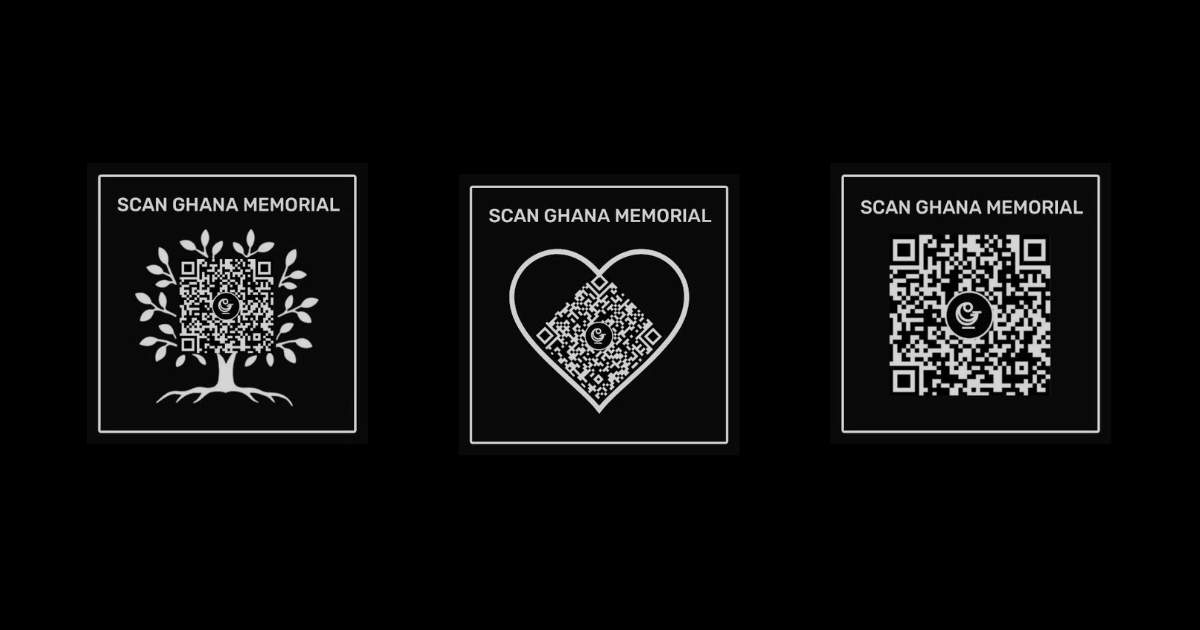
A tombstone marks a resting place. A tombstone QR sticker adds a digital layer of remembrance.
By placing a small, durable QR sticker on the tombstone, visitors can scan it with a mobile phone and open a digital memorial linked to the grave.
This digital memorial can include photos and videos, a life story or timeline, tributes from family and friends, messages from the diaspora, and the GPS location of the grave.
A New Way of Remembering
Together, careful craftsmanship and simple technology allow families to honour tradition while supporting long-term remembrance.
In Ghana, tradition guides how the dead are honoured. Tombstones remain an essential symbol of respect and remembrance. Today, families also have the option to extend memory beyond stone, without changing tradition.
A well-made tombstone marks a place of rest. A connected memorial keeps the memory alive.
More resources can be found at: Funeral Planner
And on our YouTube channel: Ghana Memorial Products
Related Articles
Condolence message to a friend: Offering comfort in Ghanaian society
Browse the post to know more and explore detailed insights on this topic.
Read MoreDeath and funeral announcements in Ghana: Tradition and modern tools
Browse the post to know more and explore detailed insights on this topic.
Read More