

Role of the chief mourner and family elders in Ghanaian funerals
April 15th 2026, 12:00 am
On the morning of a funeral in Ghana, people may see the cloth, the chairs, the canopies, the church notices, and the steady stream of visitors. But behind that visible moment is a quieter structure. Someone must receive mourners, speak for the family, guide decisions, settle disagreements, and keep the funeral moving with dignity. In many homes, that responsibility rests on the chief mourner and family elders. In Ghanaian funeral culture, these roles are not decorative. They are central to order, respect, and family unity.
Funerals in Ghana are important family and community events. They often involve a one-week observance, funeral weekend activities, thanksgiving, and later remembrance. At the same time, traditions differ by ethnic group, church, and family custom. There is no single formula for every family, and each household may adapt the common structure to its own tradition.
Why these roles matter so much
When a loved one dies, grief and logistics arrive together. A family may need to deal with the
mortuary, church, transport, posters, printing, food, contributions, and relatives arriving from Kumasi, Accra, Takoradi, London, Amsterdam, or Toronto. One-week observance is often when the family announces the funeral arrangements and begins preparing the ground for the burial and final rites. That is why clear family roles matter early.
This pressure is not only emotional. Funeral costs in Ghana can place a real burden on families, especially when expectations are high and decisions must be made quickly. In many homes, the chief mourner becomes the visible face of this pressure, while elders help protect the family from confusion and unnecessary conflict.
Who is the chief mourner?
The chief mourner is usually the main family representative during the funeral process. Depending on the family structure and tradition, this may be a spouse, first-born child, sibling, family head, or another person recognised by the wider family. The exact person can vary. What matters is that the person is accepted as the one who carries the family’s public mourning role.
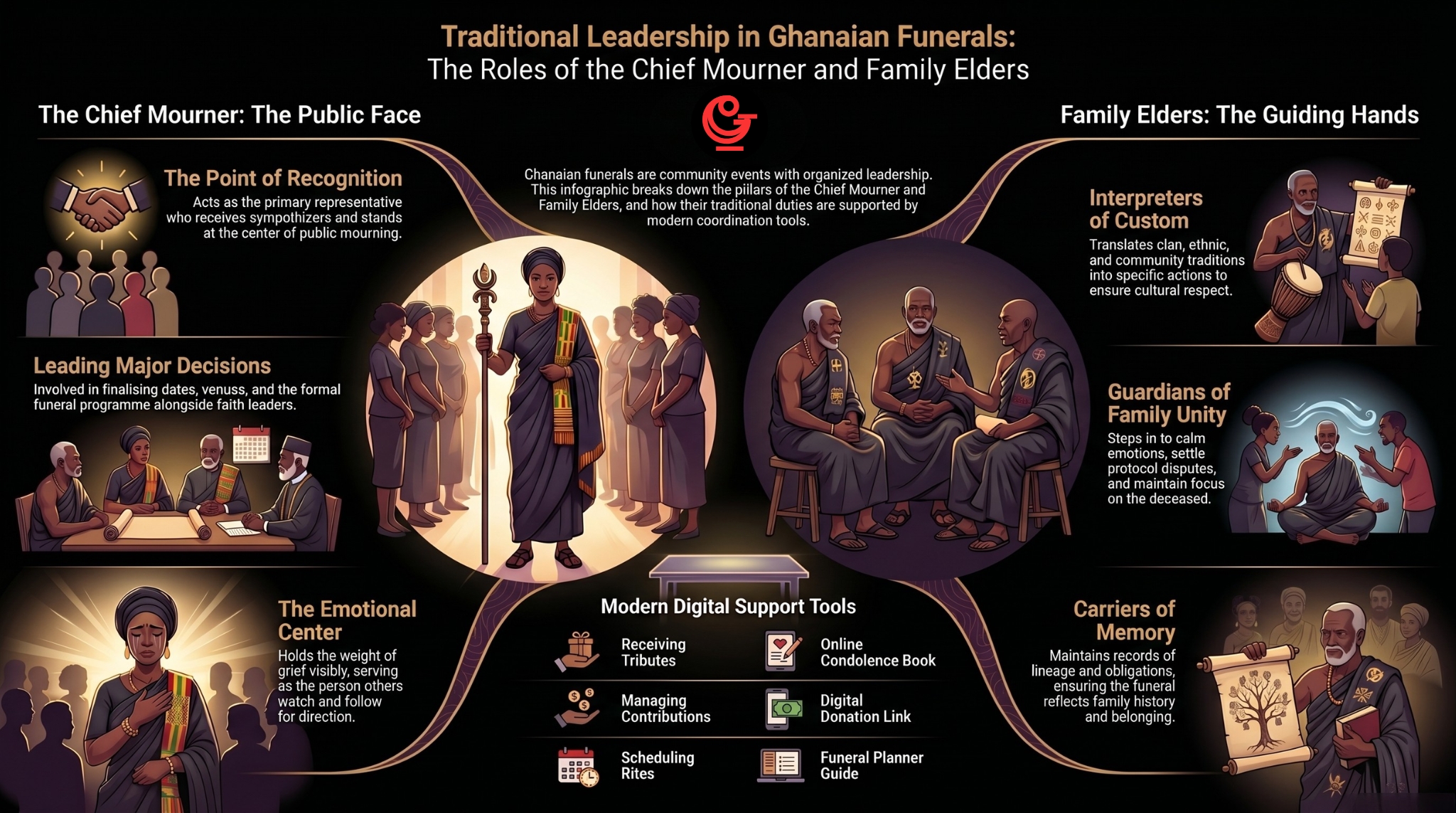
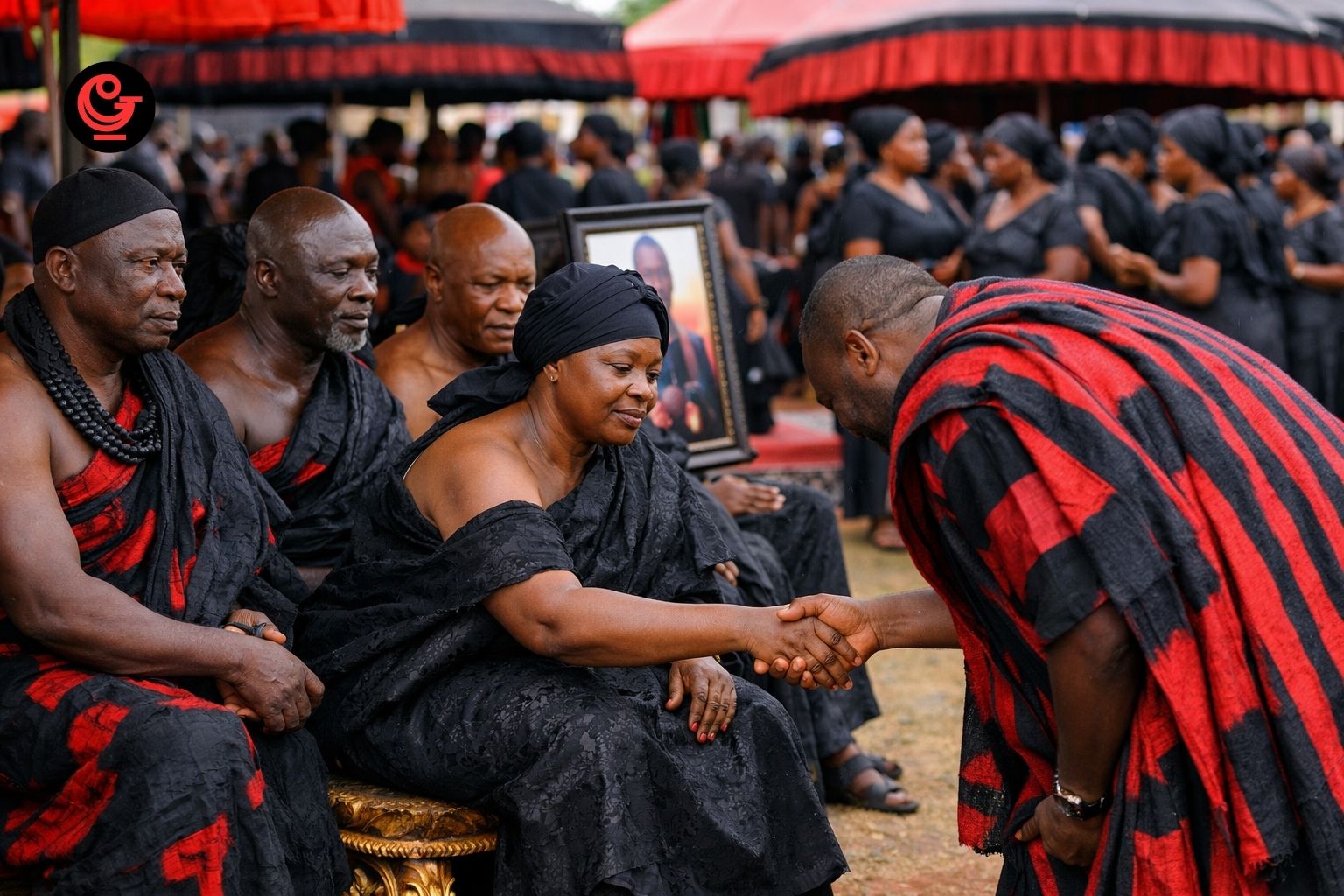
In public funeral practice in Ghana, the chief mourner is often the one who receives sympathisers and stands at the centre of the family’s mourning. This shows that the role is both emotional and organisational.
What does the chief mourner do?
The chief mourner often carries six practical duties.
1. Represent the family publicly
This person receives visitors, acknowledges support, and becomes the point of recognition for mourners arriving at the house, funeral grounds, or church. In a large funeral, this visible role gives others confidence that the family is organised.
2. Help lead major decisions
The chief mourner does not always decide alone. However, the person is usually involved in agreeing on dates, venues, tone, and key family announcements. In many families, this includes the one-week observance and the final funeral programme.
3. Hold the emotional centre
In Ghanaian funerals, grief is shared, but certain people carry the weight more visibly. The chief mourner often becomes the person others watch, comfort, and follow. This can be a heavy burden, especially where many relatives expect direction.
4. Work with elders and faith leaders
The chief mourner often becomes the bridge between family elders, church leaders, traditional authorities, and service providers. This role is important because funerals usually combine emotion, custom, logistics, and community expectations.
5. Receive and acknowledge support
Financial and practical support may come through family contributions, church support, insurance, or nsawa. The chief mourner is often closely involved in how that support is received and recognised.
6. Help preserve dignity
Even when the family is tired or divided, the chief mourner helps maintain a respectful tone. That dignity matters deeply in Ghana, where funerals are seen as an act of honour toward the departed.
What do family elders do?
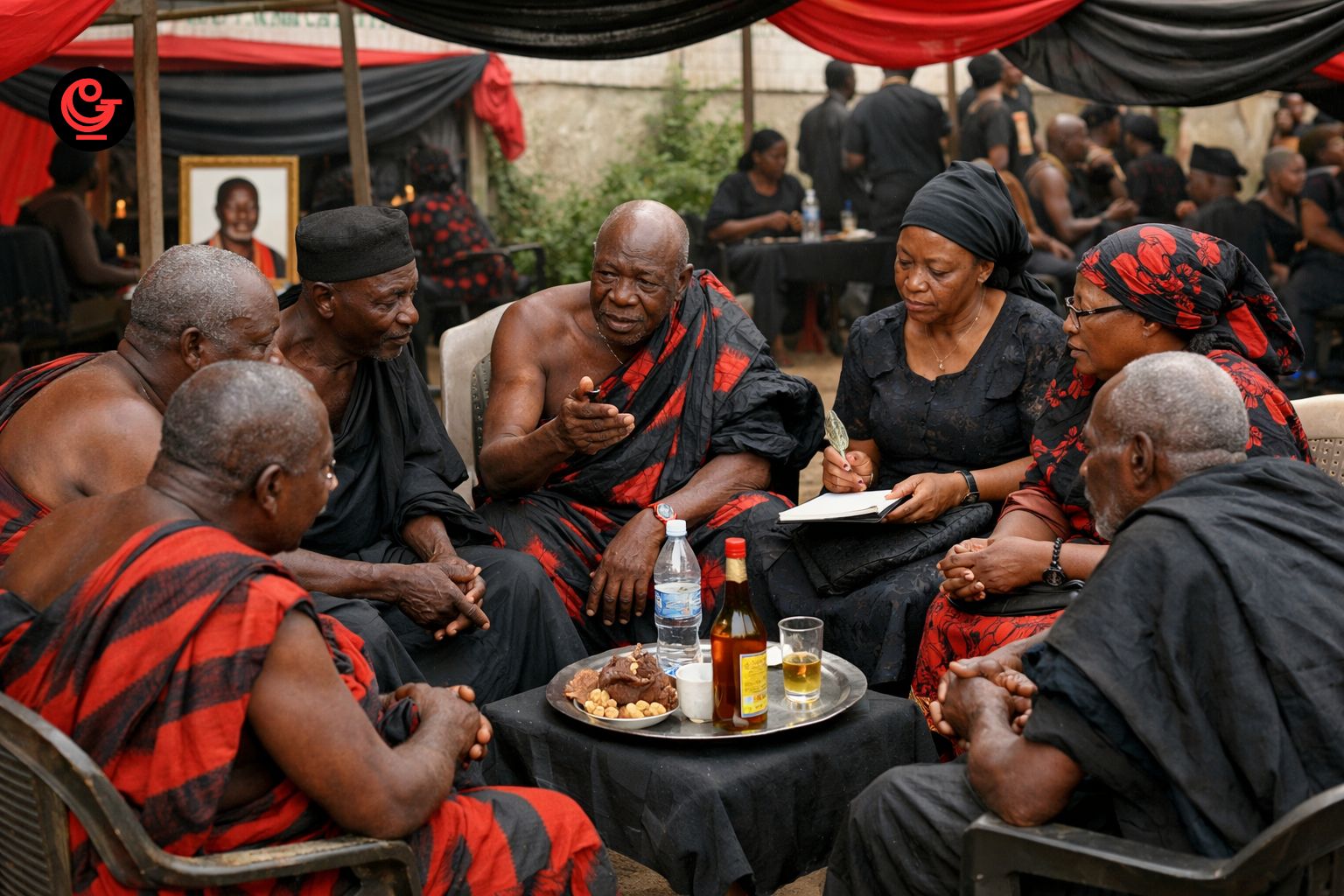
If the chief mourner is the visible face, the elders are often the guiding hands. Their work may not always be dramatic, but it is essential.
In practice, family elders often do five things.
1. Interpret custom
They explain what is expected in that family, clan, church, or community. For example, an Akan family in Kumasi may organise roles differently from a Ga family in Accra or a Dagomba family in the North. Elders help translate tradition into action.
2. Confirm who leads what
They help settle questions such as: Who is the chief mourner? Who speaks for the maternal family? Who handles church matters? Who manages visitors from abroad? This prevents avoidable conflict.
3. Guide timing and sequence
The one-week observance, burial, thanksgiving, and later remembrance all need order. Elders often help the family keep the sequence clear and respectful.
4. Protect family unity
At a funeral, old tensions can reappear. Elders often step in to calm emotions, settle protocol issues, and keep attention on the deceased rather than on disagreement.
5. Carry memory
Elders remember names, lineage, obligations, previous funeral practices, and who must be informed. They make sure the funeral reflects not only grief, but also family history and belonging.
Where families struggle today
The challenge today is not tradition itself. The challenge is coordination.
A family may have elders in the hometown, children in Accra, siblings abroad, a church committee, and different opinions about the budget. Printed material can get lost. WhatsApp messages can become scattered. Important decisions can sit in separate notebooks and voice notes. Meanwhile, the chief mourner is expected to remain composed. Ghana Memorial Products helps address this practical gap with tools such as the Funeral Planner Guide, the Comprehensive Funeral Checklist, the Budget Planner, the Online Condolence Book, and the Donation Link. These tools help families organise tasks, manage support, and communicate clearly across borders.
How digital tools can support, not replace, tradition
Digital tools should not take authority away from the chief mourner or elders. They should make their work easier.
For example, the elders may still decide the funeral date, but the family can place that agreed-upon information in one shared planner. The chief mourner may still receive mourners, but tributes can also be gathered in an Online Condolence Book for relatives who cannot travel. The family may still rely on contributions from siblings and friends, but a Donation Link can make that support easier to manage from both Ghana and abroad. In this way, technology supports the traditional structure instead of competing with it.
Because memories deserve more than paper, the work of the chief mourner and elders can now continue beyond the funeral weekend. Families can preserve names, messages, and practical information in one place with less confusion and less pressure on the people carrying the heaviest roles.
A simple guide for families
When assigning funeral roles, keep this structure in mind:
Name the chief mourner early so the wider family knows who will be the public representative.
Gather the elders quickly to confirm customs, roles, and the first decisions.
Use the one-week observance well to communicate clearly and announce agreed arrangements.
Separate emotion from logistics by giving one person public duties and others operational duties.
Keep one shared planning record for budget, timelines, providers, and family responsibilities.
Make room for diaspora participation without weakening elder guidance at home.
The role of the chief mourner and family elders in Ghana is about care, order, memory, and peace. One role gives the family a public centre. The other gives the family a cultural backbone. When both work well together, a funeral becomes more than an event and becomes a respectful act of unity.
For families who want help turning that unity into a clear plan, check out the Funeral Planner Guide. It brings together practical steps, cultural guidance, checklists, and planning tools so families in Ghana and the diaspora can organise a dignified funeral with less stress and more clarity.
Related Articles
Working with the church during funeral planning in Ghana
Browse the post to know more and explore detailed insights on this topic.
Read MoreKeeping the diaspora connected: Digital tools in Ghanaian funerals
Browse the post to know more and explore detailed insights on this topic.
Read More