

Funeral guest management in Ghana: Seating, protocol, and crowd control
May 21st 2026, 12:00 am
When the Funeral Grounds Begin to Fill
At many funerals in Ghana, the first signs of a large gathering appear early. Canopies are being arranged, chairs are being counted, ushers are waiting at the entrance, and family members are quietly asking, “Where will the elders sit?”
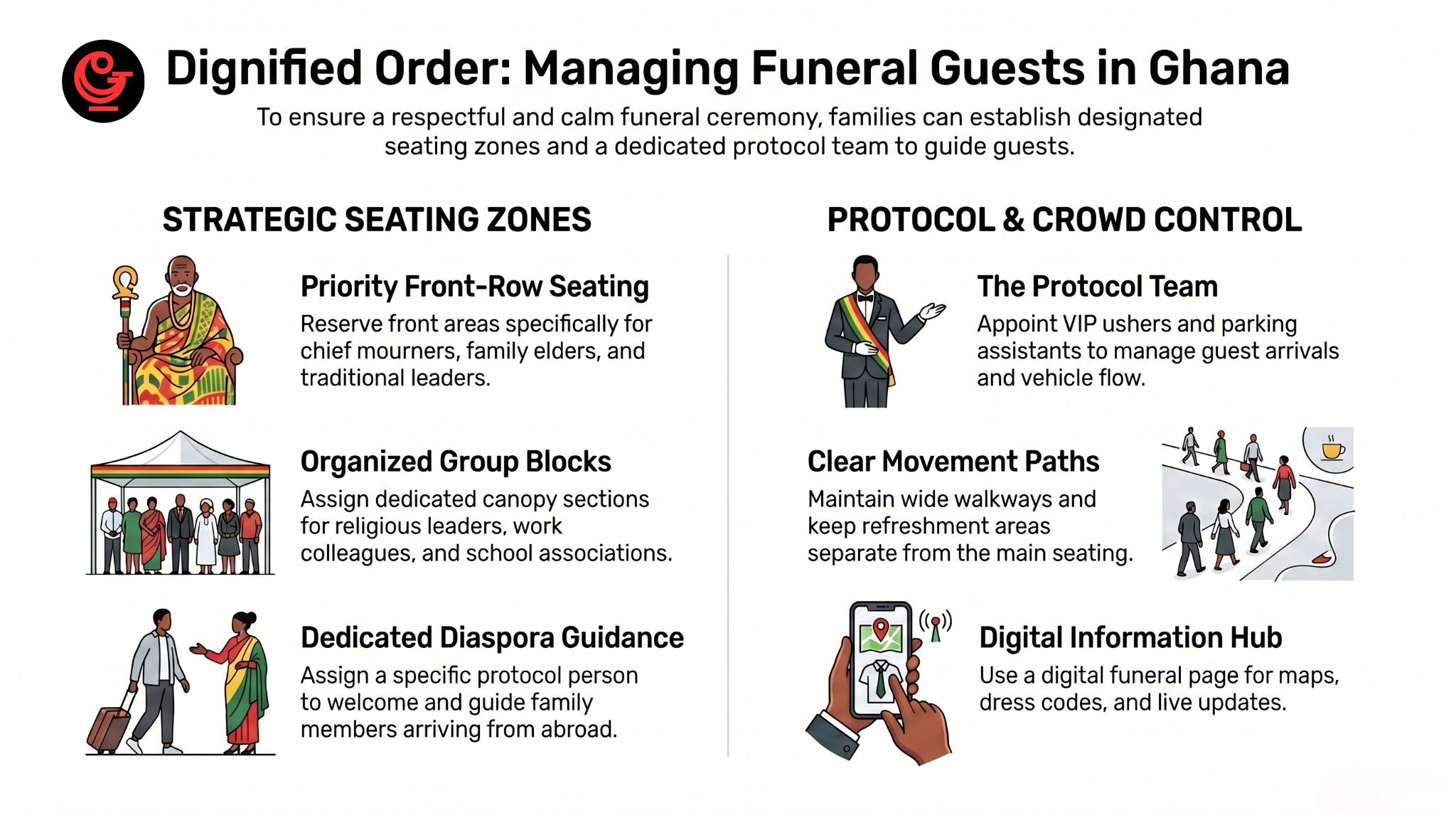
Funeral guest management in Ghana is about respect, order, family honour, and making sure every guest feels guided. A well-planned seating and protocol system can reduce confusion, prevent tension, and help the funeral ceremony move peacefully.
In Ghana, funerals often bring together close family, extended relatives, chiefs, church leaders, work colleagues, neighbours, classmates, old friends, and diaspora family members. Because of this, guest management must be handled with care.
Why Seating and Protocol Matter at Ghanaian Funerals
Funerals in Ghana are public moments of respect. Even when a funeral is organised by one household, many people feel connected to the loss. This makes proper seating and protocol important.
At a typical funeral ceremony in Ghana, some guests may need special attention. These can include:
Chief mourners and immediate family
Family elders
Traditional leaders or chiefs
Pastors, imams, or other religious leaders
In-laws and special family delegations
Work colleagues and professional groups
School associations, church groups, and social clubs
Friends travelling from abroad
When these groups arrive, and there is no clear seating plan, confusion can easily happen. For example, elders may struggle to find a suitable seat, invited groups may sit in the wrong section, or mourners may block walkways while greeting people.
Good protocol does not make a funeral too formal. Instead, it protects dignity.
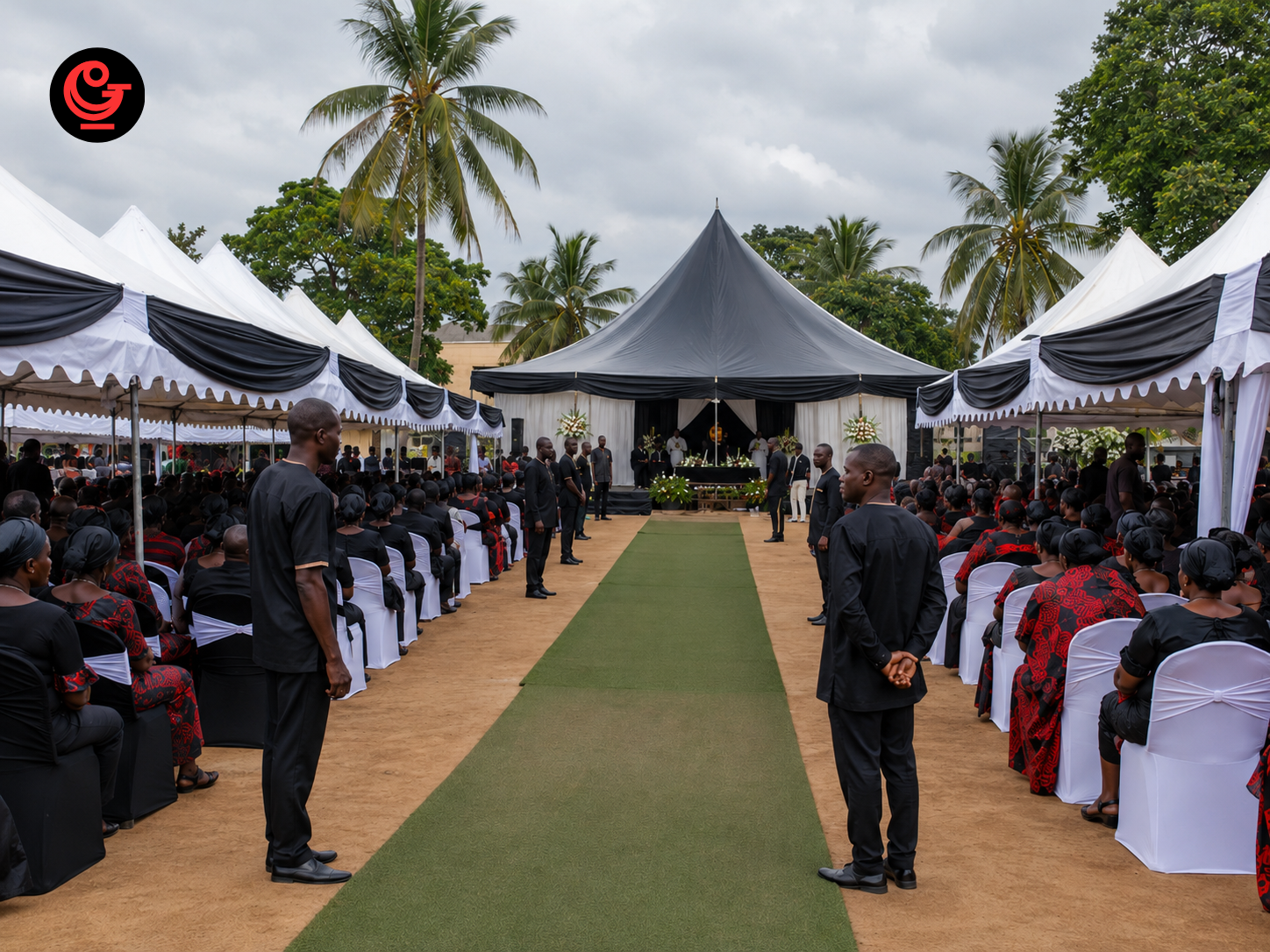
Common Guest Management Challenges in Ghana
Many Ghanaian families already know that funerals can become larger than expected. A family may plan for 300 guests, but 600 may arrive. This is common, especially when the deceased was well known in the community, church, workplace, or hometown.
Common challenges include:
Not enough chairs or canopies
This is especially common when guests arrive from different towns without confirming attendance.Unclear family seating
Immediate family, children, spouse, siblings, elders, and in-laws may all expect priority seating.Poor movement around the funeral grounds
If food, condolence books, donation tables, and seating areas are too close together, crowds can build up quickly.Protocol confusion
Traditional leaders, clergy, politicians, senior work colleagues, and family delegations may need proper welcome and seating.Traffic and parking pressure
Funerals held near busy roads, schools, churches, or family homes can affect movement in the area.Diaspora guests needing guidance
Family members arriving from the UK, US, Canada, Germany, Netherlands, or elsewhere may not understand the local arrangement immediately.
With the challenge understood, the next step is to plan the space clearly.
Funeral Seating Arrangement Ghana: A Practical Layout
A good funeral seating arrangement in Ghana should be simple and easy to explain. The aim is to help guests know where to go without asking too many questions.
Suggested Seating Plan
No | Seating Area | Who Sits There | Practical Note |
1 | Immediate family section | Spouse, children, siblings, chief mourners | Keep close to the front and visible |
2 | Elders and traditional leaders | Family heads, chiefs, queen mothers, clan leaders | Assign a protocol person to welcome them |
3 | Clergy or religious leaders | Pastors, priests, imams, church elders | Place near the programme flow |
4 | In-laws and special delegations | Family groups from marriage lines | Clearly mark or assign ushers |
5 | Work and association groups | Colleagues, unions, school groups, clubs | Keep space for group presentation |
6 | General mourners | Friends, neighbours, community members | Use larger canopy sections |
7 | Diaspora and visiting guests | Family and friends from abroad | Assign someone to guide them |
This plan can be adjusted for church services, family house funerals, cemetery ceremonies, and final funeral rites.
Protocol: Who Should Welcome and Guide Guests?
Protocol should not be left to chance. A small team can make a big difference.
A funeral committee can appoint:
Head of protocol: oversees guest reception and seating
Family liaison: confirms where family groups should sit
VIP or elder usher: receives chiefs, clergy, and senior guests
Condolence table attendants: guide guests signing the condolence book
Donation table attendants: support donation recording and transparency
Traffic and parking assistants: guide vehicles and reduce road pressure
Announcement contact person: gives updates to MCs and ushers
The protocol team should meet before the funeral day. They should know the venue layout, chair arrangement, expected special guests, and family preferences.
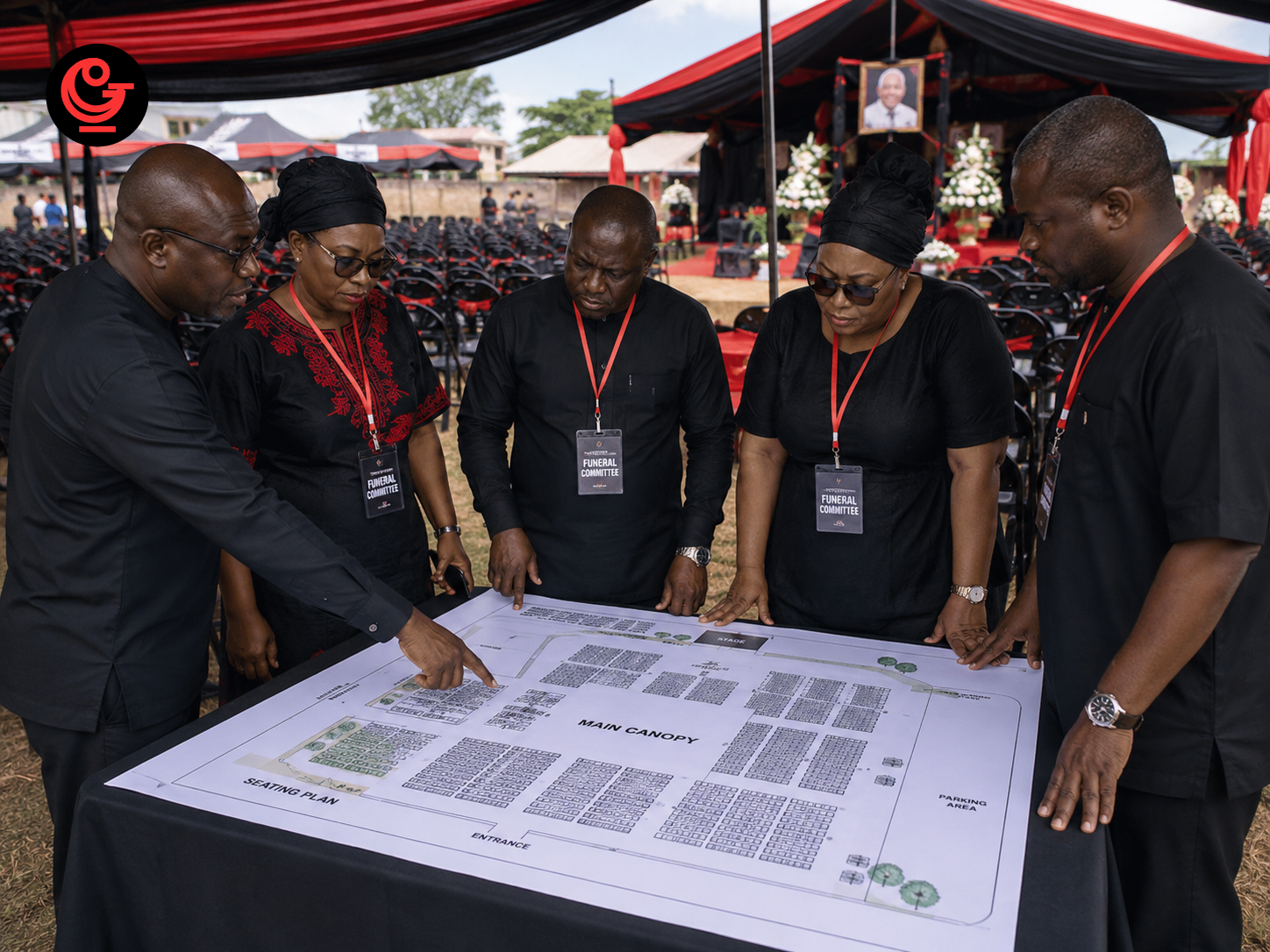
Crowd Control at Funerals: Keeping Movement Calm and Respectful
Crowd control at funerals should be gentle, organised, and respectful. It is not about pushing people around. It is about guiding movement so that the ceremony remains peaceful.
Families should plan:
Clear entrance and exit points
Guests should know where to enter, where to greet the family, and where to leave after paying respects.Separate condolence and donation tables
If possible, place the condolence signing and donation recording in a visible but spacious area.Wide walkways between chairs
This helps elders, children, and visitors move safely.Food and refreshment area away from the main seating
This prevents crowding during key parts of the ceremony.Parking guidance
Use volunteers or hired support if the funeral is near a busy road.
Good crowd control begins before guests arrive.
How Digital Tools Can Support Guest Management
Printed posters and announcements are useful, but they cannot answer every guest's question. This is where a digital funeral page can help.
With Ghana Memorial Products, families can share key funeral information in one place. A funeral page can include:
Funeral date, time, and venue
One-week observance details
Dress code or clothing colours
Google Maps location
Livestream link
Programme details
Updates for guests and diaspora family
This helps reduce repeated phone calls. It also helps visitors from outside Ghana prepare properly before arrival.
For example, a family in Kumasi can share one funeral link with relatives in Accra, London, Toronto, and Amsterdam. Guests can check the location, confirm the time, send a tribute, contribute through a donation link, and follow the livestream if they cannot travel.
Emotional Pay-Off: Order Brings Peace
A funeral will always carry emotion. Families are grieving, elders are guiding, and guests are coming to show love. When seating, protocol, and crowd control are handled well, the family can focus more on honouring their loved one.
Good guest management does not remove grief. However, it reduces pressure. It helps the ceremony feel calm, respectful, and united.
That is the tribute they deserve. The peace you need.
Plan the People, Not Only the Programme
Funeral guest management in Ghana should be part of every funeral plan. Chairs, canopies, ushers, protocol, parking, condolence books, donation points, and digital updates all work together.
When families prepare early, guests feel welcomed. Elders feel respected. Diaspora relatives feel included. The funeral committee works with less confusion.
To make planning easier, families can use Ghana Memorial Products to organise funeral details, share updates, receive tributes, and support guests before, during, and after the funeral.
For more step-by-step help, always refer to the Funeral Planner Guide on Ghana Memorial Products.
Written by: David Owusu Asante
Related Articles
Physical and Online condolence books in Ghana: Preserving words of comfort
Browse the post to know more and explore detailed insights on this topic.
Read MoreCoffin and casket choices in Ghana explained
Browse the post to know more and explore detailed insights on this topic.
Read More