

Physical and Online condolence books in Ghana: Preserving words of comfort
May 20th 2026, 12:00 am
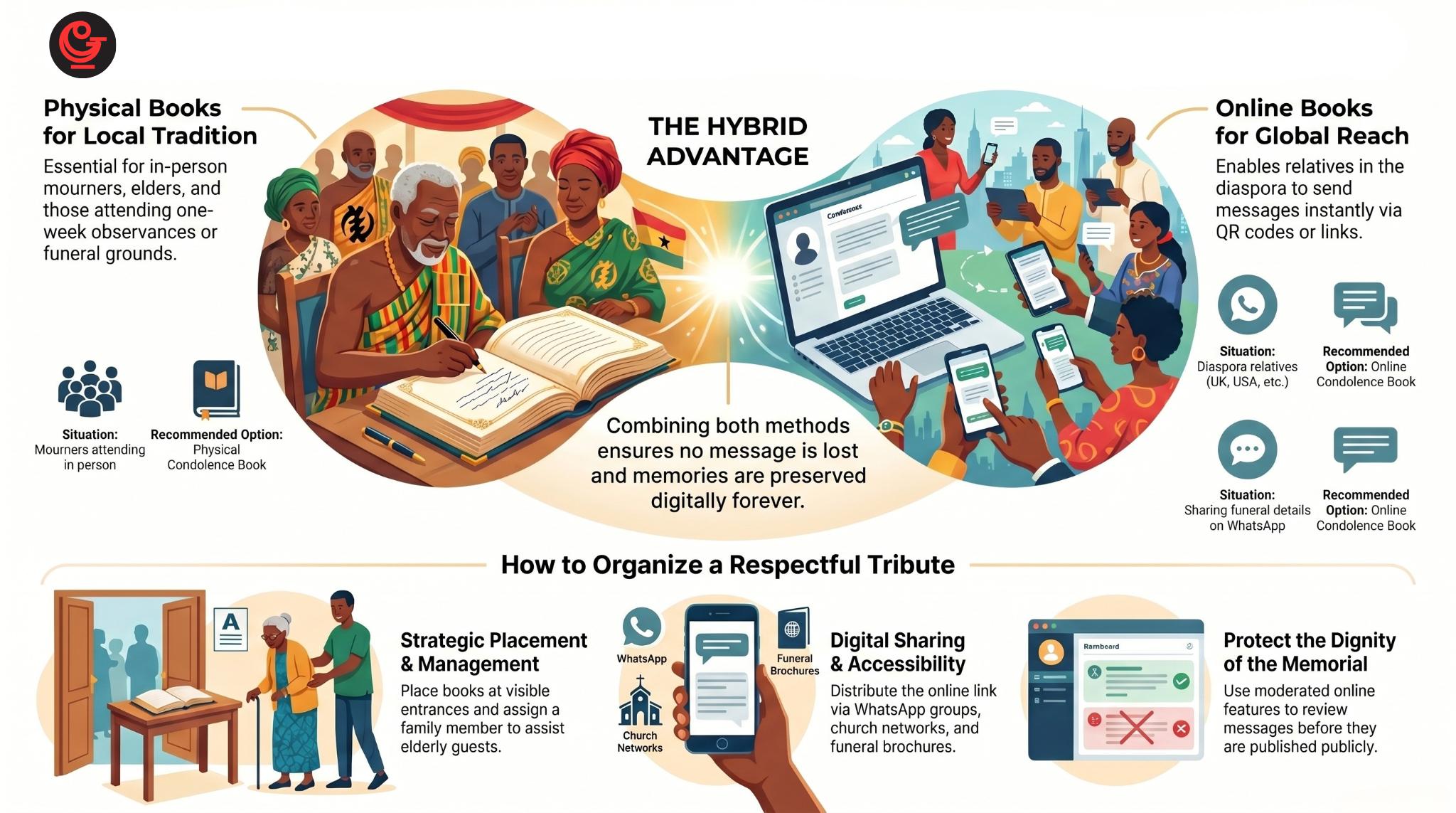
At many funerals in Ghana, a condolence book is placed near the entrance, beside a framed photo, flowers, or the family reception table. Mourners arrive quietly, greet the family, and write their names with a few words of sympathy.
For the family, those short messages can mean a lot. They show presence. They show support. They also remind the bereaved that they are not carrying the loss alone.
Today, families can use both a physical condolence book and an online condolence book. One honours the tradition of signing in person. The other helps family and friends abroad send their messages from anywhere.
Why Condolence Books Matter
In Ghanaian funerals, sympathy is not only spoken. It is shown through visits, donations, prayers, tributes, and written messages.
Books of condolence are also used in public mourning. Ghanaian media have reported several examples where condolence books were opened for respected public figures, chiefs, musicians, and national personalities. For example, Graphic Online reported mourners signing a book of condolence for Daddy Lumba at his East Legon residence, where sympathisers shared memories and messages of gratitude. (Graphic Online) MyJoyOnline also reported former President Nana Akufo-Addo signing the condolence book opened in Daddy Lumba’s honour. (MyJoyOnline)
These examples show that condolence books are not just record books. They are part of how society expresses respect.

Physical Condolence Books: The Traditional Touch
A physical condolence book is usually a printed or bound book where visitors write their names, contact details, and messages of sympathy.
It is commonly placed at:
The family house
The church or mosque
The funeral grounds
The one-week observance
The funeral reception table
The palace or traditional authority venue, where relevant
A physical book feels personal because the mourner writes by hand. The family can keep it after the funeral and read the messages privately.
However, it also has limits. Some handwriting may be difficult to read. Pages may get damaged. The book can only be signed by people who are physically present. This means relatives in the diaspora may be left out.
Online Condolence Books in Ghana: Extending Sympathy Beyond the Funeral Grounds
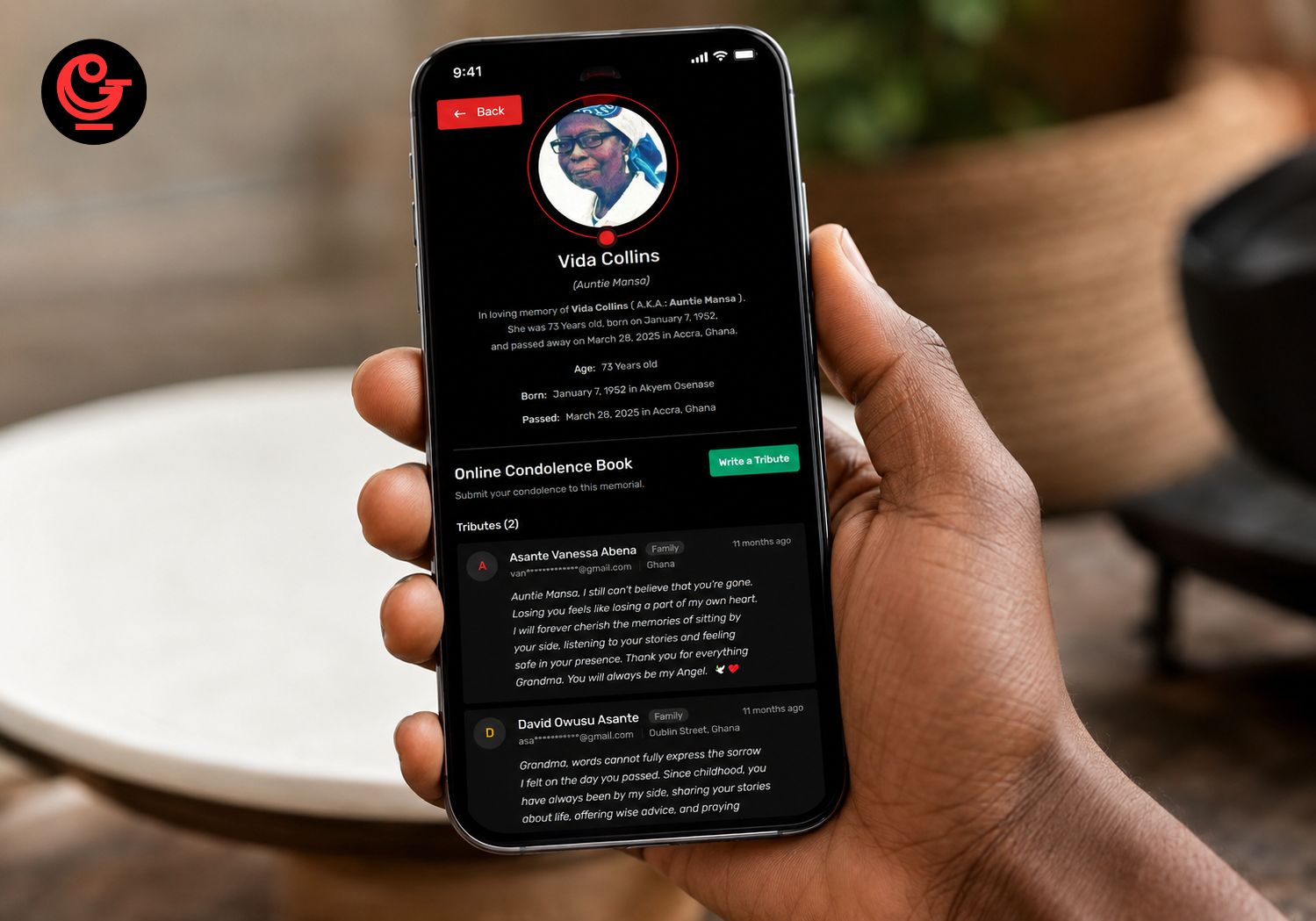
An online condolence book gives family and friends a simple way to send messages through a link or QR code.
This is especially useful for Ghanaian families with relatives abroad. A cousin in Canada, an auntie in the UK, or a church member in Germany can send a message of condolence without waiting for the funeral day.
With Ghana Memorial Products, condolence messages can become part of the loved one’s digital memorial. Ghana Memorial’s Condolence Book feature allows tributes to be collected and preserved respectfully as part of the wider memorial experience.
This means the condolence book is no longer only for one day. It can become part of a lasting memory.
Because memories deserve more than paper.
Physical vs Online Condolence Books: Which One Should Families Use?
The best option is often to use both.
No | Situation | Best Option |
1 | Mourners attending the funeral in person | Physical Condolence Book |
2 | Diaspora relatives who cannot travel | Online Condolence |
3 | Church members and associations sharing messages | Both |
4 | Families who want to preserve messages long-term | Online Condolence Book |
5 | Elderly mourners who prefer handwriting | Physical Condolence Book |
6 | Families sharing funeral details on WhatsApp | Online Condolence Book |
7 | One-week observance and funeral day | Both |
Using both gives everyone a way to participate. It also helps the family collect messages from the funeral grounds and from people far away.
How to Organise a Condolence Book
A condolence book should be simple, dignified, and easy to access.
1. Choose a trusted person to manage it
Ask one or two family members, ushers, or committee members to guide mourners. They can explain where to sign and help older guests who may need support.
2. Place the book in a visible but calm area
The book should not be hidden. It should be placed where guests naturally pass, such as the entrance, family reception point, or near the framed photo.
3. Add a clear instruction
Use a short sentence such as:
“Please leave your name and a short message of condolence for the family.”
4. Create an online version for wider access
Share the online condolence book link through:
WhatsApp family groups
Funeral announcements
Church groups
Old students’ associations
Workplace groups
Diaspora family networks
QR codes on funeral posters, brochures, and programmes
5. Review messages before publishing
A moderated online condolence book helps protect the dignity of the memorial. It allows the family to review messages before they appear publicly.
6. Preserve the final messages
After the funeral, the family can keep the physical book safely. They can also keep the online messages as part of the memorial page, making them easier to revisit over time.
Examples of Short Condolence Messages
Some mourners struggle to find the right words. A simple message is enough when it is sincere.
Here are a few examples:
“Our deepest condolences to the family. May God strengthen you during this difficult time.”
“We remember our dear mother with love and gratitude. May her soul rest in perfect peace.”
“Please accept our heartfelt sympathy. We stand with the family in prayer.”
“Your father lived a meaningful life. May his memory continue to bless the family.”
“From all of us abroad, we send our love, prayers, and support.”
“May the Lord comfort the children, spouse, and entire family.”
These messages can be used in a physical book, an online condolence book, or a funeral memorial page.
How Ghana Memorial Products Helps Families
Ghana Memorial Products helps families bring tradition and digital access together.
Through the online condolence book, families can collect messages from people who attend in person and people who cannot travel. This is helpful because many Ghanaian families are spread across different regions and countries.
It also supports the wider purpose of a memorial: to preserve the life story, photos, tributes, funeral information, donation link, livestream link, and grave location in one respectful space.
For example, a family in Kumasi can create an online memorial for their mother. Relatives in Accra can sign the physical condolence book during the funeral. At the same time, grandchildren in the UK can add messages online. After the funeral, the family still has one place to revisit those words.
That is the peace families need after a difficult period.
A condolence book may look simple, but it carries deep meaning. It holds names, prayers, memories, and words that can comfort a family long after the funeral day.
In Ghana, where funerals bring together family, church, friends, neighbours, and community leaders, both physical and online condolence books have an important role. The physical book honours the people who come in person. The online book includes those who cannot be there but still want to show love.
Together, they help families turn sympathy into something lasting.
For more step-by-step support before, during, and after the funeral, continue with the Funeral Planner Guide.
Written by: David Owusu Asante
Related Articles
What happens after a funeral in Ghana?
Browse the post to know more and explore detailed insights on this topic.
Read MoreCoping after loss, supporting children, and living with the long tail of mourning in Ghana
Browse the post to know more and explore detailed insights on this topic.
Read More