

Choosing and using a mortuary in Ghana: A practical family guide
March 5th 2026, 12:00 am
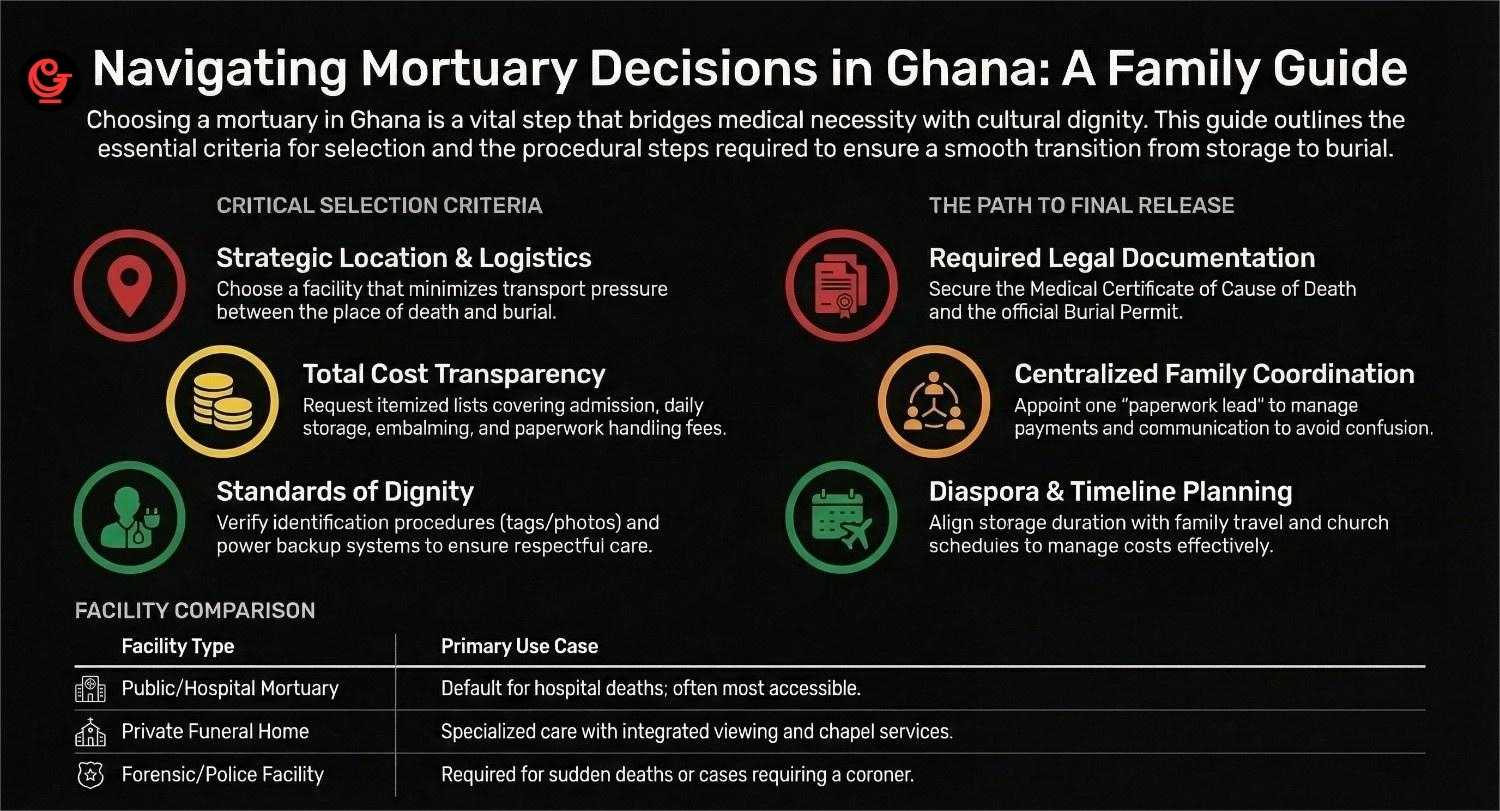
When a death happens, families often have to make decisions quickly — even while in shock. One of the earliest decisions is which mortuary in Ghana will hold and care for your loved one until burial. In Ghana, this step is not only medical. It is deeply connected to dignity, family coordination, documentation, and funeral planning.
This guide explains how mortuaries work in Ghana, what to ask, what paperwork is usually involved, and how to manage costs and timelines in a respectful way.
What a mortuary does in Ghana
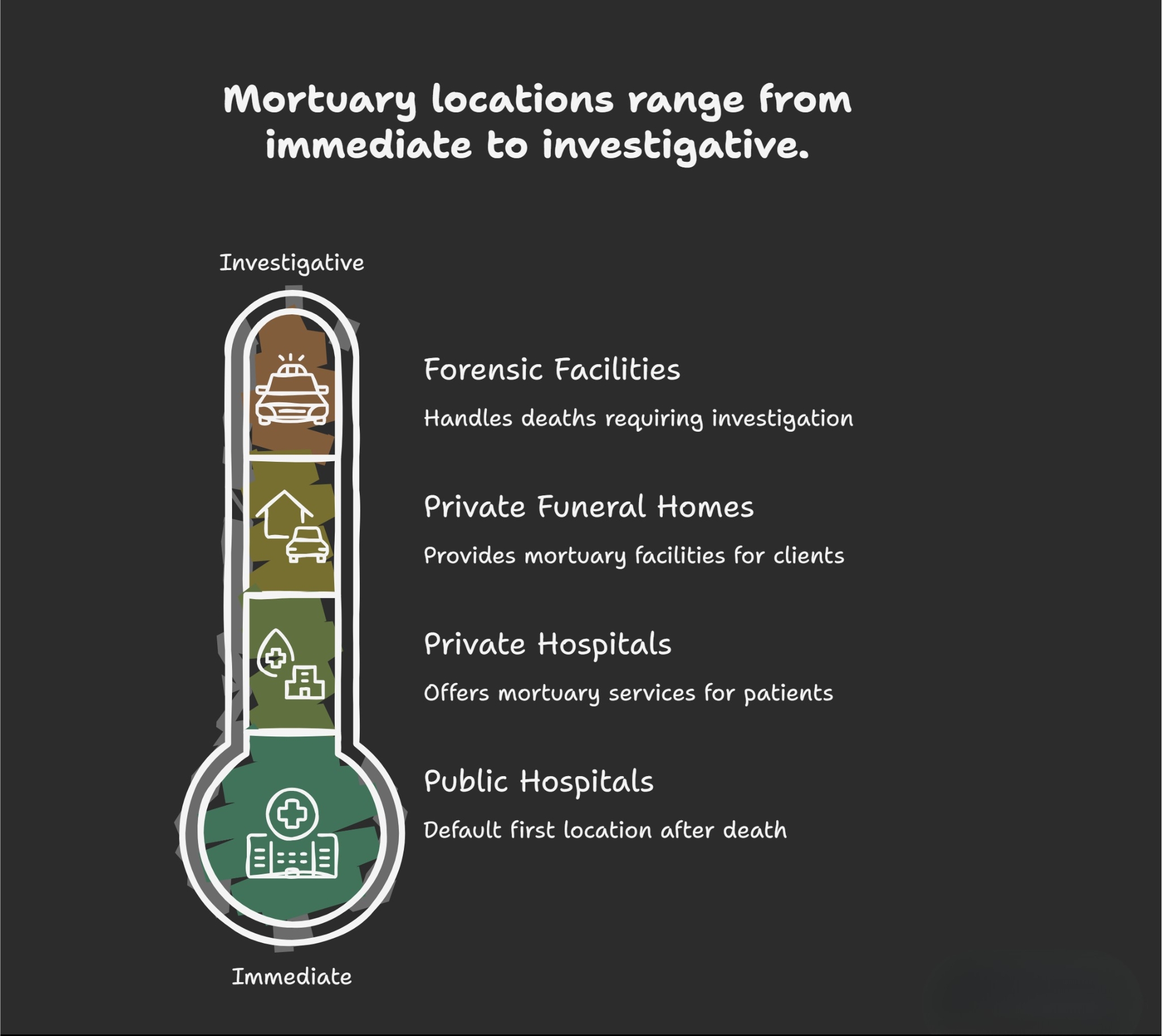
A mortuary (often called a morgue) is a facility that receives, stores, and prepares the body until burial or transfer. In Ghana, mortuaries are commonly found in:
Public hospitals (teaching hospitals, regional hospitals, district hospitals)
Private hospitals and clinics
Private funeral homes with their own mortuary facilities
Police or forensic-linked facilities, mainly when a death needs investigation under the coroner system
In practice, the mortuary becomes the “holding centre” while the family arranges: burial permits, funeral dates, family travel, fundraising, and funeral service bookings.
Ghana-specific situations that affect mortuary decisions
1) Where the person passed away
In a hospital: the hospital mortuary is often the default first location.
At home: a funeral home or ambulance service may help with removal and transport to a mortuary.
Unclear or sudden death: the police may be involved, and the coroner's process may require an autopsy before release.
2) Family decision-making takes time
In many Ghanaian families, key decisions involve elders, siblings, and diaspora relatives. This can delay final dates and increase mortuary days. That is common — but it makes it more important to understand daily charges early.
3) Religious and cultural expectations
Families may have preferences about:
Embalming timing
Washing and dressing
Viewing arrangements
Faith leaders’ involvement
These should be discussed clearly with the mortuary.
How to choose the right mortuary in Ghana
Here is a practical checklist you can use when deciding.
A. Location and access
Choose a mortuary that makes it easier for:
Immediate family to visit and manage paperwork
A funeral home to transport the body for a laying-in-state and burial
Diaspora relatives to coordinate from abroad (clear phone/WhatsApp communication matters)
Ghana-specific example:
If the funeral will take place in Kumasi but the death happened in Accra, families may either keep the body in Accra and transfer later, or move early to a mortuary closer to the final funeral location to reduce transport pressure closer to the funeral date.
B. Standards, dignity, and record-keeping
Ask how the mortuary handles:
Identification (tags, wristbands, photo records)
Storage conditions and power backup
Visiting/viewing rules
Cleanliness and staff procedures
Even smaller district hospital mortuaries often emphasise careful identification and record-keeping, because mix-ups are a serious risk families want to avoid.
C. Total cost clarity (not only daily storage)
Mortuary charges can include:
Admission/receiving fee
Daily storage
Embalming (and sometimes different pricing for autopsy cases)
Dressing, cosmetics, and viewing preparation
Use of chapel/viewing area (if available)
Release and paperwork handling
Costs vary widely by region and facility, so it is best to ask for a written list early and keep receipts.
D. Ability to support transfers
Ask if they can support:
Transfer to another mortuary
Release for burial
Release for cremation (where chosen and permitted)
Cross-regional transport coordination

What to ask the mortuary before you commit
Use these questions (by phone or in person):
What is your daily storage charge, and how do you calculate days?
What is included in your basic fee? (receiving, tagging, storage, admin)
What embalming options do you offer, and when is embalming required?
Are there different fees if an autopsy is required?
What documents must we bring before release?
What are your visiting and viewing rules? (days, hours, dress code, photography rules)
If we delay because the family is abroad, what are our cost and storage options?
Can you provide an official receipt and itemised invoice?
Key paperwork families usually need in Ghana
Paperwork can differ by situation (hospital death vs home death vs coroner case), but families commonly deal with:
1) Medical Certificate of Cause of Death (or coroner documentation)
A death registration process usually relies on medical certification — and in certain cases, a coroner’s process may be required.
2) Death registration and a burial permit
Under Ghana’s registration framework, a death certificate is issued after registration, and a burial permit is part of the process.
3) Mortuary release documentation
Many mortuaries will not release the body until key documents and payments are settled. Some guidance documents also note that delays in release can affect the ability to obtain local documentation.
Practical tip:
Keep a single family member (or appointed representative) as the “paperwork lead” to avoid confusion and duplicated payments.
How to use a mortuary smoothly: a step-by-step approach
Step 1: Confirm the receiving process
Confirm where the body will be taken first (hospital mortuary or private mortuary).
Confirm the name used for records matches ID documents.
Step 2: Ask for a clear fee list immediately
This prevents surprises after 2–4 weeks of storage.
Step 3: Decide early on viewing and preparation
If the family expects viewing (especially for laying-in-state), discuss:
Embalming timing
Dressing responsibilities (family-provided cloth, preferred attire)
Faith requirements (pastor/imam involvement)
Step 4: Plan the timeline with storage days in mind
In Ghana, funerals are often planned around weekends, church schedules, and family travel. Storage can become expensive if planning stretches too long, so it helps to set tentative dates early and adjust if needed.
Step 5: Coordinate transport and final release
Work with a funeral home or transport provider to confirm:
Pick-up time
Destination (home town, church, cemetery)
Any documentation required at pick-up
Common pitfalls to avoid
Not asking for an itemised price list early
Allowing too many family members to negotiate separately leads to confusion.
Delaying documentation until late (creates pressure close to burial dates)
Assuming the mortuary will “handle everything” — many only handle storage/prep, while the family must organise permits and funeral arrangements
No written records — keep receipts, names, and WhatsApp messages in a single folder
A gentle modern support for families
Today, many families are balancing tradition with practical coordination — especially when relatives are spread across Accra, Kumasi, Takoradi, and the diaspora. Ghana Memorial’s approach is to support this reality with tools that make planning clearer and communication easier, while keeping dignity at the centre.
Use the Funeral Planner Guide
If you want help organising the next steps after choosing a mortuary — budgeting, assigning family roles, planning timelines, booking service providers, and keeping everything in one place — refer to the Funeral Planner Guide. It is designed to help families in Ghana plan with less stress and more clarity, especially when decisions must be made quickly.
Related Articles
What to do immediately after a death in Ghana (Step-by-Step Guide)
Browse the post to know more and explore detailed insights on this topic.
Read More