

What happens after a funeral in Ghana?
May 14th 2026, 12:00 am
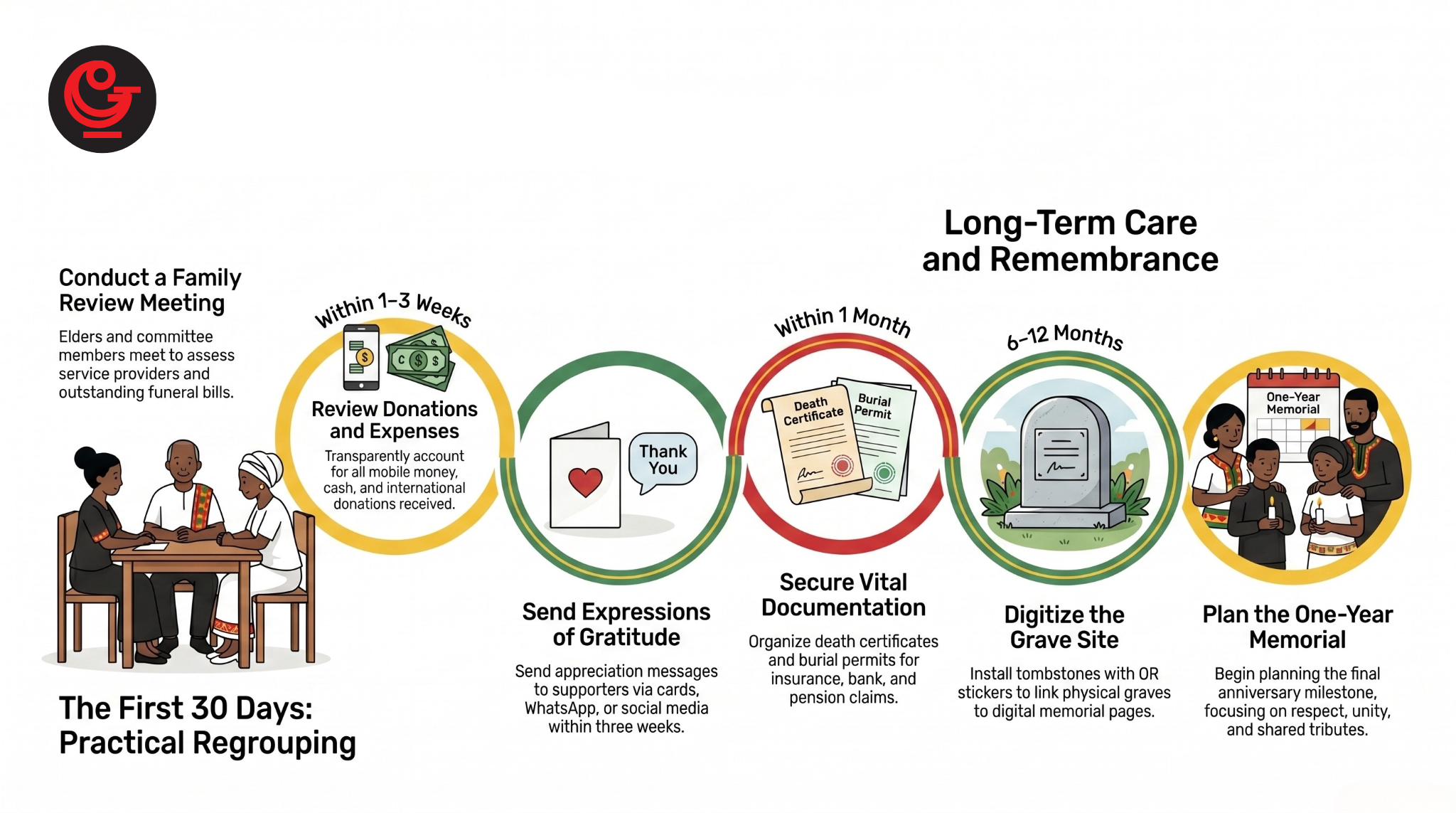
When the funeral is over, the canopies come down. The chairs are packed away. The family house becomes quiet again. For many Ghanaian families, this is the moment when the weight of loss is felt anew.
But what happens after the funeral is also important. In Ghana, the period after burial is not only about resting from the stress of the funeral. It is also a time for appreciation, family accounting, estate matters, grave care, continued mourning, and preserving the memory of the loved one.
A funeral may last a few days, but remembrance continues for years.
After the Funeral, Families First Regroup
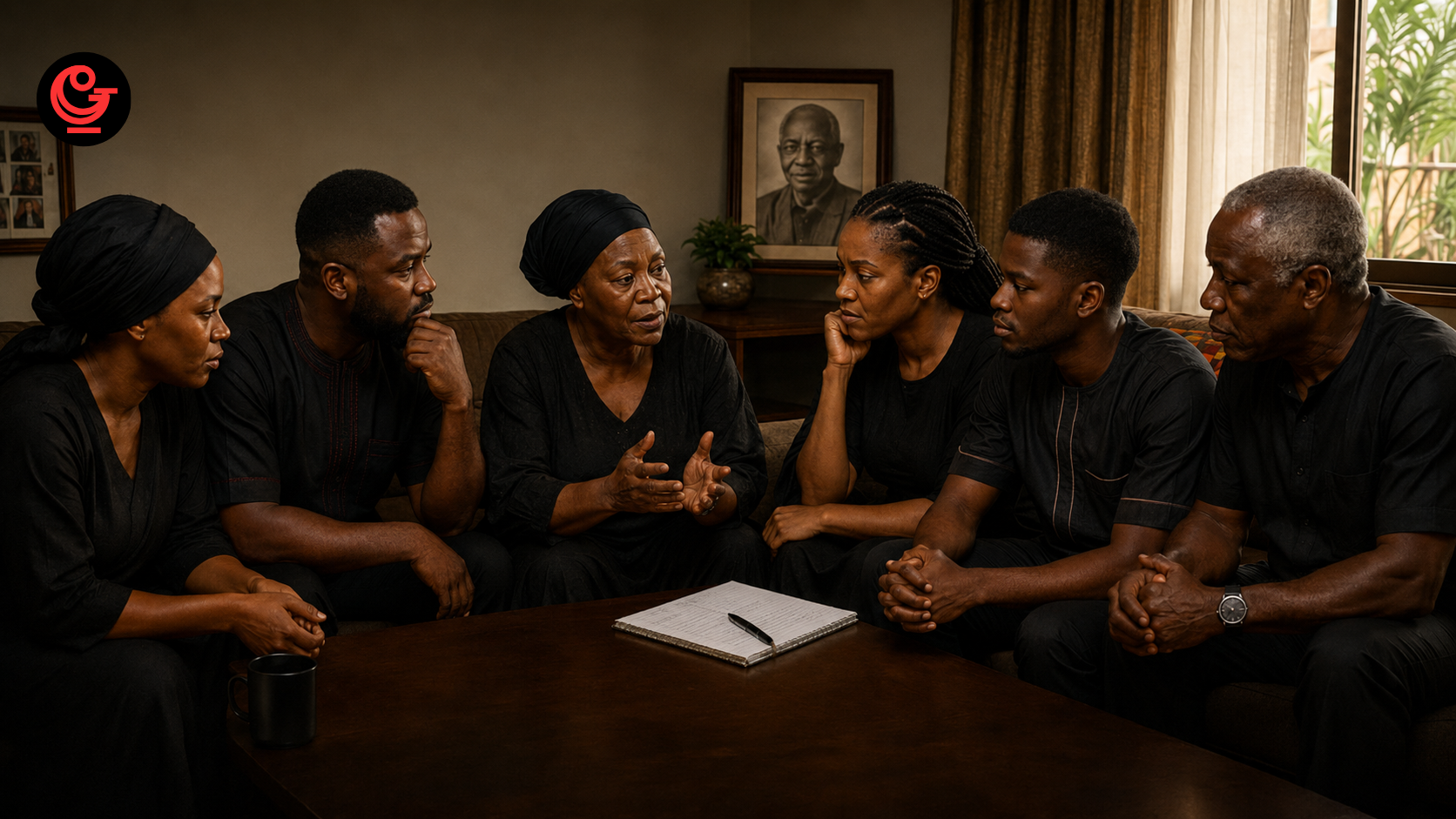
In many Ghanaian homes, the first few days after the funeral are used for rest and reflection. Close relatives, elders, chief mourners, children of the deceased, and committee members may meet again to review what happened.
This is not always a formal meeting. Sometimes it happens in the family house over food, quiet conversation, and shared memories. In other cases, especially after a large funeral in Accra, Kumasi, Takoradi, Cape Coast, or a hometown, the funeral committee may arrange a proper review meeting.
This meeting helps the family understand:
What went well during the funeral
Which service providers have been fully paid?
Which bills are still outstanding
How donations and contributions were received
Who should receive appreciation messages?
What should happen next with the grave, tombstone, or one-year memorial
It is a practical step, but it also brings closure. Everyone can see that the family handled the funeral with care and unity.
Sending Thank You Messages After the Funeral
One of the most common things that happens after the funeral in Ghana is appreciation. Families usually thank people who supported them emotionally, financially, spiritually, or physically.
This may include:
Church leaders and mosque leaders
Funeral committee members
Family elders
Work colleagues
Neighbours and friends
Funeral home staff
Designers, printers, ushers, caterers, and decorators
People who travelled from abroad or other regions
Those who donated money, food, drinks, or services
A thank you message after a funeral can be sent through WhatsApp, printed appreciation cards, social media posts, church announcements, or a short note in the family group.
A simple message may read:
“The family of the late Akosua Sakyiwaa wishes to express our sincere appreciation to all relatives, friends, church members, colleagues, and loved ones who supported us before, during, and after the funeral. Your presence, prayers, donations, and kindness gave us strength. May God bless you all.”
Families can also create appreciation cards through Ghana Memorial Products, especially when they want something more polished and respectful.
Reviewing Funeral Donations and Expenses
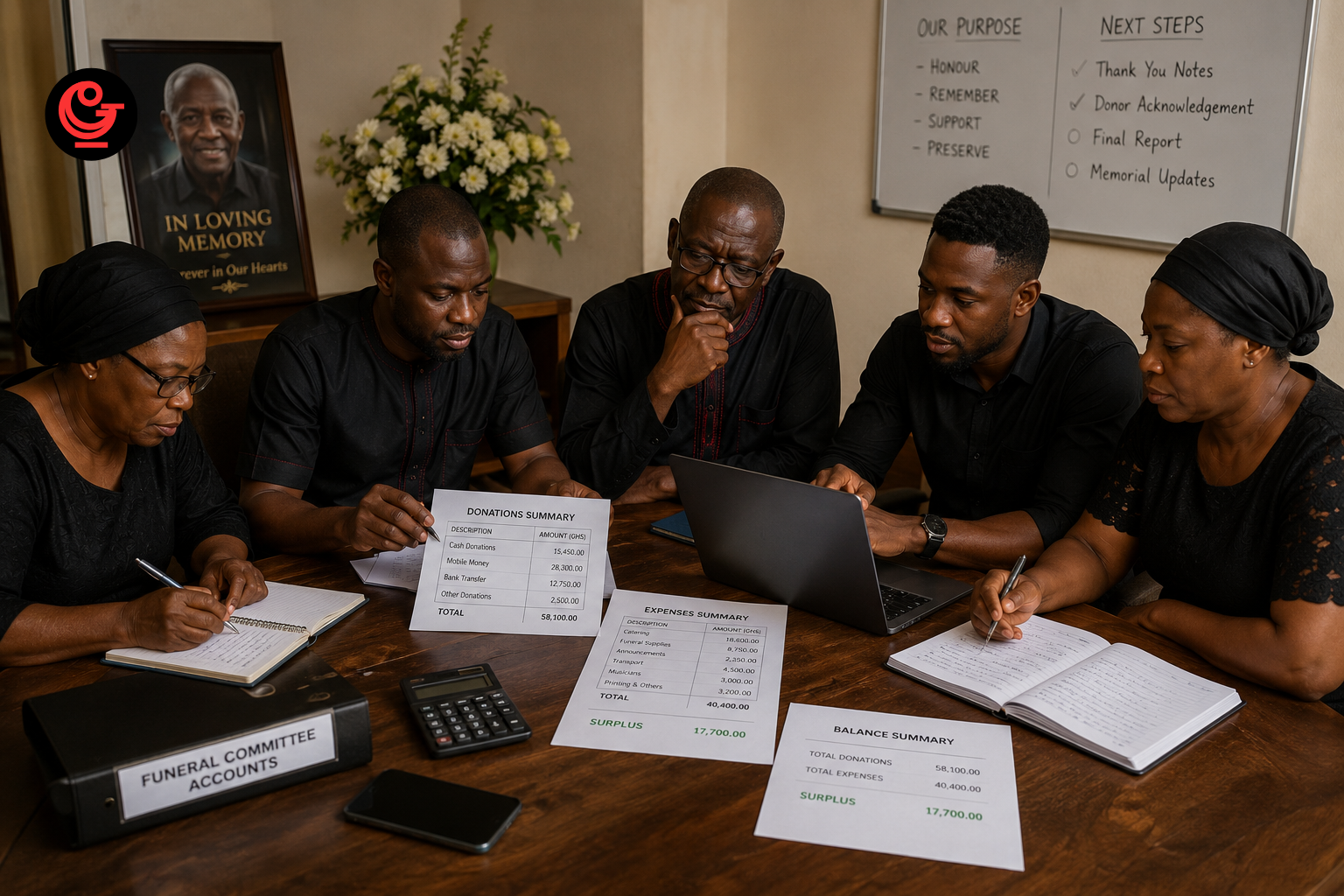
After a funeral, financial transparency matters. In Ghana, funerals often involve contributions from many people. These may come through mobile money, cash envelopes, bank transfers, diaspora donations, church collections, workplace support, or family pledges.
Therefore, the funeral committee or treasurer should prepare a simple account.
No | Item to Review | Why it matters |
1 | Donations received | To show appreciation and avoid confusion |
2 | Funeral expenses | To understand the total cost |
3 | Outstanding bills | To settle service providers early |
4 | Remaining funds | To decide whether money supports the spouse, children, tombstone, or one-year memorial |
5 | Records and receipts | To keep proof for family reference |
This step should be handled calmly and respectfully. It is not about blame. It is about trust.
Digital tools can also help. For example, a Donation Link can make contributions easier to track, especially when relatives abroad want to support the family from the UK, US, Canada, Germany, the Netherlands, or elsewhere.
Keeping Important Documents Safe
After the funeral, families should keep all important documents together. These may include the death certificate, burial permit, hospital papers, funeral receipts, cemetery documents, insurance papers, pension documents, and any will or estate-related papers.
Families may also need official death registration documents for future administrative matters. Ghana’s Births and Deaths Registry describes death registration as the official recording of deaths that occur within Ghana. (Births and Deaths Registry, Ghana)
These records may be needed when dealing with:
Banks
Insurance claims
Pension benefits
Employer benefits
Property matters
Probate or letters of administration
School or children’s support matters
Where estate or property issues are involved, the family should speak with a qualified lawyer or the appropriate court office. This helps reduce conflict and protects the interests of spouses, children, and dependants.
Caring for the Grave and Planning the Tombstone
In Ghana, the grave remains an important place of remembrance. Some families return shortly after burial to check whether the grave is properly settled, cleaned, or marked.
A permanent tombstone is usually not installed immediately. In many Ghanaian families, it may be planned after some months or around the one-year remembrance. A GMP tombstone guide notes that many families first place a temporary marker and later install a permanent tombstone after family consultation, fundraising, and design decisions.
A tombstone may include:
Full name of the deceased
Date of birth and date of death
Short tribute
Bible verse, Quran verse, or proverb
Family or clan name
Local language inscription, where appropriate
Today, families can also add a Tombstone QR Sticker. When scanned, it can lead visitors to the Ghana Memorial page of the loved one, where they can see photos, videos, tributes, life stories, and the grave location.
This connects the physical grave with a lasting digital memory.
Preserving the Funeral Programme and Memories
After the funeral, many printed items are put away. Funeral brochures may be kept in cupboards. Posters may fade. Banners may be removed. But the stories, photos, songs, tributes, and messages shared during the funeral should not disappear.
This is where Ghana Memorial becomes useful.
Families can preserve:
The life story of the deceased
Funeral programme details
Photos and videos
Audio memories
Tributes from family and friends
Condolence messages
Family roles and relationships
GPS grave location
Livestream link, where available
Ghana Memorial allows the family to keep updating the memorial even after the funeral. This is especially helpful for diaspora relatives who could not attend the funeral in person but still want to contribute stories and messages.
Because memories deserve more than paper.
Supporting the Close Family After the Funeral
After the funeral, visitors reduce. Phone calls become fewer. The family may look strong, but grief often becomes deeper when daily life returns.
This is when close support matters most.
Family members can support the bereaved by:
Checking on the widow, widower, children, or elderly parents
Helping with school, rent, food, or medical needs where possible
Visiting without waiting for an invitation
Helping the family settle the unpaid funeral costs
Encouraging proper rest
Respecting their mourning pace
In Ghanaian culture, community support does not end at the burial ground. True support continues quietly after the crowd has gone.
Planning the One-Year Memorial
For many families in Ghana, the one-year memorial is an important moment. It may include a church service, family gathering, grave visit, thanksgiving, food, music, prayers, and renewed tributes.
Some families also use this time to unveil the tombstone or update the memorial page with new photos and stories.
The one-year memorial does not need to be expensive. What matters is respect, unity, and remembrance. Families can keep it simple and meaningful by planning early, setting a budget, and communicating clearly.
A Ghana Memorial page can also help by keeping all details in one place and allowing relatives abroad to follow, contribute, or send messages.
A Simple After-Funeral Checklist
No | Task | Suggested Timing |
1 | Rest and allow the close family to recover | First few days |
2 | Hold a funeral committee review | Within 1–2 weeks |
3 | Send appreciation messages | Within 1 - 3 weeks |
4 | Review donations and expenses | Within 2–4 weeks |
5 | Organise documents and receipts | Within 1 month |
6 | Check the grave condition | Within 1–3 months |
7 | Plan a tombstone or a grave marker | 3–12 months |
8 | Update Ghana Memorial page | Ongoing |
9 | Plan a one-year memorial | 6–12 months |
10 | Continue supporting close family | Ongoing |
What happens after the funeral is just as important as the funeral itself. It is the time to thank people, settle accounts, protect documents, care for the grave, support the close family, and keep the memory of the loved one alive.
In Ghana, remembrance is not a single event. It is a journey.
Ghana Memorial Products helps families continue that journey with tools for digital memorials, condolence books, donation links, appreciation cards, funeral programmes, tombstone QR stickers, and long-term remembrance.
When the funeral is over, the memory must not end.
For more support, families can use the Funeral Planner Guide on GhanaMemorialProducts.com to organise each step with clarity, respect, and peace of mind.
Written by: David Owusu Asante
Related Articles
Setting up a funeral planning committee in Ghana
Browse the post to know more and explore detailed insights on this topic.
Read MoreFuneral Day Logistics in Ghana
Browse the post to know more and explore detailed insights on this topic.
Read More