

Planning a one-year memorial in Ghana
April 1st 2026, 12:00 am
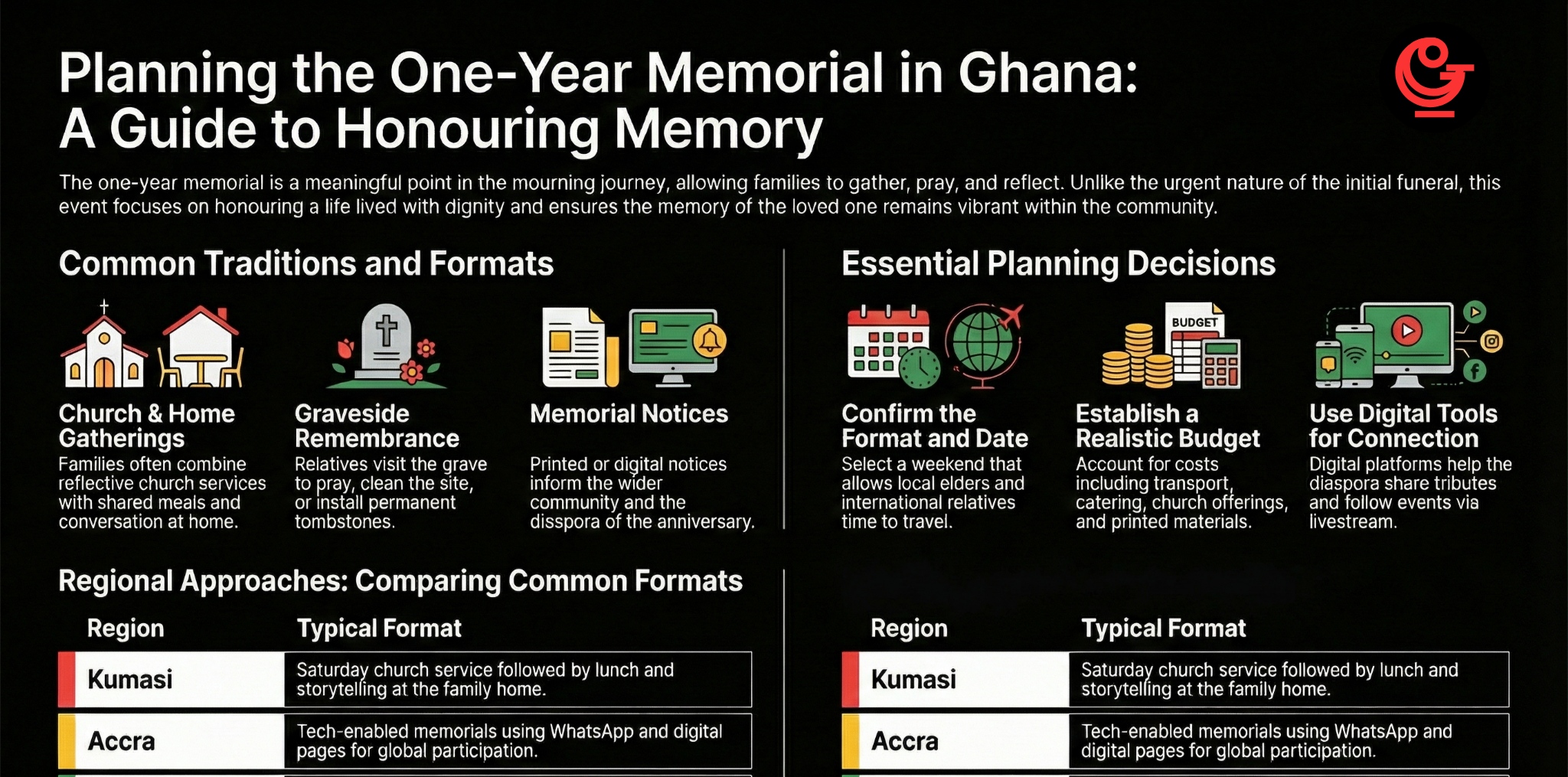
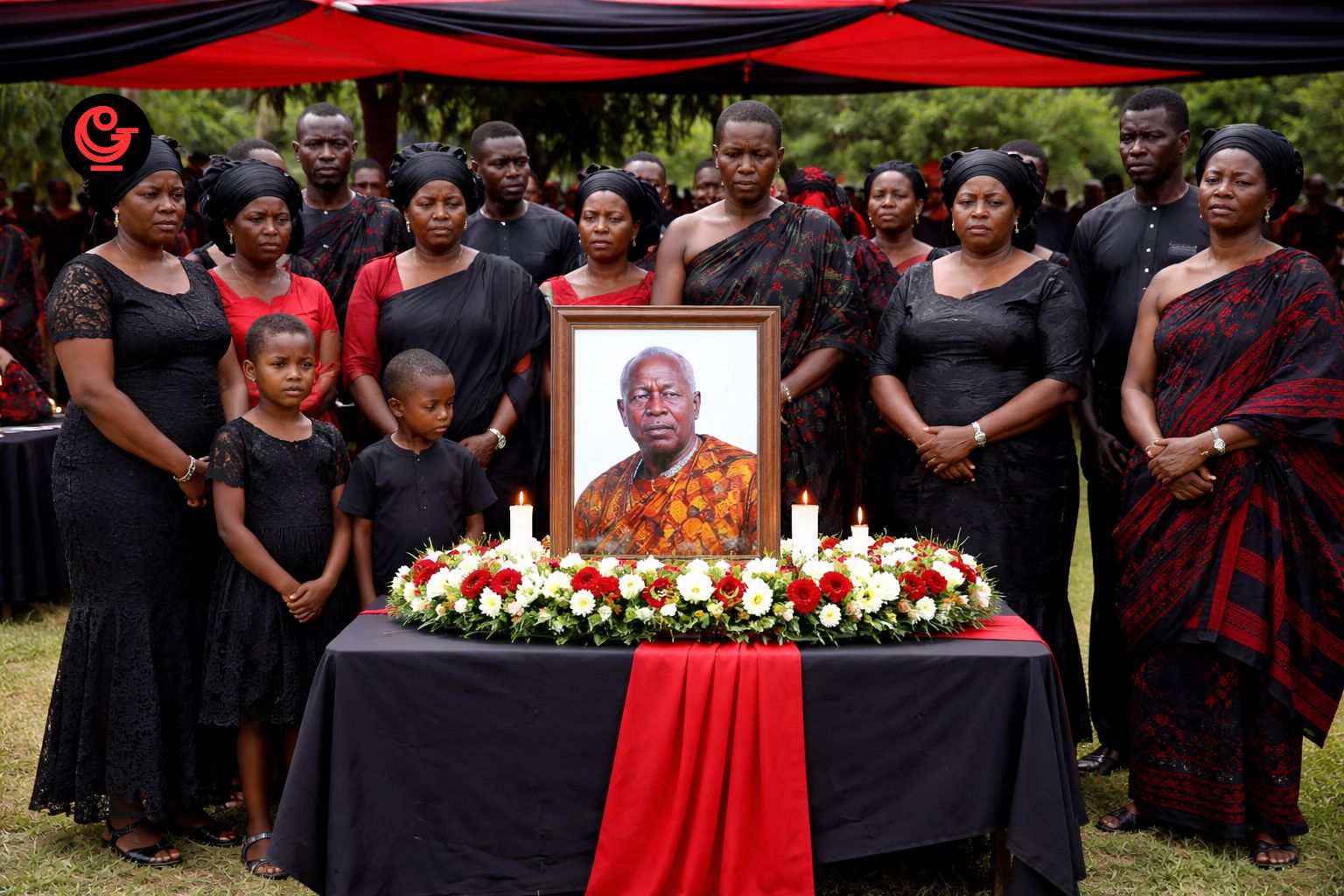
A year can pass quickly after a funeral, yet for many families in Ghana, the one-year memorial brings grief and remembrance back into focus. The first funeral may have been large, busy, and full of urgent decisions. The one-year memorial is often quieter. However, it still carries deep meaning.
Planning the one-year memorial in Ghana is about more than setting a date. It is about honour, family unity, faith, and memory. It is also a moment when relatives at home and abroad come together again to remember the person properly.
In many Ghanaian families, the one-year remembrance is not treated as a small afterthought. It is a meaningful point in the mourning journey. It allows the family to gather again, pray, reflect, and show that the memory of their loved one has not faded.
What Is a One-Year Memorial in Ghana?
A one-year memorial in Ghana is a remembrance held about twelve months after a person’s passing or funeral. Some families hold a church service. Others organise a family house gathering, a cemetery visit, a thanksgiving, or a combination of these.
The exact form depends on family tradition, denomination, budget, and location. In some homes, it is a modest gathering with prayers and refreshments. In others, it includes a memorial cloth, a printed or digital invitation, speeches, and a full family gathering.
What stays the same is the purpose: to mark one year with dignity and to honour the life that was lived.
Why the One-Year Memorial Matters
In Ghanaian culture, remembrance is shared. A loved one is not only remembered privately. Their memory is carried by family, church, friends, and community. That is why the one-year memorial remains important.
It gives families a chance to:
Pray together and thank God for the life of the deceased
gather relatives who may not have seen each other since the funeral
Visit the grave and reflect
Share memories with younger family members
Close the first year of mourning with care and respect
For some families, this moment is also practical. It may be the time when a permanent tombstone is installed, since tombstones are often placed several months after burial and sometimes after the one-year remembrance.
Common Ways Families Mark the Day
There is no single format for a one-year memorial in Ghana. Still, a few common patterns appear across families and regions.
Church Service
Many Christian families begin with a memorial service at church. This may include hymns, scripture readings, short tributes, and a message from the pastor. The tone is usually reflective rather than ceremonial.
Family Gathering at Home
Some families hold the remembrance at the family house or another agreed location. This can include prayers, greetings from elders, food for guests, and time for conversation.
Cemetery or Graveside Visit
Where possible, some relatives visit the grave to pray, clean the area, lay flowers, or inspect a newly installed tombstone. In Ghana, the grave remains an important physical place of return and remembrance.
Small Printed or Digital Memorial Notice
Some families prepare a one-year anniversary funeral poster, flyer, or online remembrance notice to inform relatives and friends.
Key Decisions to Make Early
The one-year memorial may be simpler than the funeral, but it still needs planning. Starting early reduces pressure on the family.
1. Decide the format
Ask first: will it be a church service, a home gathering, a graveside visit, or a mix? This shapes every other decision.
2. Confirm the date and time
Some families choose the exact date of passing. Others use the closest weekend so more relatives can attend, especially those travelling from Accra, Kumasi, Takoradi, or abroad.
3. Agree on the budget
Even a modest remembrance has costs. These may include transport, food, church offerings, printed materials, flowers, seating, or tombstone work.
4. Inform key relatives early
The one-year memorial often matters greatly to close family and elders. Early communication avoids confusion and helps the diaspora plan participation.
5. Choose whether to keep it private or broader
Some families invite only close relatives. Others extend the notice to church members, colleagues, neighbours, and funeral friends.
A Simple Planning Checklist
To keep the process manageable, families can work through the following steps.
Confirm the lead family contact.
Agree on the date, venue, and format.
Speak with the church or officiating minister.
Prepare a guest list.
Decide whether to create a printed or digital notice.
Arrange food and seating if guests will gather.
Plan transport for elders where needed.
Decide whether there will be a graveside visit.
Check the state of the tombstone or grave area.
Prepare a short remembrance message, prayer outline, or tribute.
This kind of structure matters because families often feel that remembrance should be meaningful, but they do not always know where to begin.
Ghana-Specific Examples
A family in Kumasi may hold a short Saturday morning church service, followed by lunch at the family home, where children and grandchildren share stories about their mother.
In Accra, a family with relatives in London and Toronto may use WhatsApp and a digital memorial page to share the one-year announcement, the service time, and the livestream link.
In Cape Coast or Takoradi, a smaller family may keep the day very private, with only a graveside visit, a prayer, and refreshments afterward.
All of these are valid. What matters is not the size of the event. What matters is whether it reflects the family’s values and honours the loved one well.
How Digital Tools Can Make It Easier
With tradition explained, it helps to see how digital tools can reduce pressure without taking away dignity.
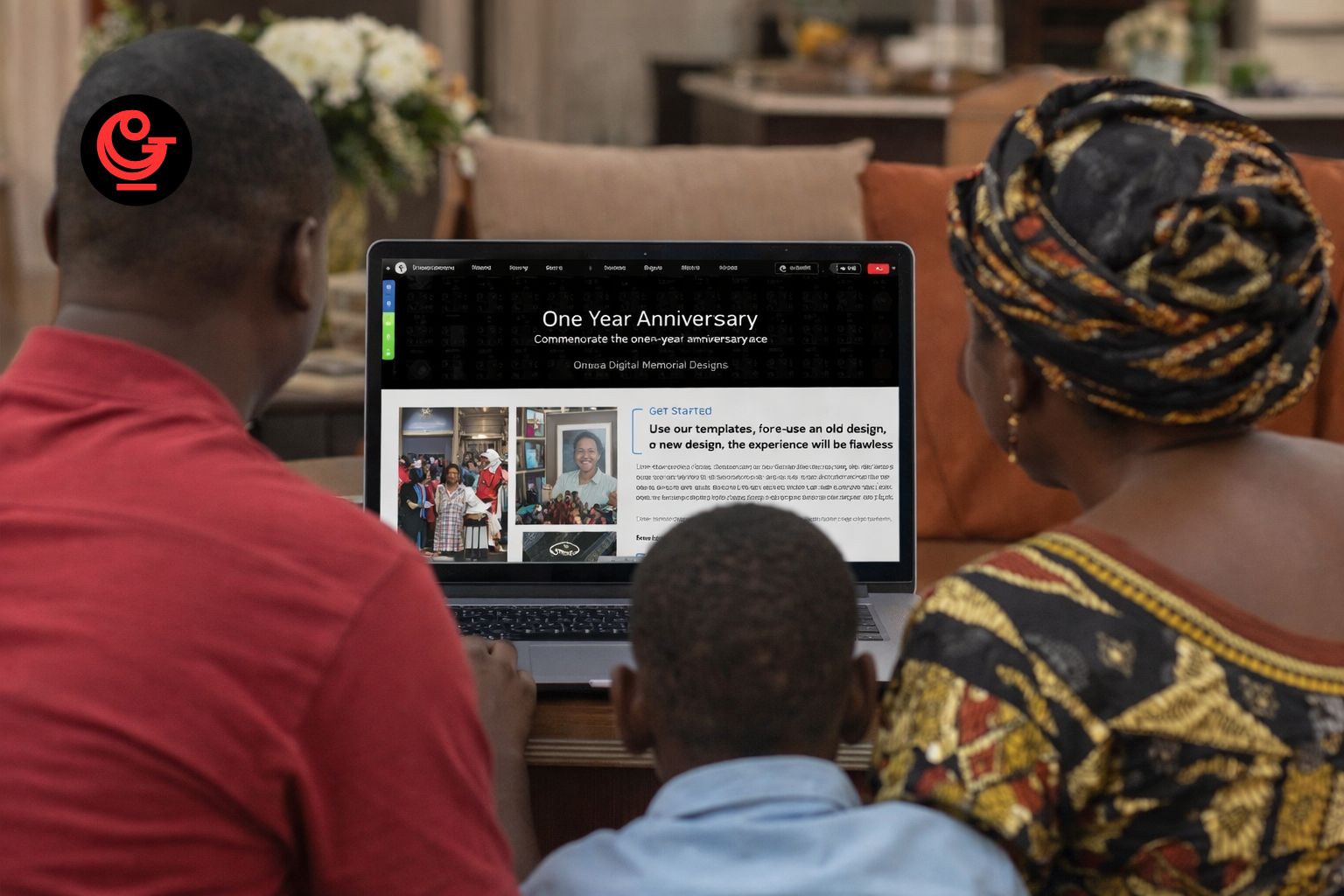
Ghana Memorial was built to support remembrance before, during, and after the funeral. The platform combines cultural respect with practical tools such as funeral and one-week communication, tribute sharing, donation support, livestream links, GPS-linked grave location, and a permanent memorial space for family and friends at home and abroad.
For a one-year memorial, this can help families in practical ways:
Share the one-year memorial details clearly in one place
Post a digital tribute or remembrance message
Let diaspora family members follow the event and contribute tributes
Connect the memorial to the grave location
Continue preserving stories, photos, and family reflections after the first year
This matters because posters are temporary, but memories are not. Ghana Memorial’s own brand direction makes that clear: funerals are moments, while the memorial can remain and grow over time.
Keeping the Day Respectful and Manageable
Families sometimes feel pressure to make every remembrance event large. That is not always necessary.
A one-year memorial can be dignified without being expensive. A short service, clear planning, simple communication, and one central place for information can be enough. In fact, many families may find more peace in a well-organised, modest event than in a rushed and costly one.
Because memories deserve more than paper, it can also be helpful to keep the memory in a form that lasts beyond the day itself.
Planning the one-year memorial in Ghana is about memory, not pressure. It is a chance to pause after the urgency of the funeral and honour a loved one with care. Whether the remembrance is held in a church, at home, at the graveside, or online with family across borders, it should feel respectful, clear, and sincere.
When families plan well, the day becomes lighter to manage. And when they combine tradition with the right digital support, remembrance becomes easier to share and preserve for the future.
For families who want help organising memorial communication, tributes, family participation, and funeral-related information in one place, Ghana Memorial offers a respectful digital path forward.
And for broader funeral planning support, always refer to the Funeral Planner Guide.
Related Articles
Mourning attire and cultural practices in Ghana explained
Browse the post to know more and explore detailed insights on this topic.
Read MoreCoffin and Casket Choices in Ghana Explained
Browse the post to know more and explore detailed insights on this topic.
Read More