

Mourning attire and cultural practices in Ghana explained
April 1st 2026, 12:00 am
When a loved one dies in Ghana, mourning begins long before the funeral day itself. It can be seen in the clothes people wear, the colours chosen by the family, the way visitors arrive to show support, and the quiet signs of respect observed at home, in church, and at the funeral grounds.
Mourning attire and cultural practices in Ghana are not only about appearance. They express grief, family unity, tradition, faith, and honour. For many families, they also help guide the community on how to respond appropriately in a time of loss.
Today, however, families often face a new challenge. They want to respect tradition, but they also need simple ways to inform relatives, coordinate funeral details, and keep everyone connected, including loved ones abroad. That is where digital tools can support the process respectfully. Ghana Memorial’s broader mission is to make funerals smoother, easier, and less expensive while helping remembrance last beyond the funeral itself.
Why Mourning Attire Matters in Ghana
In Ghanaian society, funeral clothing carries meaning. It tells others that a family is in mourning. It can also show the stage of mourning, the closeness of the relationship, or the tone the family has chosen for the funeral rites.
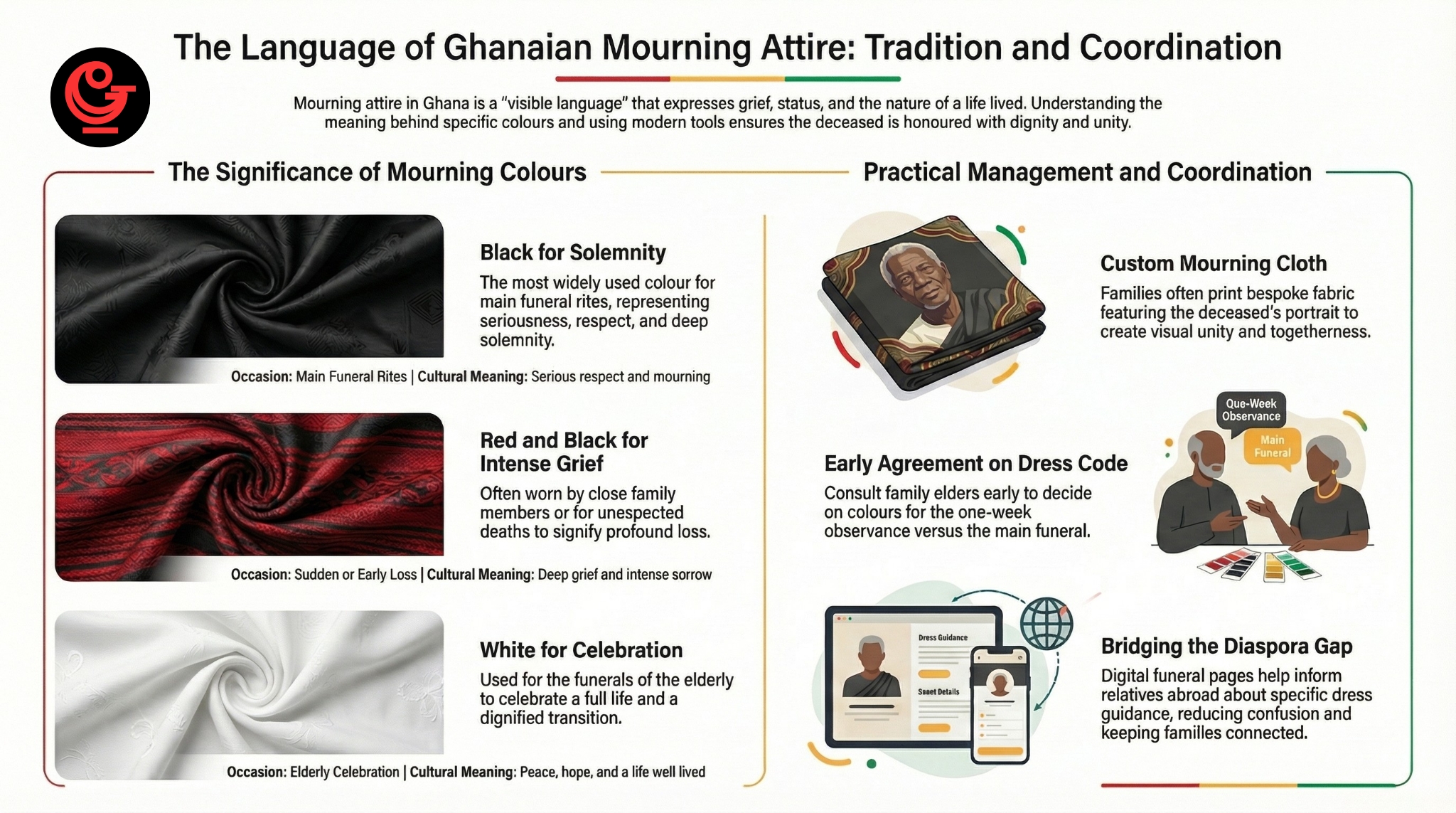
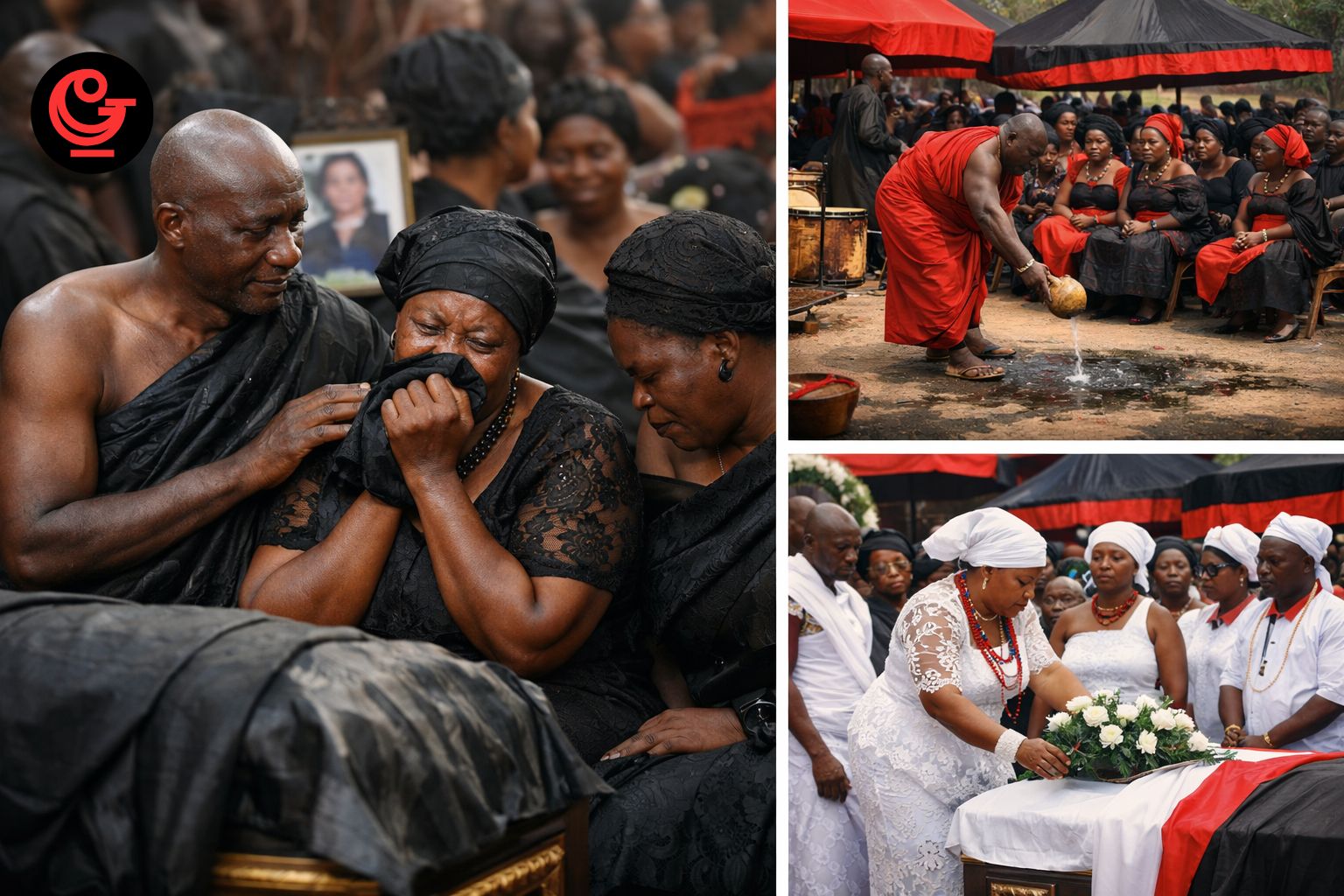
In many communities, especially among Akan families, black and red are the most recognised mourning colours. Black often reflects sorrow, respect, and solemnity. Red may be used for intense grief, sudden death, or the loss of someone who died under painful circumstances. In some cases, white may also appear, especially when the deceased was elderly, and the family wishes to emphasise a life well lived and a dignified transition.
Although colour customs can vary by region, ethnicity, denomination, and family preference, one thing remains constant: mourning attire is a visible language of respect.
Common Mourning Colours and What They Often Mean
Black
Black is the most widely used mourning colour in Ghana. It is often worn during the main funeral rites, church service, laying-in-state, and burial. It communicates seriousness and respect.
Red and Black
Red is often combined with black during funerals, especially where grief is deep or the death was unexpected. In many funeral gatherings, close family members may wear stronger red-and-black cloth than more distant mourners.
White
White may be worn in some funerals for elderly people, especially where the family wants to celebrate a full life rather than focus only on sorrow. Some Christian services also use white to reflect peace, resurrection, or hope.
Custom Mourning Cloth
Families may print custom funeral cloth with the deceased person’s photo, name, date, or tribute text. This has become common in Ghana and helps create visual unity among family members and supporters. It also strengthens identity and togetherness during the funeral period.
Mourning Practices Beyond Clothing
With the attire explained, it is also important to understand that mourning in Ghana is never only about what people wear.
Family Gathering and Public Support
When a death occurs, family members often gather quickly at the family's house or another agreed-upon location. Elders help guide decisions. Neighbours, church members, friends, and work colleagues may visit to offer condolences, bring support, or assist with planning.
One-Week Observation
In many Ghanaian communities, the one-week observance is an important early gathering after death. It is often the first formal public moment of remembrance and planning. Families use it to announce funeral intentions, receive support, and begin coordination.
Funeral Service and Burial Rites
The main funeral often includes a wake, laying-in-state, church or mosque service, burial, and post-burial gathering. Mourning attire becomes especially important here because it helps reflect order, family structure, and cultural dignity.
Extended Mourning
For some families, mourning continues after burial through anniversaries, remembrance services, and visits to the grave. Clothing expectations may become less formal over time, but the emotional and cultural significance remains.
How Traditions Differ Across Ghana
Ghana is culturally rich, so mourning customs are not the same everywhere.
Among Akan families, black and red funeral cloth is especially common and highly recognisable. In Ga communities, funeral practices may involve different forms of family participation, public announcements, and traditions linked to hometown and lineage. Ewe families may also follow strong family and community structures around funeral organisation. Christian, Muslim, and traditional beliefs can also shape how mourning attire is used.
Therefore, families should remember that there is no single rule that fits every funeral in Ghana. The safest approach is to follow the guidance of family elders, religious leaders, and the customs of the deceased person’s family.
The Modern Challenge for Families
Even though these traditions remain strong, funeral planning has become more complex.
Families now often have relatives in Accra, Kumasi, London, Amsterdam, Toronto, or New York. Some people can attend the funeral physically. Others cannot. Some need updates on WhatsApp. Others need a clear page they can visit for funeral details, tributes, directions, livestream access, or support options.
This creates pressure at a time when the family is already grieving.
Printed notices, cloth, brochures, and public announcements still matter. But on their own, they may not be enough. Posters are temporary. Messages get lost in chat groups. Family members abroad may miss important details. Ghana Memorial’s product direction addresses this exact problem by combining Ghanaian funeral tradition with practical digital tools such as the Funeral Page, tributes, donation support, livestream links, and memorial sharing.
How Digital Tools Can Respect Tradition
Digital support should never replace culture. It should support it.
For example, a family may still choose traditional mourning cloth, hold a one-week event, organise a church service, and print funeral materials. At the same time, they can use a digital funeral page to share the confirmed date, venue, dress guidance, family tribute, livestream access, and practical updates with relatives at home and abroad.
This helps in several ways:
It reduces confusion about dress code and funeral details
It makes information easier to share across WhatsApp and social media
It gives diaspora relatives a respectful way to stay involved
It preserves funeral and remembrance information beyond the event itself
This fits Ghana Memorial’s broader promise: Funeral is a moment. Ghana Memorial is forever. It also reflects the product vision of preserving memories, strengthening family bonds, and making funeral organisation easier through respectful digital innovation.

Practical Tips for Families Managing Mourning Attire
1. Agree on colours early
Decide with the family elders whether mourners should wear black, red and black, white, or custom cloth.
2. Communicate clearly
Share attire guidance in funeral announcements, WhatsApp messages, and the funeral page if one is being used.
3. Think about the one-week event separately
The dress tone for a one-week observance may differ from the main funeral, so make that clear.
4. Consider diaspora needs
Relatives abroad may not know the expected cultural dress. A simple written note helps them participate appropriately.
5. Preserve the meaning, not only the appearance
Mourning cloth matters, but what matters more is the dignity, support, and unity it represents.
A Tradition That Still Holds People Together
Mourning attire and cultural practices in Ghana remain one of the clearest ways families show love and honour after death. The cloth, the colours, the visits, the one-week event, the funeral service, and the continued remembrance all form part of a larger story: a community standing with a family in grief.
That story still matters today.
And with the right support, families do not have to choose between tradition and practicality. They can honour both. They can keep the cultural meaning of mourning attire while also using simple digital tools to inform, organise, and remember well.
Because memories deserve more than paper.
For families planning funeral communication and remembrance in a more organised way, the Funeral Planner Guide is a useful next step.
Related Articles
What to do immediately after a death in Ghana (Step-by-Step Guide)
Browse the post to know more and explore detailed insights on this topic.
Read MoreWorking with the church during funeral planning in Ghana
Browse the post to know more and explore detailed insights on this topic.
Read More