

Setting up a funeral planning committee in Ghana
April 29th 2026, 12:00 am
Introduction: When Many Hands Are Needed
During times of grief, a funeral planning committee provides an essential structure for managing the pressure and numerous decisions a family faces. Ghanaian funerals are significant social events that extend beyond the immediate family to include extended kin, church members, the community, friends, colleagues, hometown associations, and relatives residing abroad.
Following the one-week observance, families must often finalise key arrangements such as the funeral date, venue, budget, burial plans, fundraising/donations, announcements, program, catering, music, transportation, and the thanksgiving service. Without a clearly defined committee, the burden risks overwhelming a small group of people.
A well-organised committee does not replace traditional practices; it strengthens them. It ensures the family can organise the event with respect, communicate effectively, and minimise confusion.
Why a Funeral Committee Matters in Ghana
Funerals in Ghana are moments of unity. They bring together people from different branches of the family, different towns, and sometimes different countries. However, this unity also needs structure.
In many Ghanaian families, the chief mourner, elders, spouse, children, siblings, and church leaders may all have important roles. A committee helps these people work together without replacing the authority of the family.
A good funeral committee can help to:
Share responsibilities fairly.
Keep records of decisions and contributions.
Control the funeral budget.
Coordinate family, church, and community expectations.
Communicate clearly with diaspora relatives.
Prevent last-minute confusion.
Keep the funeral respectful and dignified.
The goal is not to create too many titles. The goal is to bring order during a difficult time.
Who Should Be Part of the Funeral Planning Committee?
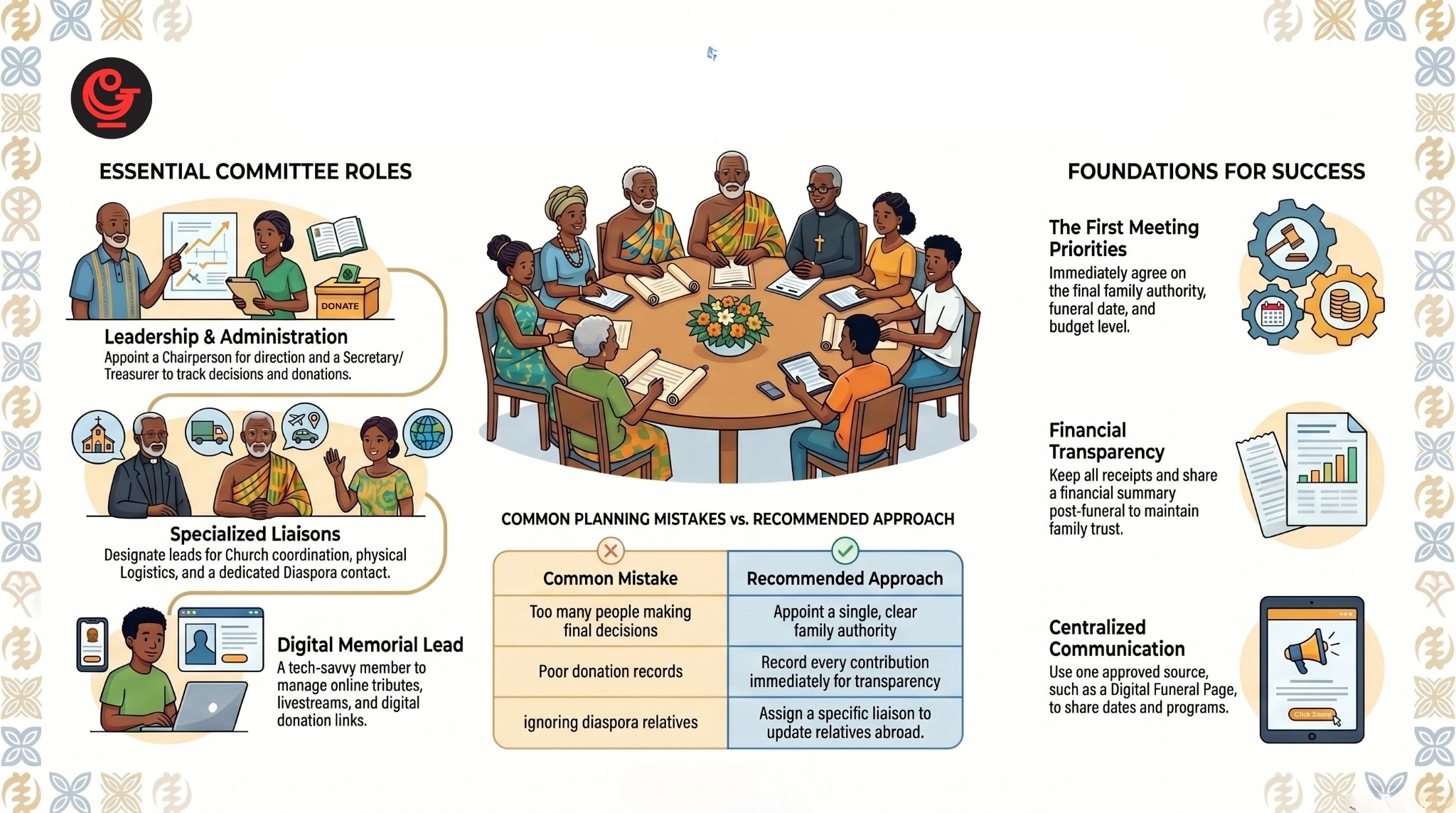
A funeral committee should be small enough to work well, but wide enough to represent the key people involved. In Ghana, this often includes family elders, close relatives, church representatives, and people with practical skills.
Suggested Funeral Committee Structure
Role | Main Responsibility | Ghana-Specific Example |
Committee Chairperson | Leads meetings and keeps decisions moving. | A respected uncle, auntie, sibling, or senior family member. |
Chief Mourner / Family Representative | Represents the closest family and approves sensitive decisions. | Spouse, eldest child, sibling, or appointed family head. |
Secretary | Records minutes, decisions, names, tasks, and deadlines. | A younger relative comfortable with writing and WhatsApp updates. |
Treasurer | Tracks income, donations, expenses, and balances. | A trusted person with financial discipline. |
Church / Religious Liaison | Coordinates with the church, pastor, choir, ushers, and the thanksgiving service. | A church elder, deacon, or active family member. |
Programme & Announcement Lead | Handles funeral announcements, brochures, order of service, and appreciation messages. | A designer, printer, or digitally skilled relative. |
Logistics Lead | Manages venue, canopies, chairs, transport, hearse, food, and sound. | A practical person based near the funeral location. |
Diaspora Liaison | Updates relatives abroad and helps them contribute or participate. | A relative in the UK, US, Canada, Germany, or the Netherlands. |
Digital Memorial Lead | Manages online tributes, photos, livestream link, donation link, and funeral page. | A younger family member or trusted friend. |
This structure can be adjusted. A small family may combine roles. A large family may create sub-committees.
First Meeting: What the Committee Should Decide
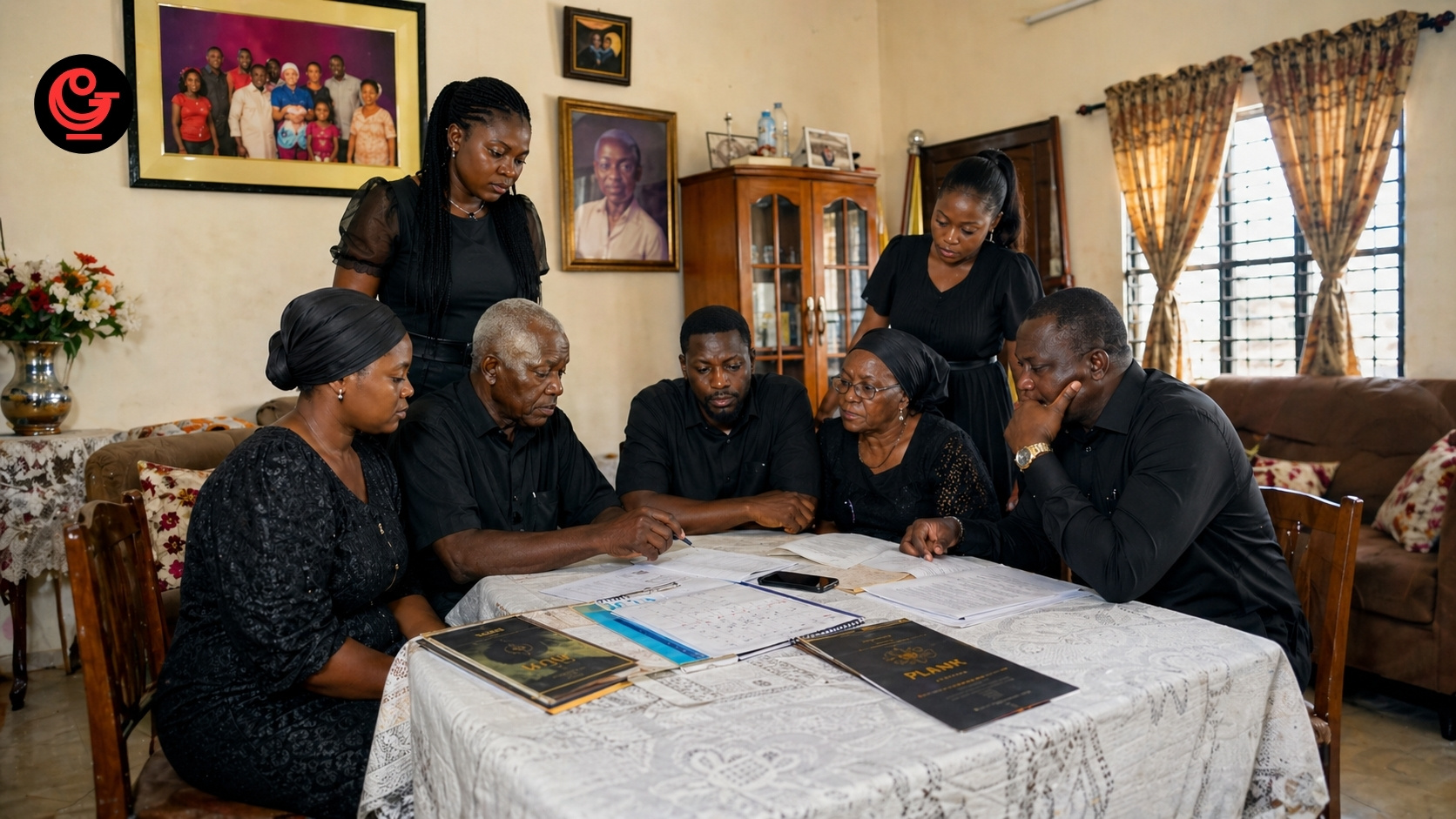
The first meeting is important because it sets the tone. It should be calm, respectful, and focused.
The committee should agree on:
Who has final family authority?
This prevents confusion when sensitive decisions come up.The proposed funeral date and location
This may depend on family tradition, church availability, cemetery arrangements, and diaspora travel.The budget level
The family should agree on whether the funeral will be modest, medium, or elaborate.The communication channel
A WhatsApp group can help, but important decisions should still be recorded properly.The donation process
Families should decide how contributions will be received, recorded, acknowledged, and reported.The main planning calendar
This should include the one-week observance, funeral day, burial, thanksgiving service, and possible one-year memorial.
In addition, families should confirm official documentation early. For example, death registration and related records should be handled through the appropriate official channels, such as the Births and Deaths Registry in Ghana.
How to Manage Money Transparently
Money can create tension during funeral planning. Therefore, the treasurer’s role must be handled with care.
A simple system should include:
Financial Practice | Why It Helps |
Open a clear record of all contributions | Everyone can see what has been received |
Record donor name, amount, date, and purpose | Reduces confusion and supports appreciation messages |
Approve major expenses before payment | Prevents overspending |
Keep receipts and invoices | Makes reporting easier |
Share a summary after the funeral | Builds trust within the family |
For diaspora relatives, digital payment options can make contributions easier. Ghana Memorial Products’ Donation Link can also connect funeral support to the memorial, condolence book, and funeral page, giving families one clearer way to organise support.
Communication: Keep Everyone Informed
Many funeral disagreements begin with poor communication. Some relatives may feel left out. Others may receive wrong dates or incomplete details.
The committee should create one approved communication source. This can include:
A WhatsApp announcement group.
A funeral page with the date, venue, dress code, map, and programme.
A digital funeral announcement.
A clear contact person for questions.
A regular update for diaspora relatives.
Ghana Memorial Products’ Funeral Programme page is useful here because it helps families capture funeral details and share them in a structured way.
Digital Tools Can Support the Committee
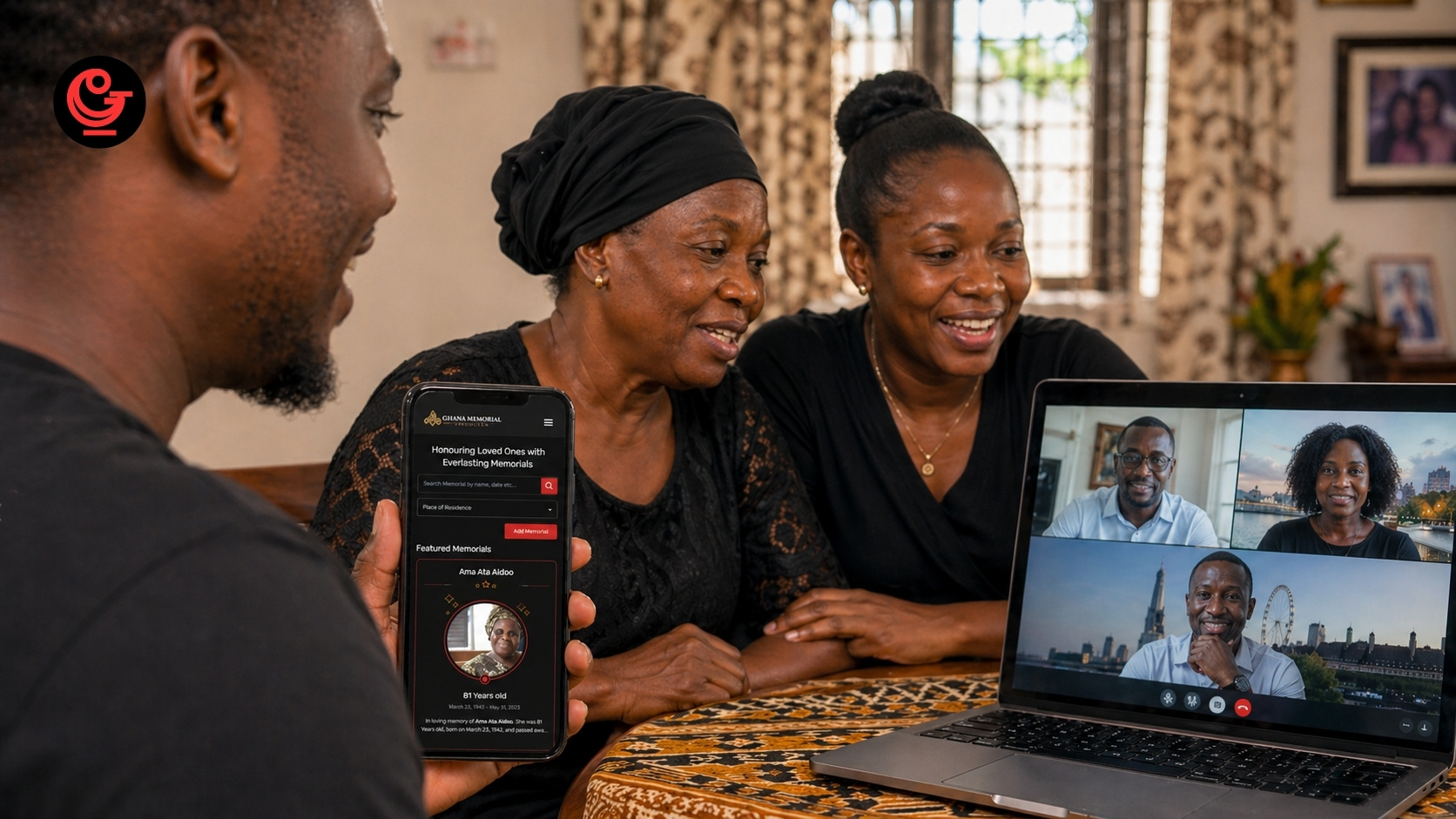
Today, a funeral committee does not need to rely only on phone calls, printed posters, and repeated WhatsApp messages. Digital tools can help reduce pressure.
For example, the committee can use Ghana Memorial Products to:
Share funeral information through one funeral page.
Collect tributes through an Online Condolence Book.
Add a Donation Link for transparent support.
Upload photos, stories, and videos into a lasting memorial.
Add livestream details for relatives who cannot attend.
Keep memories available after the funeral is over.
Common Mistakes to Avoid
A funeral committee should also avoid common planning problems.
Mistake | Better Approach |
Too many people making final decisions | Appoint clear family authority |
No written budget | Use a budget tracker from the beginning |
Poor donation records | Record every contribution immediately |
Late church coordination | Speak to the church early |
Confusing announcements | Use one approved funeral announcement |
Ignoring diaspora relatives | Assign a diaspora liaison |
Waiting too long to collect photos and tributes | Start early with a digital condolence book |
Order Brings Peace
Setting up a funeral planning committee is one of the most helpful steps a Ghanaian family can take after the one-week observance or even earlier. It gives people clear roles. It protects the family from confusion. It also helps elders, children, church members, and diaspora relatives work together with respect.
A good committee does not make the funeral less personal. It makes the process lighter for the grieving family.
When responsibilities are shared well, the family can focus on what matters most: honouring a life, comforting one another, and preserving the memory beyond the funeral day.
For more step-by-step support, families can continue with the Ghana Memorial Products Funeral Planner Guide.
Related Articles
Planning a wake-keeping in Ghana
Browse the post to know more and explore detailed insights on this topic.
Read MoreBridging tradition and technology: The online condolence book for Ghanaians at home and abroad
Browse the post to know more and explore detailed insights on this topic.
Read More