

Planning a wake-keeping in Ghana
April 23rd 2026, 12:00 am
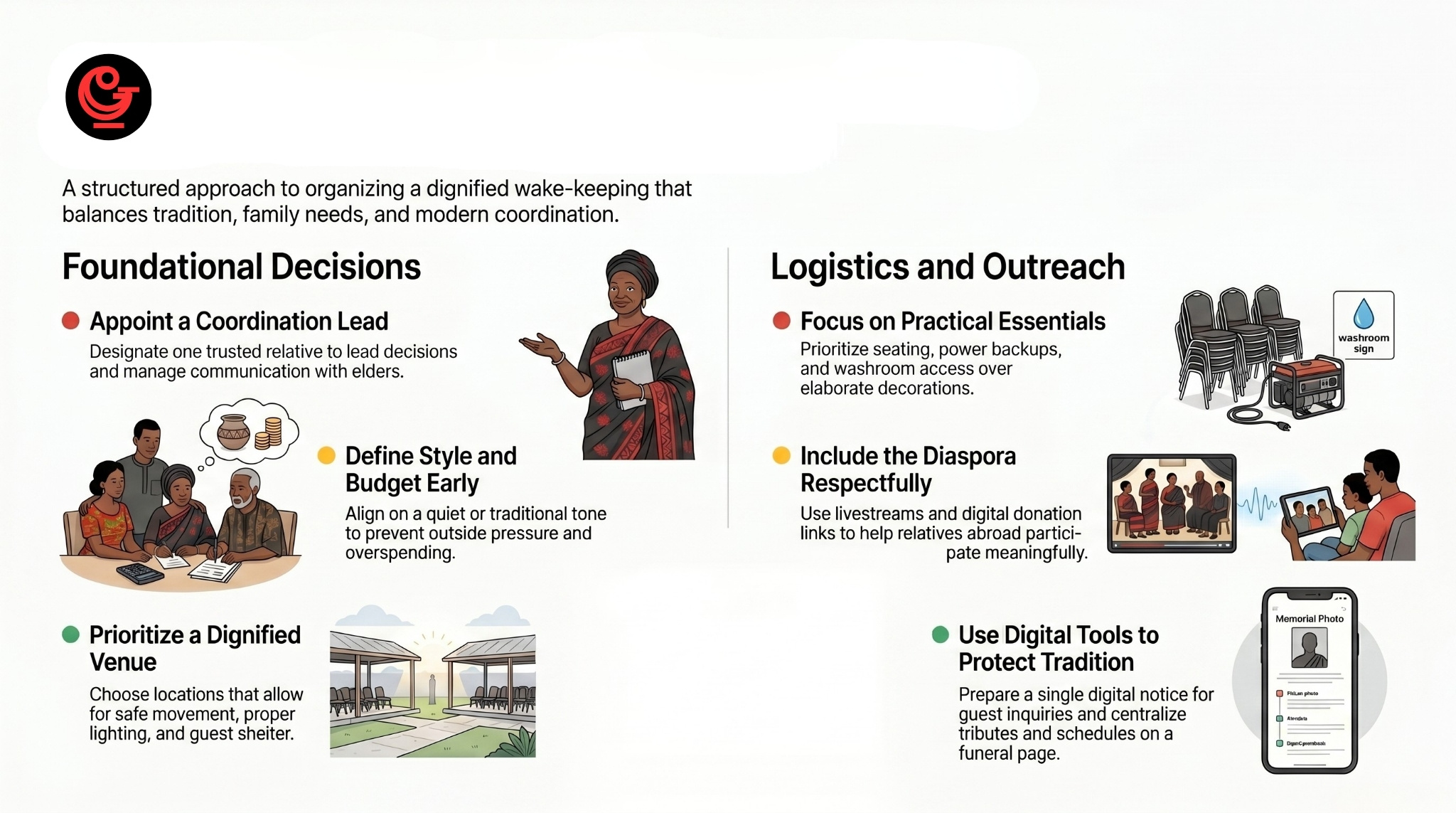
A wake-keeping is one of the most sensitive moments in funeral preparation. It is the time when family, friends, neighbours, church members, and community leaders gather to sit with grief, show support, and prepare for the final farewell. In Ghana, this gathering is not only practical. It is deeply cultural. When handled well, it brings calm, dignity, and unity at a difficult time.
For many families today, however, planning a wake-keeping can feel heavy. There are visitors to receive, chairs and canopies to arrange, food to think about, announcements to share, and relatives at home and abroad to keep informed. This is why respectful planning matters. It helps the family protect the dignity of the deceased while reducing confusion for everyone involved. That practical and respectful support fits Ghana Memorial’s wider purpose of making funerals smoother, easier, and less expensive while preserving remembrance in a lasting way.
What a Wake-Keeping Means in Ghana
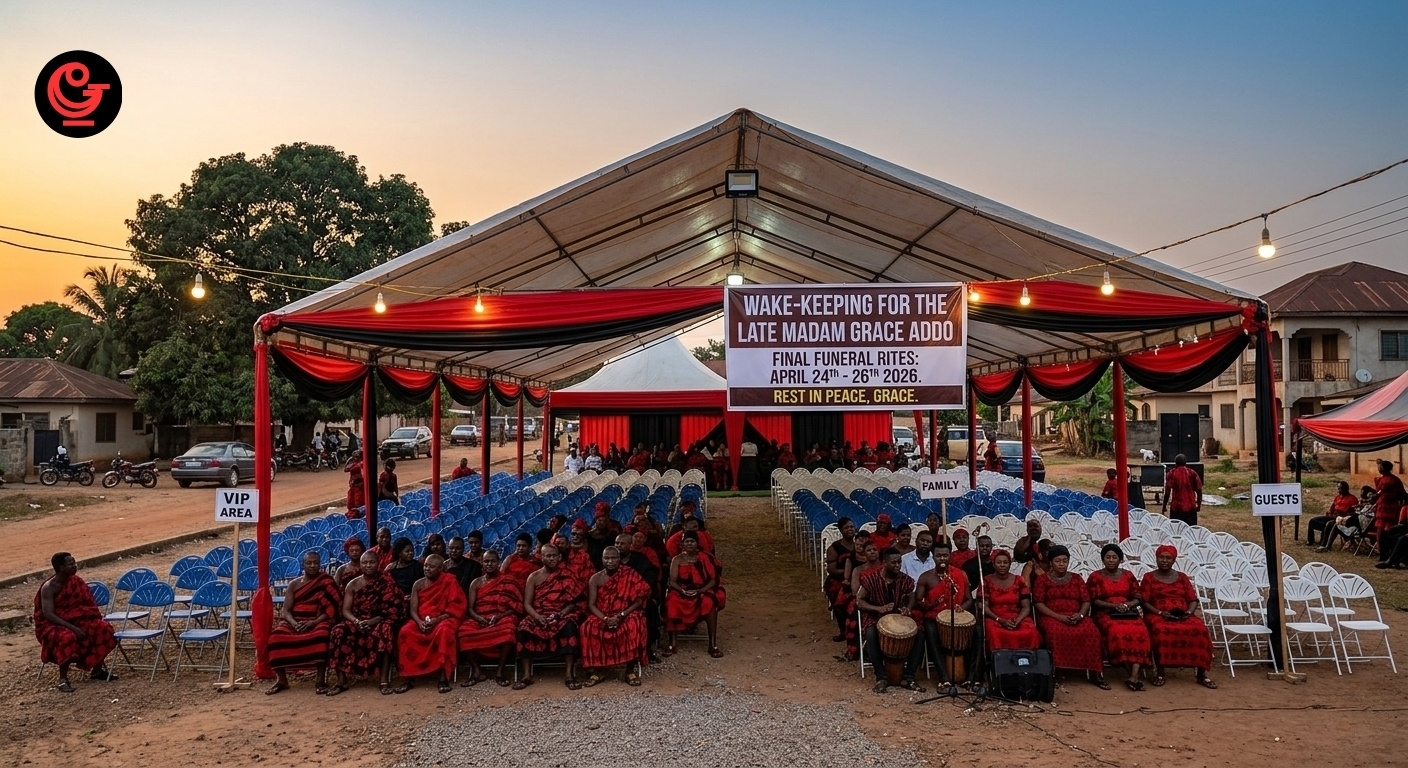
In Ghana, a wake-keeping is usually held in the evening before the burial or the main funeral rites. In some communities, it is quiet and prayerful. In others, it may include singing, scripture reading, traditional music, family greetings, and the steady arrival of mourners through the night.
The exact form varies by region, ethnicity, denomination, and family preference. An Akan family in Kumasi may organise the evening differently from a Ga family in Accra or an Ewe family in Ho. A Catholic wake may feel different from a Pentecostal or Methodist one. Yet the core purpose is shared: to honour the deceased respectfully and allow people to gather in solidarity with the family.
This is also why families should not treat the wake as only a social event. It is a moment of mourning, reflection, and order. Respectful planning helps people know where to sit, how to participate, when prayers or songs begin, and how to support the family without adding pressure.
Why Wake-Keeping Planning Can Become Difficult
Many Ghanaian families already know the pattern. Once news spreads, people begin calling, visiting, and asking questions. Who is in charge? Where will the wake be held? Will there be a printed programme? Is there a dress code? Will there be an online stream for relatives abroad? Who is handling donations? Who is coordinating the church or the elders?
Without clear planning, the family may face avoidable stress, such as:
Too many last-minute decisions
Mixed messages about time and venue
Confusion over family roles
Overcrowding or poor seating arrangement
Avoidable spending on urgent fixes
Difficulty informing relatives abroad
Tension between tradition, church expectations, and budget
A respectful wake-keeping does not have to be expensive. But it does need structure.
Start With Family, Elders, and Key Decision-Makers
Before any public communication goes out, the family should first agree on a few key matters. In Ghana, this is especially important because funerals often involve both the nuclear family and the wider family line. Elders, church leaders, and principal mourners may all have a role.
Start by deciding:
Who is leading coordination?
This may be the chief mourner, a senior child, an uncle, an aunt, or another trusted relative.What style of wake is appropriate?
Quiet and prayerful, traditional, church-led, or a blend.Where will it be held?
At home, at a family house, at a church premises, or at a funeral venue.What time should guests arrive?
Clarity matters, especially for people travelling from another town.What level of spending is realistic?
The family should agree early to avoid pressure from outside expectations.
When these decisions are made together, there is less room for misunderstanding later.
Choose a Venue That Supports Dignity
The venue shapes the entire tone of the evening. In Ghana, many wake-keepings are held at the family house or close to the deceased’s home area. That often feels personal and culturally fitting. However, where space is limited, a church compound or hired venue may be more suitable.
A respectful venue should allow for:
Safe movement of guests
Enough seating for elders and close family
A quiet area for prayers or reflection
Proper lighting
Access to washrooms
Clear entry and exit points
Shelter if the weather changes
In Accra, for example, a family in a busy compound house may decide to use a nearby church forecourt rather than crowd a narrow lane with chairs and canopies. In Kumasi, a family home with enough compound space may be the better choice because it feels closer to home and tradition.
Plan the Essentials, Not Just the Appearance
Some families spend too much time on decoration and too little on the practical details that guests will actually experience. Respectful planning means giving attention to the basics first.
Core items to organise
Chairs and tenting or canopy
Lighting and power backup
Sound system, if needed
Table for family greetings or condolence book
Water and simple refreshments
Washroom access and cleaning
Parking or traffic guidance
Security or trusted ushers
A place for clergy, elders, or family heads
A simple, orderly wake is often more dignified than an elaborate but disorganised one.
Communicate Clearly With Guests
This is where many problems begin. If guests do not know the correct time, venue, dress expectations, or funeral sequence, they will keep calling the family. That increases stress at the worst possible time.
A clear funeral page or digital announcement can help the family share:
Wake-keeping date and time
Location details
Funeral and burial schedule
Dress guidance, if relevant
Livestream details for relatives abroad
Family contacts or official spokesperson
Donation information, if the family chooses to receive support digitally
This type of structured communication reflects one of Ghana Memorial’s key strengths: giving families a single place to share funeral information, tributes, livestream access, donation links, and family roles in a way that is dignified and easy to update. It also helps diaspora relatives stay connected and participate meaningfully.
Include the Diaspora Respectfully
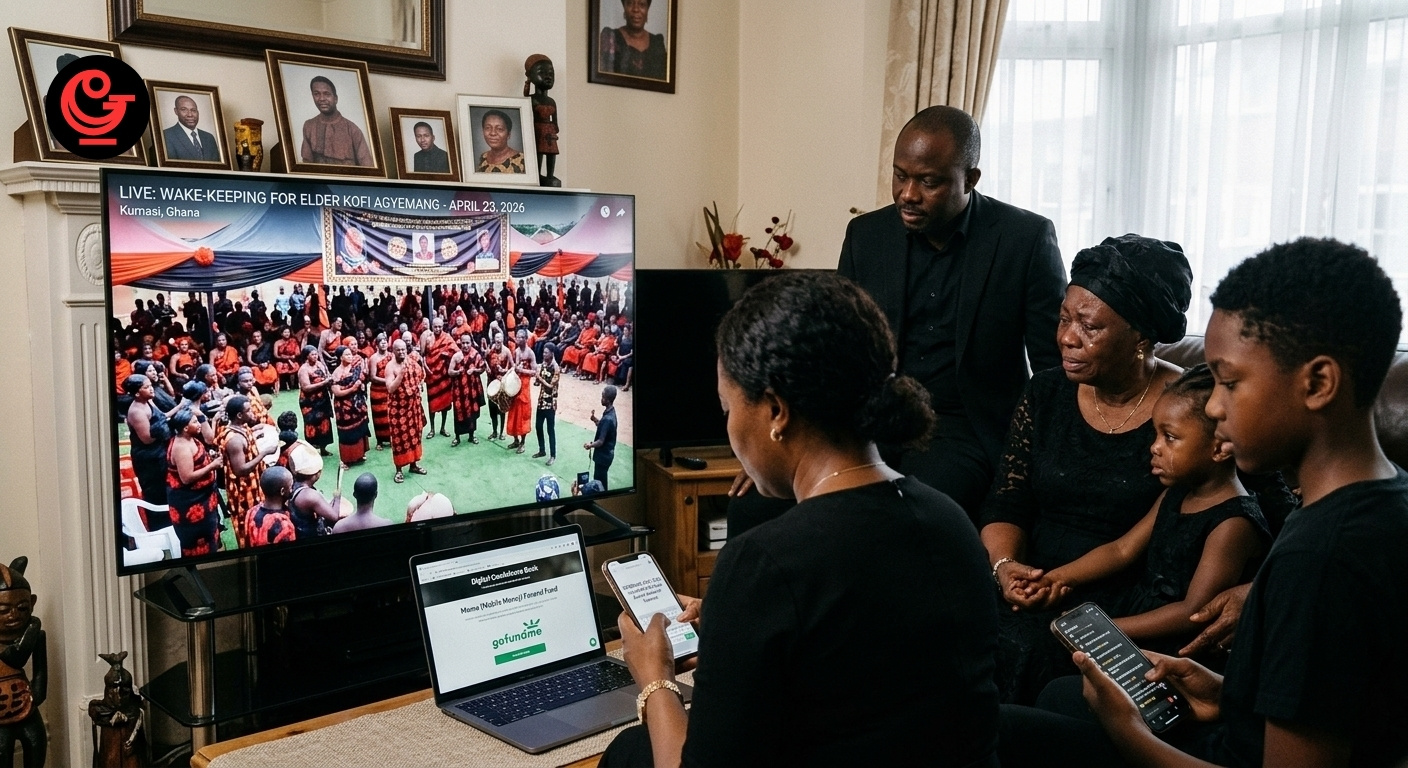
Many Ghanaian funerals now involve children, siblings, cousins, and friends living in the UK, the Netherlands, Germany, Canada, or the United States. They may not arrive in time for every stage, but they still want to be present, informed, and useful.
For wake-keeping planning, families can involve the diaspora by:
Sharing the official funeral page early
Assigning one contact person for updates
Using a livestream link where suitable
Allowing tributes to be posted online
Sharing a verified digital donation option
Sending the correct location and sequence in one message
This reduces repeated questions and helps relatives abroad feel included rather than helpless.
Keep Food, Music, and Atmosphere Appropriate
In Ghana, hospitality matters. It is normal for mourners to be received with water and light refreshments, especially during long evening gatherings. But the level of food and entertainment should match the tone of the occasion.
A respectful wake-keeping usually works best when:
Refreshments are modest and organised
Music is appropriate to the faith and family preference
Announcements are calm and limited
The focus remains on mourning and support, not display
Families do not need to compete with other funerals. A wake is not measured by excess. It is remembered for order, dignity, and the way people were made to feel.
A Simple Checklist for the Family
Below is a practical guide families can use.
No. | Item | What to Confirm |
1 | Family Lead | Who is the main coordinator? |
2 | Venue | Is the space suitable and accessible? |
3 | Time | Have the start time and sequence been agreed? |
4 | Seating | Are elders, clergy, and close family catered for? |
5 | Communication | Is one clear funeral notice or page ready to share? |
6 | Visitors Abroad | Do diaspora relatives have livestream and updates? |
7 | Budget | Has the family agreed on a realistic spending limit? |
8 | Support Roles | Who handles ushers, refreshments, and guest flow? |
9 | Tone | Are music, prayers, and atmosphere appropriate? |
10 | Records | Is there a condolence book or digital tribute option? |
Where Digital Tools Can Help Without Replacing Tradition
Digital support should not replace Ghanaian funeral culture. It should support it. That is the turning point many families now appreciate. Tradition remains at the centre, but simple tools can remove stress.
For example, instead of answering the same venue question fifty times on WhatsApp, a family can share one funeral page. Instead of losing written condolences after the event, they can preserve tributes digitally. Instead of relying only on cash updates passed by word of mouth, they can use a clear donation link. Instead of excluding relatives abroad, they can include them with a livestream and a memorial page.
That is how technology meets tradition with respect. It does not reduce meaning. It protects it.
A Wake-Keeping That Brings Peace
A well-planned wake-keeping gives the family room to grieve properly. Guests know where to go. Elders are received well. Church members can follow the order. Diaspora relatives are not left out. The evening becomes calmer, more respectful, and more unified.
In the end, people may not remember every chair or every arrangement. But they will remember whether the family created a peaceful space to honour the deceased.
Because memories deserve more than paper, even the planning around farewell should be handled with care.
If your family is preparing for a funeral, use tools that help you organise information, include loved ones abroad, and preserve tributes respectfully. And for a wider step-by-step planning resource, please see the Funeral Planner Guide. This approach supports the practical and lasting funeral journey Ghana Memorial Products is designed to serve.
Related Articles
Managing funeral donations transparently in Ghana
Browse the post to know more and explore detailed insights on this topic.
Read MoreHow to plan and control a funeral budget
Browse the post to know more and explore detailed insights on this topic.
Read More