

Wills, Estate and Probate after death in Ghana: What families should know
March 11th 2026, 12:00 am
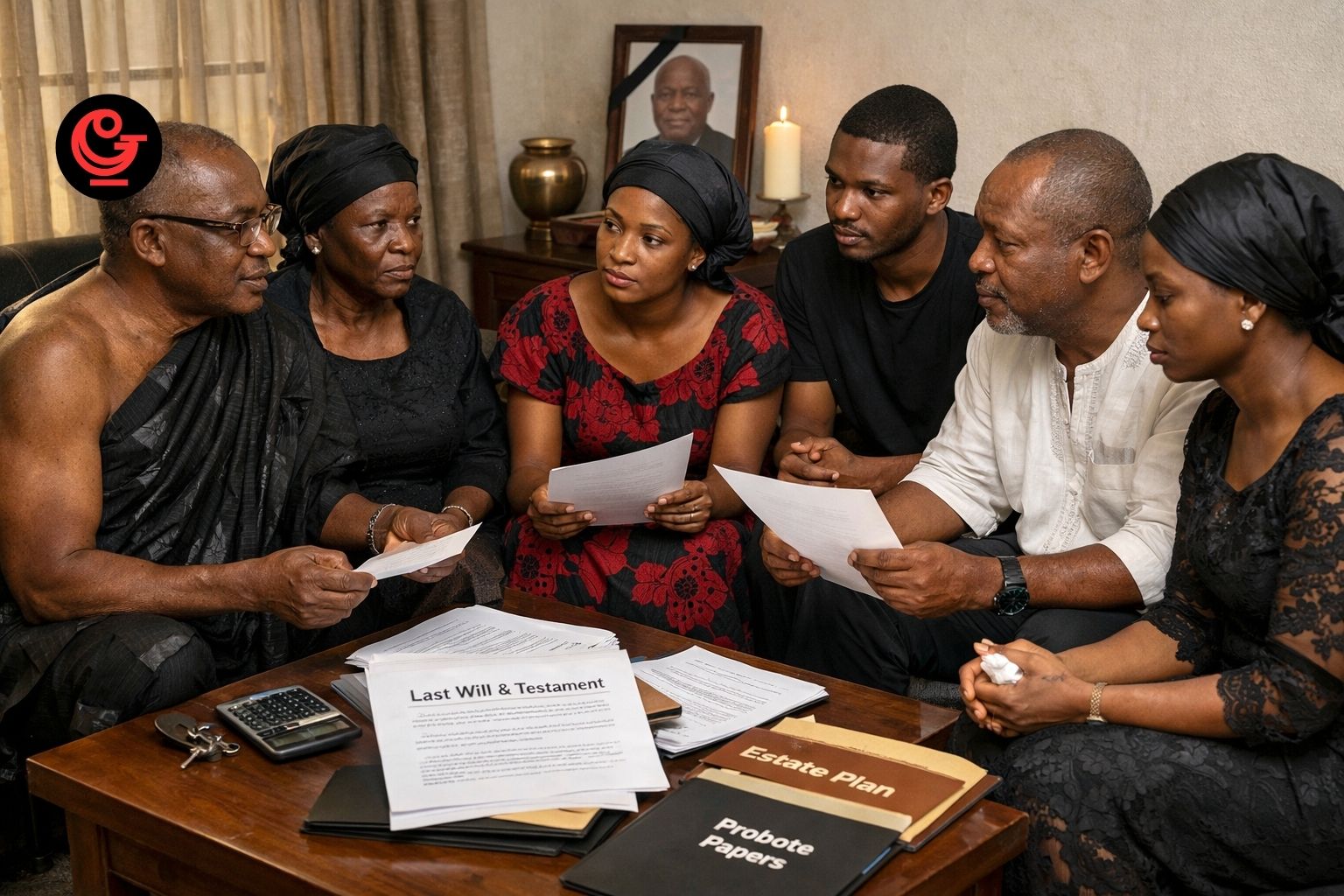
When a loved one dies, grief often comes together with urgent questions. Did they leave a will? Who can manage the estate? What happens to the house, bank accounts, or family property? In Ghana, these questions usually lead families into the area of wills, estate, and probate after death in Ghana.
This guide explains the basics in plain language. It is written for families in Ghana and for relatives abroad who may be helping from a distance. It is not a substitute for legal advice, especially where there is conflict, a large estate, or questions about family entitlement.
Why this topic matters in Ghana
In Ghana, funeral arrangements often move quickly. At the same time, estate matters may move slowly. That difference can create stress. A family may complete the burial and one-week observance, yet still face months of uncertainty about property, rent income, vehicles, pensions, or business assets.
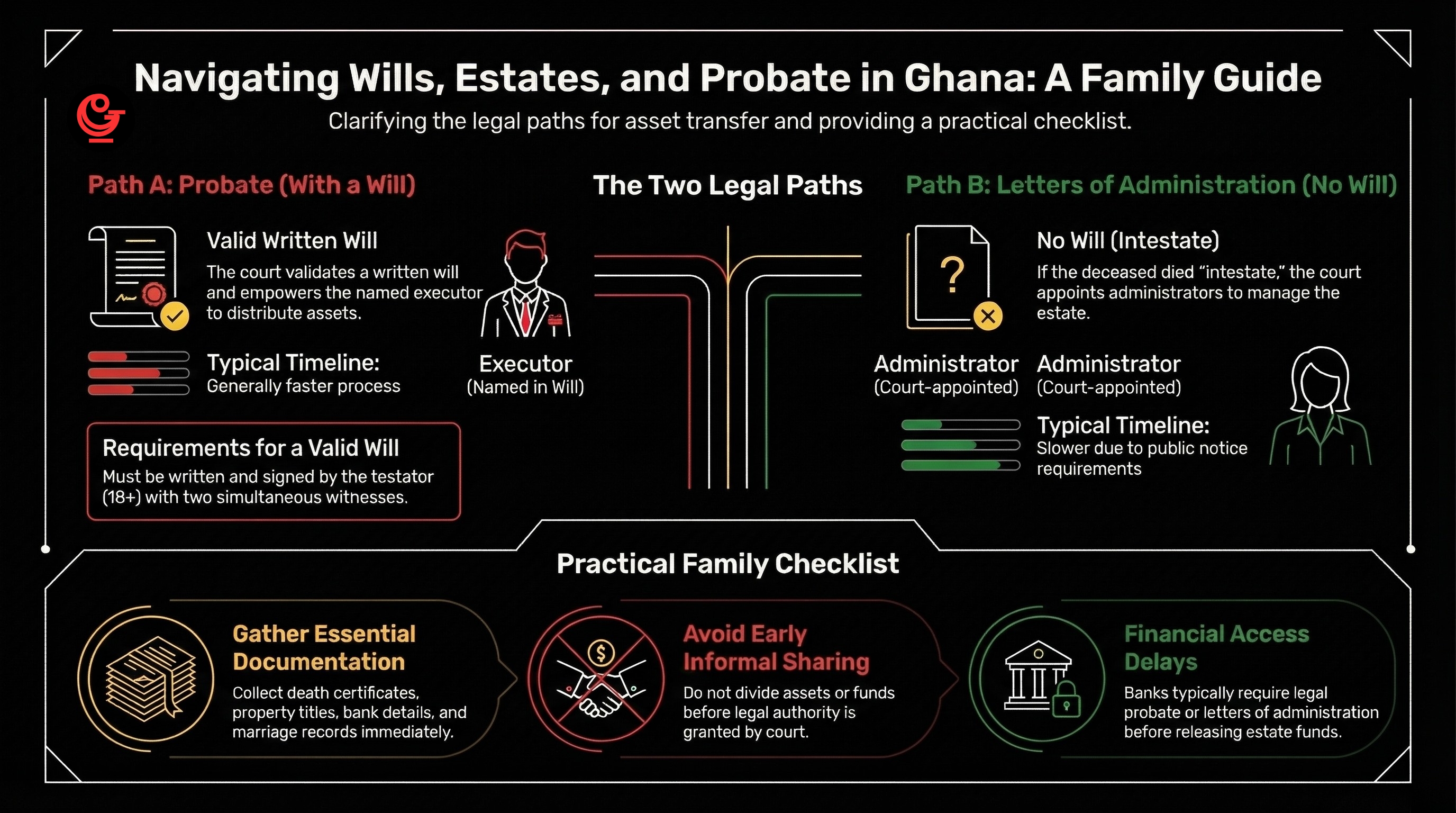
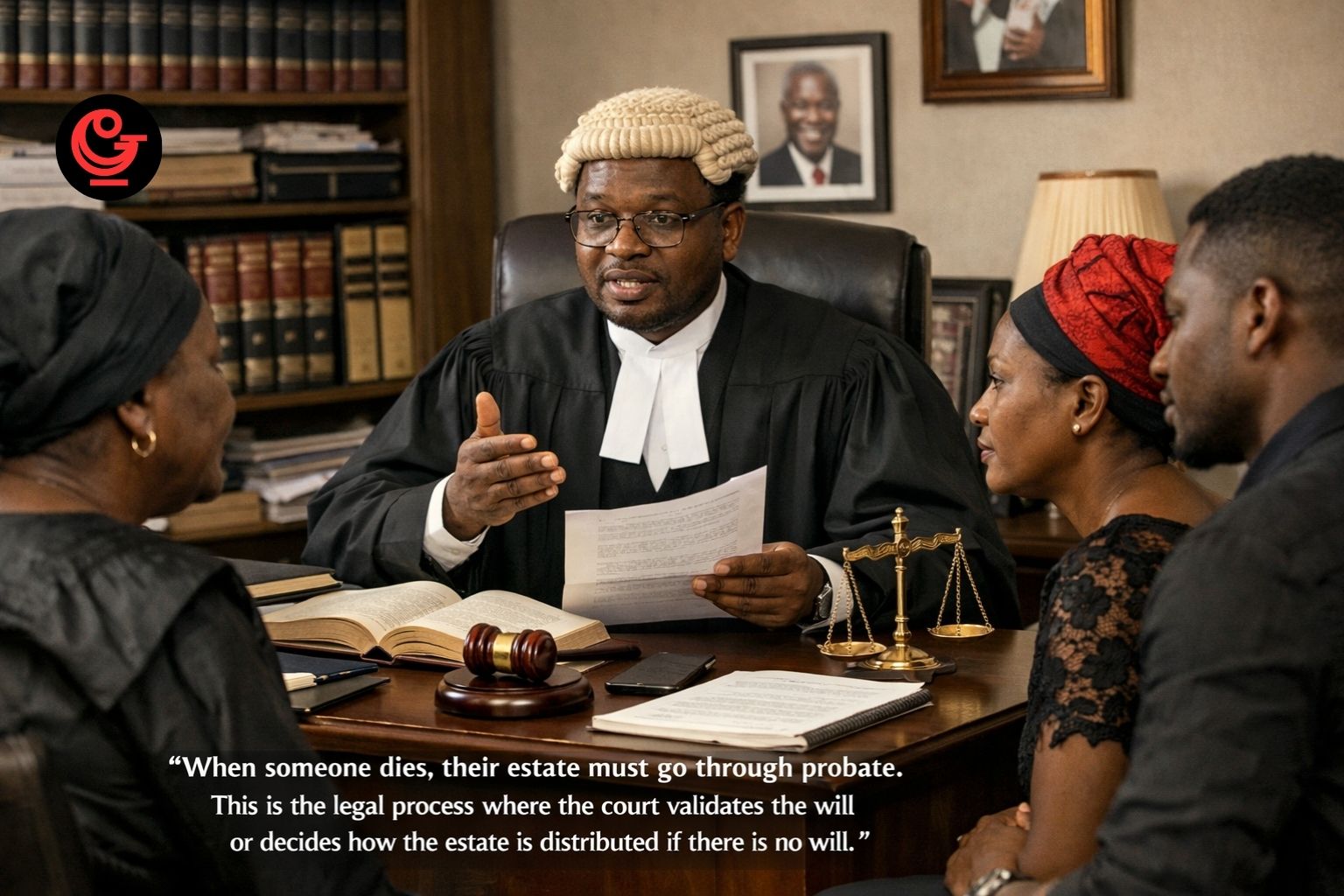
This is why families should understand the difference between a will, an estate, and probate. A will is the written instruction left by the deceased. The estate is the property, rights, and obligations left behind. Probate, or estate administration, is the legal process that allows the right people to manage and distribute the estate through the courts. In Ghana, the court checks whether a will was properly made, and where there is no will, the court may grant letters of administration to the proper applicants.
What counts as a valid will in Ghana?
Under Ghana’s Wills Act, a person aged 18 or above may make a will if they have the mental capacity to understand what they are doing. The will must be in writing and signed by the testator, and that signature must be made or acknowledged in the presence of at least two witnesses present at the same time. The witnesses must also sign in the presence of the testator. Where the testator is blind or illiterate, the law requires an explanation of the contents and a written declaration confirming that the contents were properly read and explained.
This is important in practice. For example, if a father in Kumasi writes down his wishes on paper but does not sign it properly in front of two witnesses, the court may refuse probate. Likewise, if a family later claims that the will was made under pressure or fraud, that can also affect validity.
What happens when there is a will?
If the deceased left a valid will, the usual court process is probate. The court examines the will to see whether it appears to have been properly signed and witnessed. If the will is duly executed, the court may grant probate, after which the executor can act on behalf of the estate.
In many Ghanaian families, the will may name an executor who is a spouse, child, sibling, trusted family friend, or lawyer. Once probate is granted, that executor is in the legal position to collect assets, settle debts, and distribute the estate according to the will.
What happens when there is no will?
If there is no will, the estate is treated as intestate. In that case, the family usually applies for letters of administration rather than probate.
This process often takes longer because public notice is usually required, and objections may be raised. For example, if a man dies in Accra without a will and two branches of the family disagree on who should administer his property, the court may have to decide who is entitled to the grant.
Under Ghana’s Intestate Succession Law, the spouse and children have legal rights in the estate. However, because family structures in Ghana can be complex, especially where there are customary marriages, multiple households, or family land issues, it is wise to get legal help early if there is any doubt.
Probate, letters of administration, and the courts
Families often ask where to go. In Ghana, probate and letters of administration matters are handled by the courts. The right court may depend on the type and value of the estate.
The court also keeps the original will once probate is processed. Certified copies may then be obtained when needed. This is one reason families should avoid relying only on verbal accounts of what the deceased wanted.
Common estate issues families face after death
1. Access to money is not immediate
Even where everyone agrees, banks and other institutions usually require proper legal authority before releasing estate funds. That means families may have funeral costs before they can access part of the estate.
2. Family property can create tension
A house in East Legon, a cocoa farm in Ashanti, or rental rooms in Kasoa may have emotional and financial value. When no will exists, disagreements can start quickly.
3. Diaspora families may struggle to coordinate
A daughter in London and a son in Accra may both want to help. But without the proper court process, neither can fully manage the estate.
4. Delay increases confusion
The longer documents, titles, and accounts remain unclear, the harder administration becomes. That is why early organisation matters.
A practical checklist for families
Confirm whether a will exists
Check with close relatives, the family lawyer, or whether the will was deposited in court.Gather key documents
Collect the death certificate, ID cards, property papers, bank details, marriage records, and children’s details.Identify the likely executor or administrators
Confirm who has legal standing to apply.List the estate clearly
Include the house, land, bank accounts, vehicles, business assets, pensions, and debts.Avoid informal sharing too early
Do not divide assets before legal authority is granted.Seek legal support where needed
This is especially important for disputes, land questions, or blended families.Keep the wider family informed
Clear communication reduces mistrust.
Where digital funeral planning can help
Legal matters continue after burial, but a good funeral organisation can reduce pressure in the early days. Ghana Memorial’s wider platform is built to make funerals smoother, easier, and less expensive while supporting lasting remembrance. Its practical tools help families centralise funeral information, coordinate relatives at home and abroad, and preserve key records in one respectful digital space. Families who want to prepare ahead can also explore the Ghana Online Will Maker, while using the Funeral Planner Guide to organise the practical steps after a loss.
For many families, the best approach is this: handle the funeral with dignity, keep documents organised from day one, and separate immediate funeral decisions from estate distribution decisions. That reduces mistakes and helps relatives stay aligned.
Wills, estate, and probate after death in Ghana can feel heavy, especially in the first weeks of loss. However, the basic question is simple: did the person leave a valid will or not? If yes, the family usually moves toward probate. If no, the family usually applies for letters of administration. In both situations, proper documentation, lawful process, and calm family communication matter greatly.
Because memories deserve more than paper, families should also plan the practical side of funeral organisation carefully. For that reason, always keep the Funeral Planner Guide close at hand as a helpful companion while managing the funeral and the many tasks that follow.
Related Articles
Choosing and using a mortuary in Ghana: A practical family guide
Browse the post to know more and explore detailed insights on this topic.
Read MoreCoffin and Casket Choices in Ghana Explained
Browse the post to know more and explore detailed insights on this topic.
Read More