

Choosing the funeral date and venues in Ghana
May 28th 2026, 12:00 am
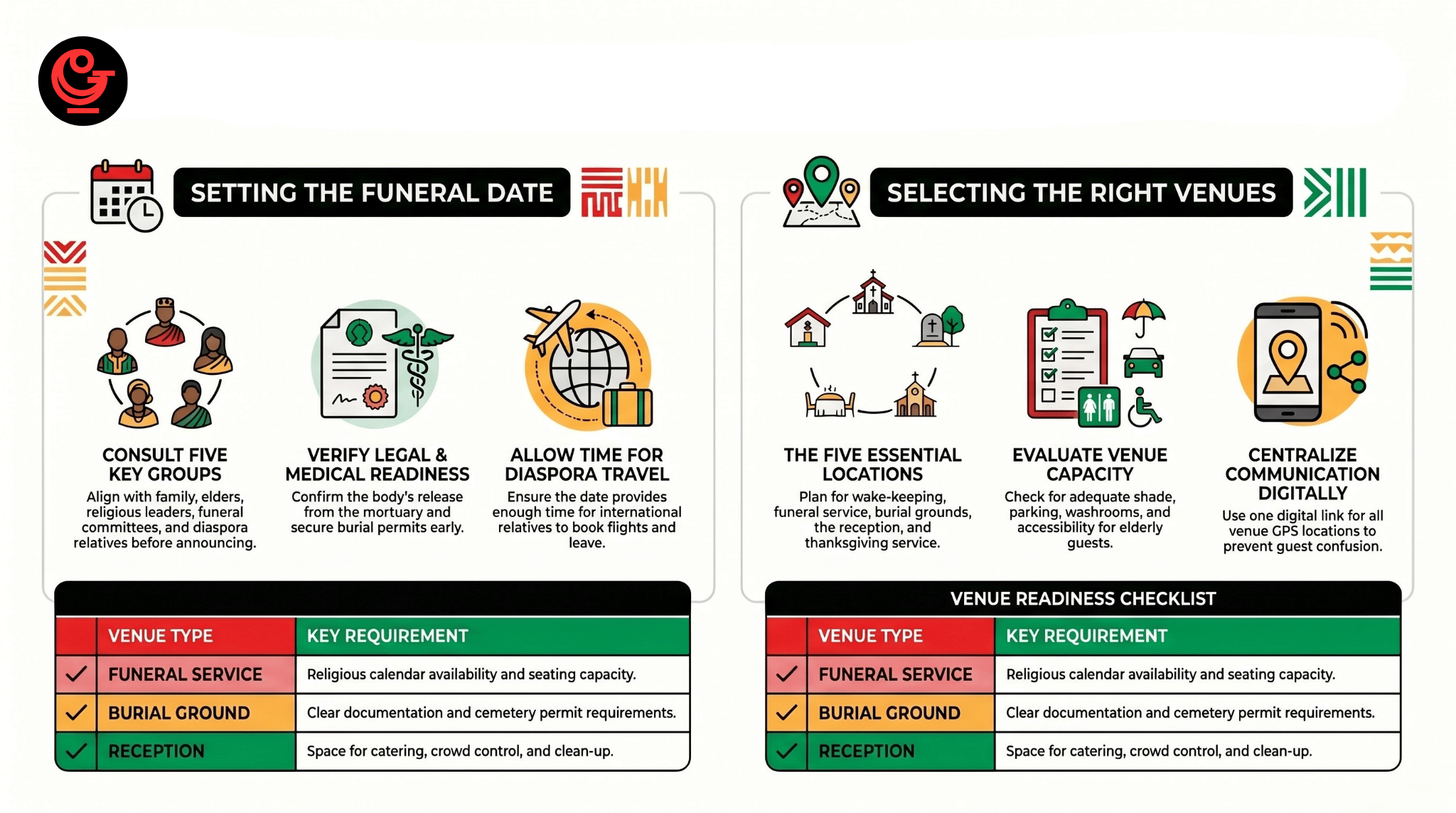
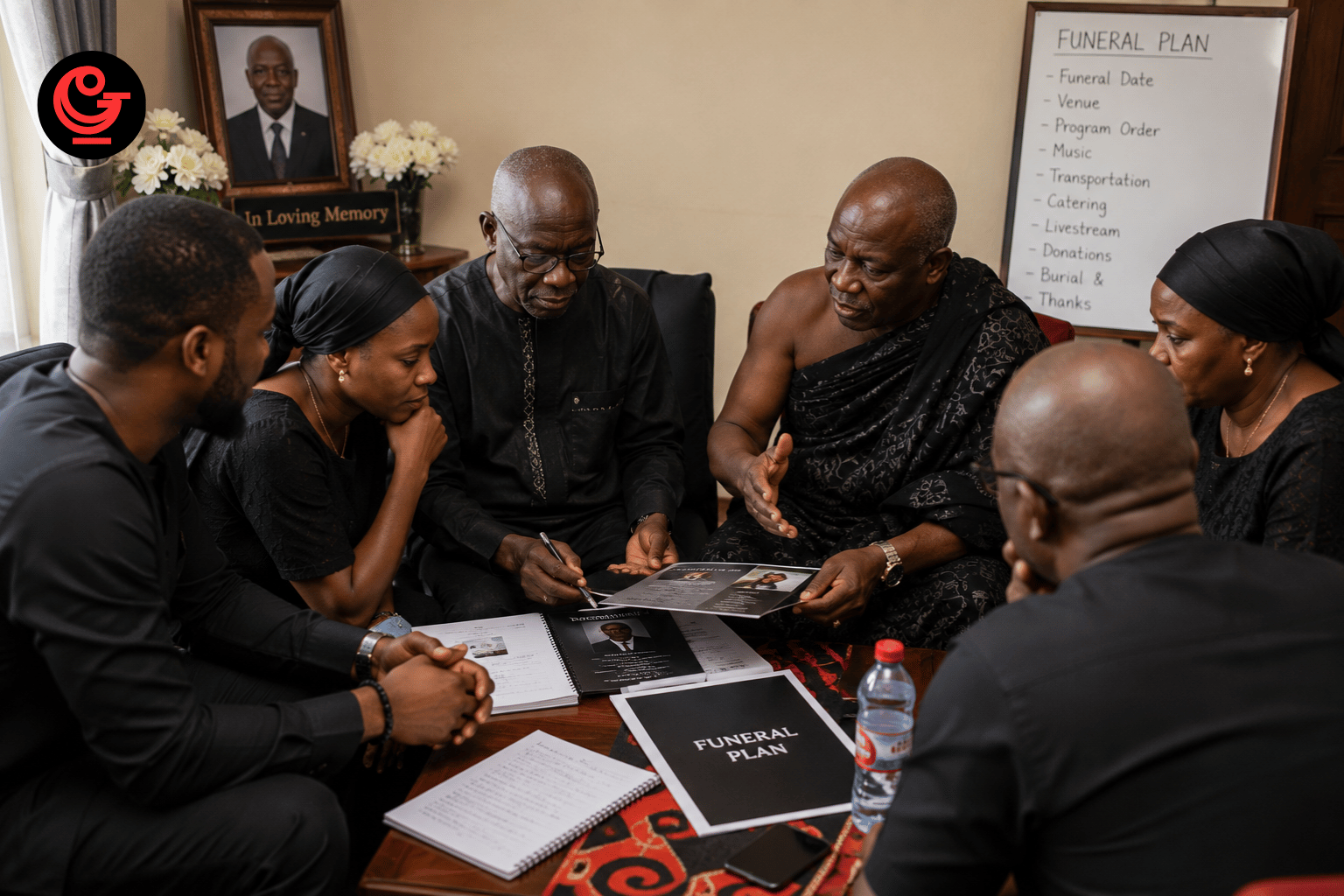
Choosing the funeral date and venues in Ghana is one of the first major decisions a bereaved family must make. After the one-week observance, relatives often gather with elders, church leaders, funeral committee members, and sometimes diaspora family members to agree on when and where the funeral should take place.
This decision may look simple from the outside. However, in many Ghanaian families, the funeral date affects travel, church availability, mortuary arrangements, burial permits, venue booking, printing, donations, and the full funeral budget. A good date brings order. A rushed date can create stress.
Why the Funeral Date Matters in Ghana
In Ghana, funerals are moments of unity, respect, culture, and public farewell. The chosen date must therefore work for the immediate family, extended family, church or mosque, traditional leaders, service providers, and guests.
For example, a family in Kumasi may need to choose a Saturday that allows relatives from Accra, Takoradi, London, Toronto, or Hamburg to attend. A family in the Volta Region may also need to consider hometown customs, church calendars, and whether the burial will happen in the family’s ancestral town.
The right funeral date helps the family:
Give relatives enough time to travel.
Complete death registration and burial-related documentation.
Confirm church, cemetery, and reception arrangements.
Print and share funeral announcements early.
Manage costs more calmly.
Avoid clashes with major community, church, or family events.
In addition, families should start burial documentation early. Death registration and burial-related paperwork can affect timing, so the family should confirm the required steps with the relevant local authority, cemetery, hospital, mortuary, or funeral service provider.
Key People to Consult Before Choosing the Date
Before the funeral date is announced publicly, the family should consult the right people. This prevents confusion later.
1. Immediate family
The spouse, children, siblings, and close relatives should first agree on a realistic period. Their availability matters because they carry most of the emotional and financial responsibility.
2. Chief mourner and family elders
In many Ghanaian communities, the chief mourner and elders help guide the process. They may advise on tradition, family expectations, hometown arrangements, and who must be formally informed.
3. Church, or religious leader
If the funeral includes a church service, burial service, thanksgiving service, or prayers, the family must check the religious calendar before confirming the date.
4. Funeral committee
The funeral committee helps check the practical side: budget, venue booking, canopies, chairs, sound system, ushers, food, transport, and guest management.
5. Diaspora family members
Diaspora relatives may need time to book flights, apply for leave, or send support. Even if they cannot travel, they may need time to contribute to the funeral programme, tribute, donation link, or livestream plan.
Practical Factors to Consider Before Fixing the Date
1. Mortuary and body preparation
The family should confirm with the mortuary whether the body can be released on the planned date. Embalming, dressing, viewing arrangements, and transportation must all fit the schedule.
2. Documentation and burial permit
No family should wait until the last week to handle documentation. Burial permits, death certificates, cemetery requirements, and assembly processes can delay burial if left late. Requirements can differ depending on the district, cemetery, and place of death, so the family should check early.
3. Family travel
If key relatives are coming from abroad or another region, the date should allow enough time for travel. A date that works for the hometown may not work for the children abroad, so communication is important.
4. Budget readiness
Some families choose a later date because they need time to raise funds. This is common and understandable. The goal is not to delay unnecessarily, but to avoid fixing a date that creates financial pressure.
5. Venue availability
In busy cities such as Accra, Kumasi, Tema, Cape Coast, and Takoradi, churches, event grounds, school parks, town halls, and reception venues may be booked early. Families should confirm availability before printing announcements.
Choosing the Right Funeral Venues
Most Ghanaian funerals involve more than one venue. A family may need a wake-keeping venue, a church or mosque venue, a burial ground, funeral grounds, a reception venue, and a thanksgiving service venue.
1. Wake-keeping venue
Wake-keeping may take place at the family house, a community park, a church premises, or a rented event space. When choosing the venue, consider noise levels, lighting, seating, parking, nearby homes, and security.
For example, a family in Dansoman may choose the family house if space allows. However, a family expecting a large crowd may need a school park or community centre.
2. Funeral service venue
The funeral service may happen in a church, mosque, chapel, family compound, cemetery chapel, or open funeral grounds. The venue should match the expected number of guests and the religious or cultural requirements.
Families should ask:
How many people can the venue hold?
Is there enough shade or canopy space?
Is there parking nearby?
Can the venue support sound, livestream, and photography?
Are there restrictions on time, music, decorations, or procession?
3. Burial venue
The burial venue may be a public cemetery, private cemetery, family land, or hometown burial ground. This decision should be handled carefully because it carries cultural, legal, and emotional meaning.
For many families, burial in the hometown connects the deceased to ancestry and family roots. For others, burial in Accra, Tema, or another city may be more practical because the immediate family lives there.
4. Reception venue
The reception venue is where guests may gather after the burial or service. It may be the same as the funeral grounds or a separate place. The family should consider seating, catering access, washrooms, crowd control, and clean-up.
5. Thanksgiving service venue
Many Christian families hold a thanksgiving service on Sunday after the funeral. This is usually held at the deceased’s church or the family’s church. It should be confirmed early so the funeral announcement, programme, and WhatsApp notices are accurate.
A Simple Date and Venue Planning Checklist
No. | Decision Area | Questions to Confirm |
1 | Funeral date | Does it work for immediate family, elders, church, and key travellers? |
2 | Wake-keeping venue | Is the space safe, respectful, and suitable for evening guests? |
3 | Funeral service venue | Is it available, accessible, and large enough? |
4 | Burial place | Are the documentation and cemetery requirements clear? |
5 | Reception venue | Can it handle food, chairs, parking, washrooms, and crowd movement? |
6 | Thanksgiving Venue | Has the church or religious body confirmed the date and time? |
7 | Digital Sharing | Has one clear funeral page or announcement link been created? |
How Ghana Memorial Products Helps Families Share the Details Clearly
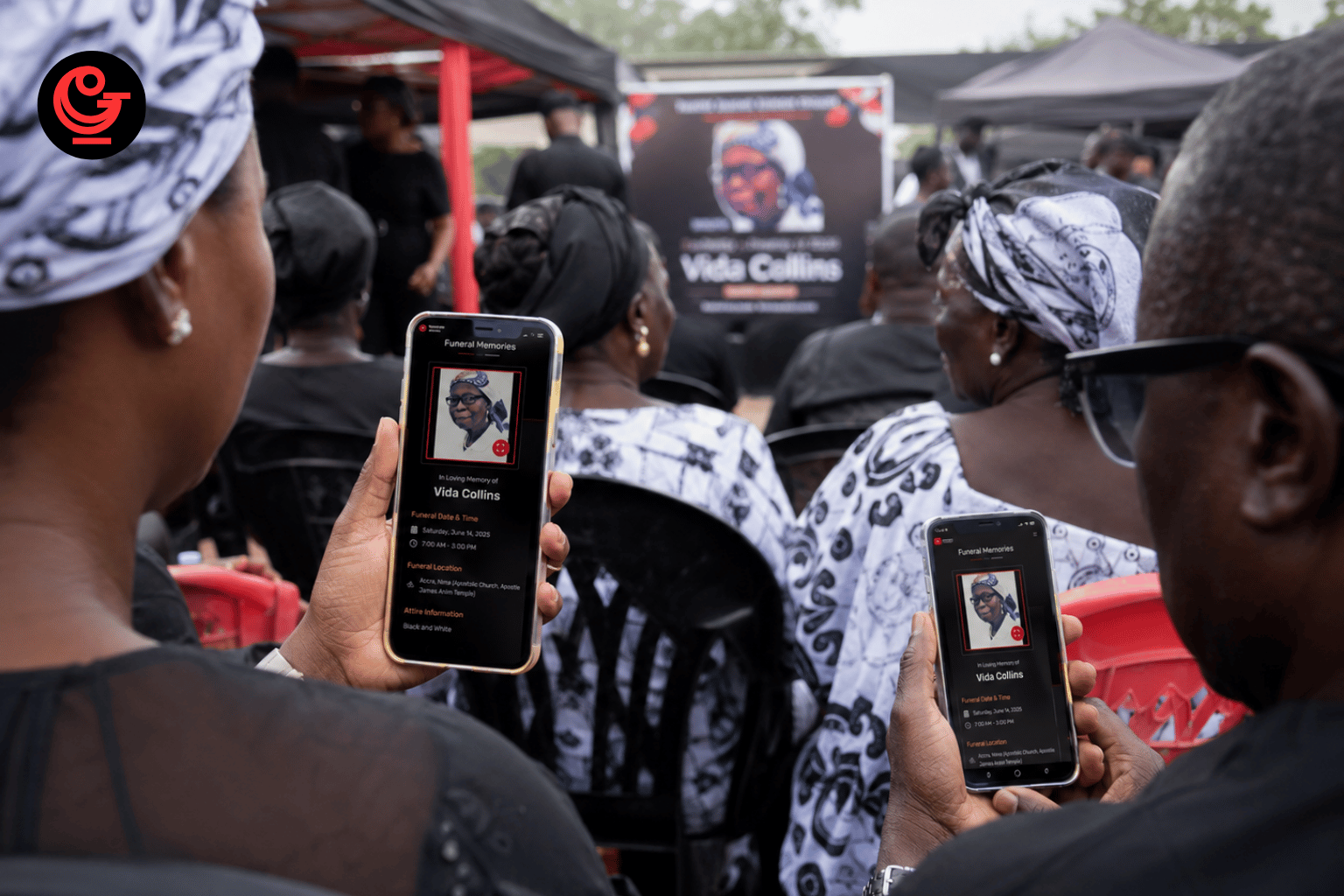
Once the date and venues are confirmed, the next challenge is communication. In Ghana, funeral details often spread through posters, WhatsApp messages, church announcements, radio mentions, and family calls. This can lead to mistakes when times, venues, or directions change.
Ghana Memorial Products helps families create one clear digital place for the funeral information. Through the Funeral Page and related tools, families can share:
Funeral date and time.
Wake-keeping details.
Church or mosque venue.
Burial location.
Reception venue.
Livestream link.
GPS grave or venue location, where relevant.
This is useful for relatives in Ghana and abroad. Instead of sending many different messages, the family can share one trusted link on WhatsApp, Facebook, SMS, or email.
Because memories deserve more than paper, the funeral details can also become part of a lasting digital memorial after the funeral.
Common Mistakes to Avoid
Printing announcements before venues are confirmed
This can lead to costly reprints.Choosing a date without checking church availability
Many churches have fixed calendars and other bookings.Forgetting diaspora travel time
Some relatives may need several weeks to arrange travel.Leaving burial permits and cemetery issues too late
Documentation can affect the burial schedule.Using many different WhatsApp messages
This confuses when details change.Choosing a venue without considering elderly guests
Seating, shade, toilets, and access matter.
Emotional Pay-Off: A Clear Date Brings Peace
A funeral date does more than organise a ceremony. It gives the family a path forward. It tells people when to gather, where to stand together, and how to honour the life that has ended.
When the date and venues are chosen carefully, the family can focus less on confusion and more on remembrance. They can welcome guests with dignity, guide diaspora relatives clearly, and preserve the funeral details as part of a lasting legacy.
Related Articles
Funeral day logistics explained for families in Ghana
Browse the post to know more and explore detailed insights on this topic.
Read MoreFuneral guest management in Ghana: Seating, protocol, and crowd control
Browse the post to know more and explore detailed insights on this topic.
Read More