

Condolence messages for a friend whose mother has died
September 1st 2026, 12:00 am
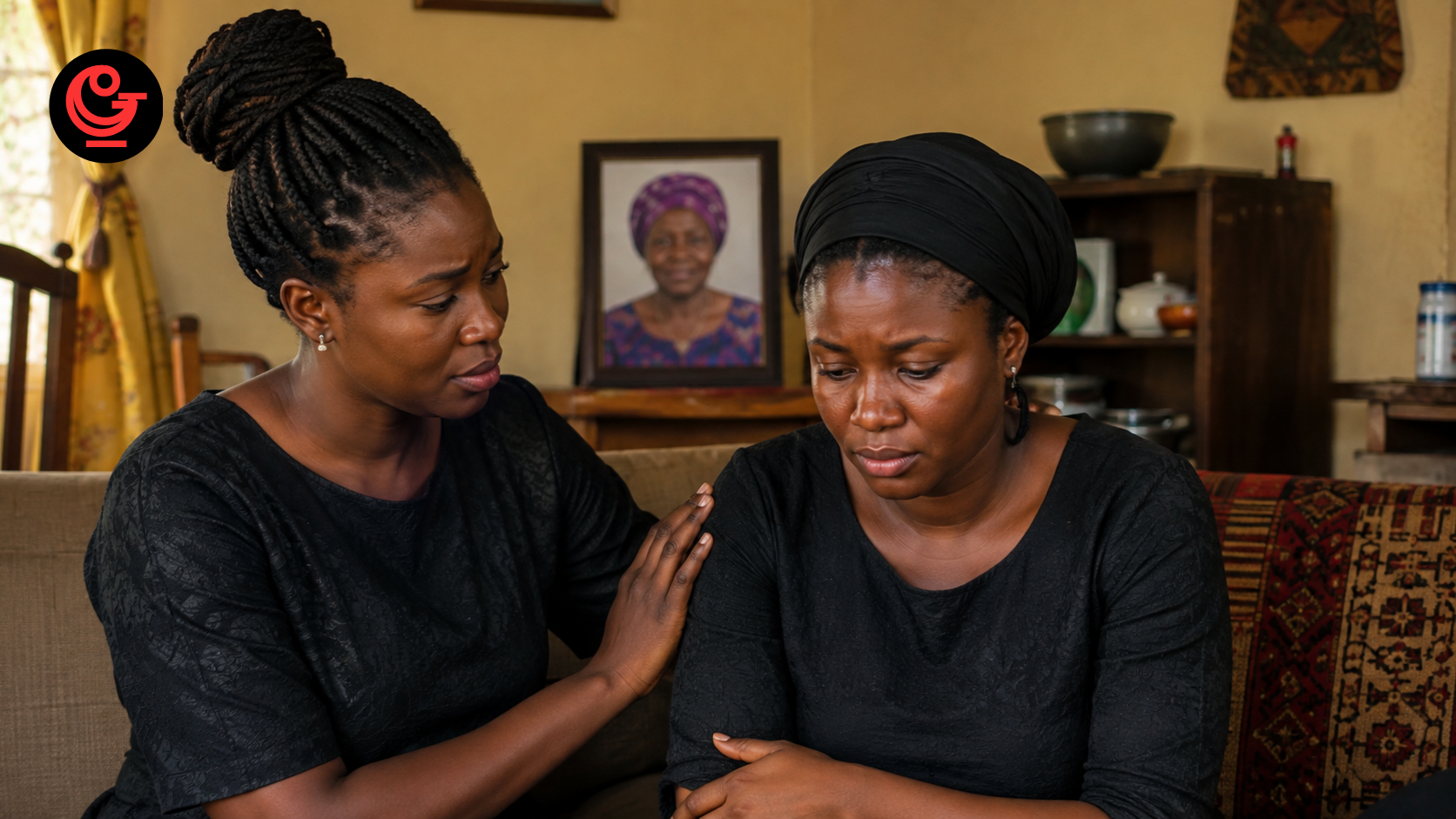
Your phone lights up with a message you wish your friend never had to send: “My mother has died.”
You want to respond immediately, but finding the right words can be difficult. A condolence message for a friend whose mother has died does not need to be long or beautifully written. It needs to be sincere.
The loss of a mother can be deeply painful at any age. In Ghana, where family connections and communal support are an important part of mourning, your words can be one small part of letting your friend know that they do not have to face the days ahead alone.
Why your condolence message matters
There is no message that can remove grief.
That is not what a condolence message is supposed to do.
Your role is simply to acknowledge what has happened, recognise the importance of the person who has died and let your friend know that you care.
The grief of losing a mother remains profound, regardless of the age at which it is experienced.
Therefore, do not worry too much about finding the “perfect” words. A simple and sincere message is usually better than a long message filled with explanations.
Something as straightforward as “I am so sorry about your mum. I am thinking of you and your family” can mean a great deal.
What to say to a friend whose mother has died
The relationship you have with your friend should guide your message. A close childhood friend may receive something very personal, while a colleague or more distant friend may appreciate a shorter message.
Here are examples you can adapt:
Simple and sincere: “I am so sorry for the loss of your mother. My thoughts are with you and your family during this difficult time.”
Warm and personal: “I was very sorry to hear about your mum. She was always so welcoming whenever I saw her. I will remember her kindness.”
A short WhatsApp message: “I am so sorry about your mum. Sending you and the whole family my condolences and strength.”
When you want to offer support: “I am very sorry for your loss. Please do not worry about replying. I am here, and I will check on you in the coming days.”
When you knew the mother well: “Your mum was a wonderful woman, and I feel fortunate to have known her. I will always remember the warmth she showed me.”
When you have a particular memory: “I will always remember your mother’s smile and the way she made everyone feel welcome. I am so sorry for your loss.”
For a Christian friend: “I am deeply sorry for the loss of your mother. May God comfort you and your family and give you strength during this difficult time.”
For a Muslim friend: “I am very sorry for your loss. May Allah have mercy on your mother, grant her Jannah and give your family strength and comfort.”
When the death was sudden: “I was shocked and deeply saddened to hear about your mum. I cannot imagine how difficult these days must be. I am here for you.”
After attending the funeral: “It was an honour to join your family in saying goodbye to your mother. I am continuing to keep you in my thoughts.”
How to make your message more personal
A good message of condolence often becomes more meaningful when it contains something specific.
If you knew your friend's mother, use her name. Mention a quality you remember about her or a small memory you shared.
For example, instead of only writing, “Sorry for your loss,” you might say:
“I am so sorry about Auntie Ama. I will always remember how warmly she welcomed us whenever we came to your house.”
A single genuine memory can mean more than several paragraphs of general sympathy.
However, do not invent a personal connection if you did not know the deceased. In that situation, focus on your friend.
You can say that you know how much their mother meant to them without pretending that you knew her yourself.
What should you avoid saying?
Good intentions can sometimes lead to words that are difficult for someone who is grieving.
Try not to tell your friend to “be strong.” They may already feel pressure to remain strong for siblings, children or other relatives.
Similarly, phrases such as “everything happens for a reason,” “it was God's plan,” or “at least she lived a long life” may not bring comfort. Even when someone is elderly, losing a mother can still hurt deeply.
It is also better not to say “I know exactly how you feel.” Even if you have also lost a parent, every relationship and every experience of grief is different.
Instead, keep the focus on your friend.
You can simply say: “I am sorry. I am here.”
In Ghana, support often goes beyond the first message
A condolence message is important, but support does not necessarily end after pressing “send”.
In Ghanaian funeral culture, family, friends, neighbours, colleagues, church members and community groups often come together around the bereaved family. Showing up can therefore be as meaningful as writing.
You might call your friend, visit the family house when appropriate, attend the one-week observance or funeral, contribute towards arrangements, bring food or help with a practical task.
Be specific where possible.
Instead of saying, “Let me know if you need anything,” consider saying, “I can drive you to the family meeting on Thursday,” or “I can bring some food for the house tomorrow.”
Grief can make even ordinary decisions tiring. A clear offer is easier to accept.
And remember to check in after the funeral.
Support is often strongest immediately after a death. However, grief continues when the chairs have been packed away, and other people have returned to their normal routines.
A message several weeks later saying, “I was thinking about you today. How are you doing?” can therefore be especially meaningful.
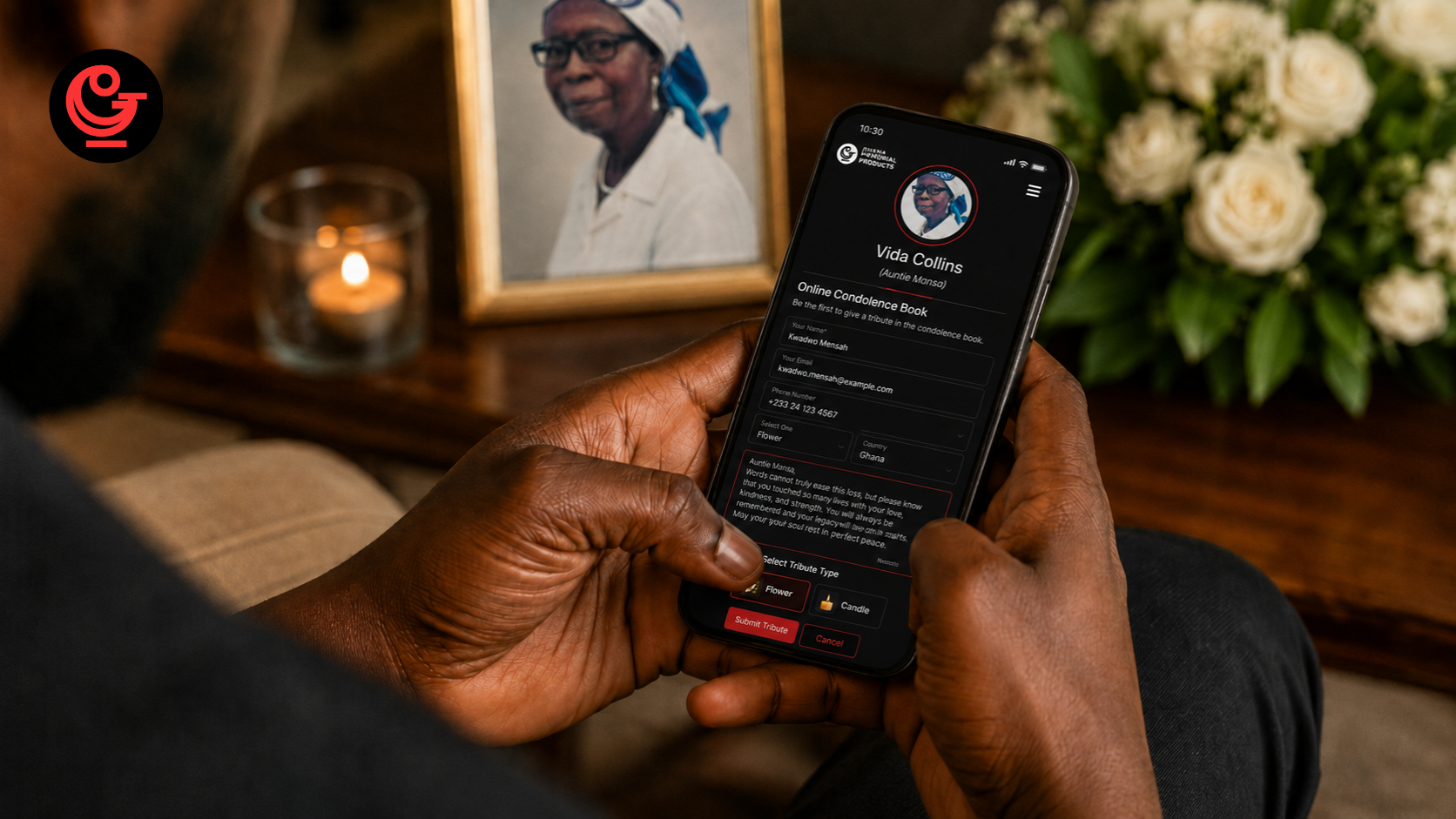
Writing a condolence message in an Online Condolence Book
Some words of sympathy are sent privately through WhatsApp or SMS. Others become part of how a family remembers the person who died.
A condolence book gives friends and relatives a place to leave those messages together.
Physical condolence books remain familiar at Ghanaian funerals. However, an Online Condolence Book also allows relatives and friends who cannot attend in person to leave their messages from Ghana or abroad.
Ghana Memorial Products provides an Online Condolence Book as part of the Ghana Memorial. Friends and family can submit messages from anywhere, while the family can moderate messages before they appear. Approved condolences can then remain with the memorial as part of the person's lasting story.
This is particularly useful for Ghanaian families spread across the diaspora. A childhood friend in Accra or a cousin in London can all leave their words in the same place.
A condolence message written today may later become something the family returns to.
The most important thing is to reach out
When a friend's mother dies, silence can sometimes happen because people are afraid of saying the wrong thing.
Do not let the search for perfect words stop you from reaching out.
You do not need to explain death, remove your friend's sadness or need a long speech.
Say that you are sorry and tell your friend that you are thinking about them.
Sometimes the simplest message “I am here with you” says exactly what is needed.
If the family has created a Ghana Memorial, you can also leave a condolence or personal memory in the Online Condolence Book, allowing your words of support to become part of the family's lasting remembrance.
Written by: David Owusu Asante
Related Articles
Condolence message for a friend whose father has died
Browse the post to know more and explore detailed insights on this topic.
Read More