

Death certificate and burial permit explained in Ghana
April 16th 2026, 12:00 am
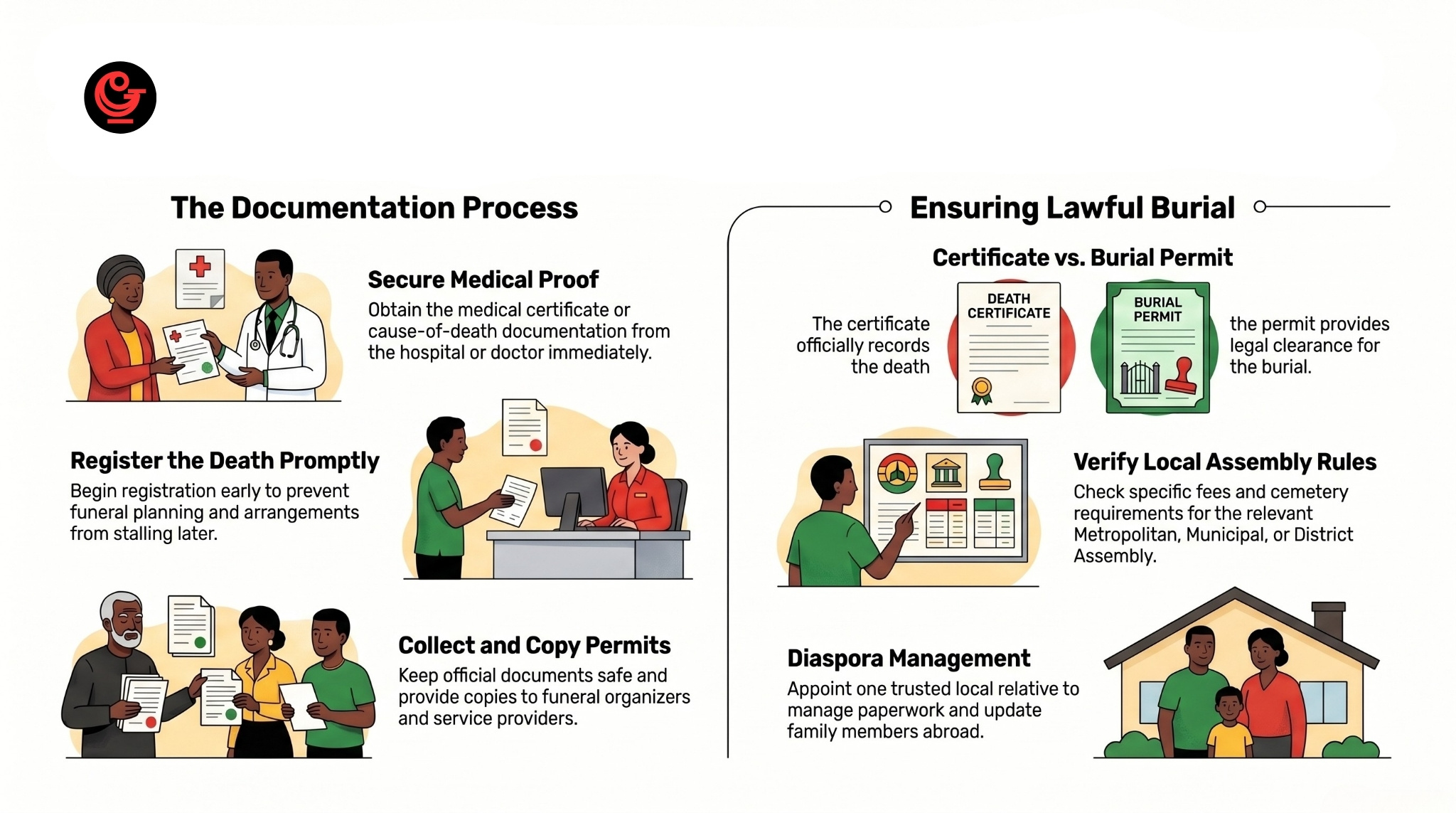
When someone passes away in Ghana, grief arrives first. Yet almost immediately, the family must begin dealing with practical matters. One of the earliest and most important steps is understanding the death certificate and burial permit. These documents, despite being paperwork, help the family move from shock to order and from uncertainty to lawful funeral planning.
Why these documents matter in Ghana
In Ghana, funerals involve family meetings, or church coordination, transport, announcements, printing, burial arrangements, and often relatives travelling in from other towns or from abroad. Because of that, the documentation stage matters more than many families expect.
A death certificate gives official proof that the death has been registered. A burial permit gives legal clearance for burial or another lawful form of disposition of the body. However, in everyday funeral planning, people may also use the phrase “burial permit” to refer to the cemetery or assembly approval needed for burial in a public cemetery. That is why families often feel confused at the beginning. The words sound simple, but the process can involve both civil registration and local cemetery approval.
What is a death certificate?
A death certificate is the formal document issued after the death has been registered. It is the official record families can present when institutions or service providers ask for proof that the death has been recorded properly.
This document is important because it creates clarity. In a difficult week, families are already answering many questions from relatives, employers, churches, funeral homes, and service providers. The death certificate becomes the formal reference point.
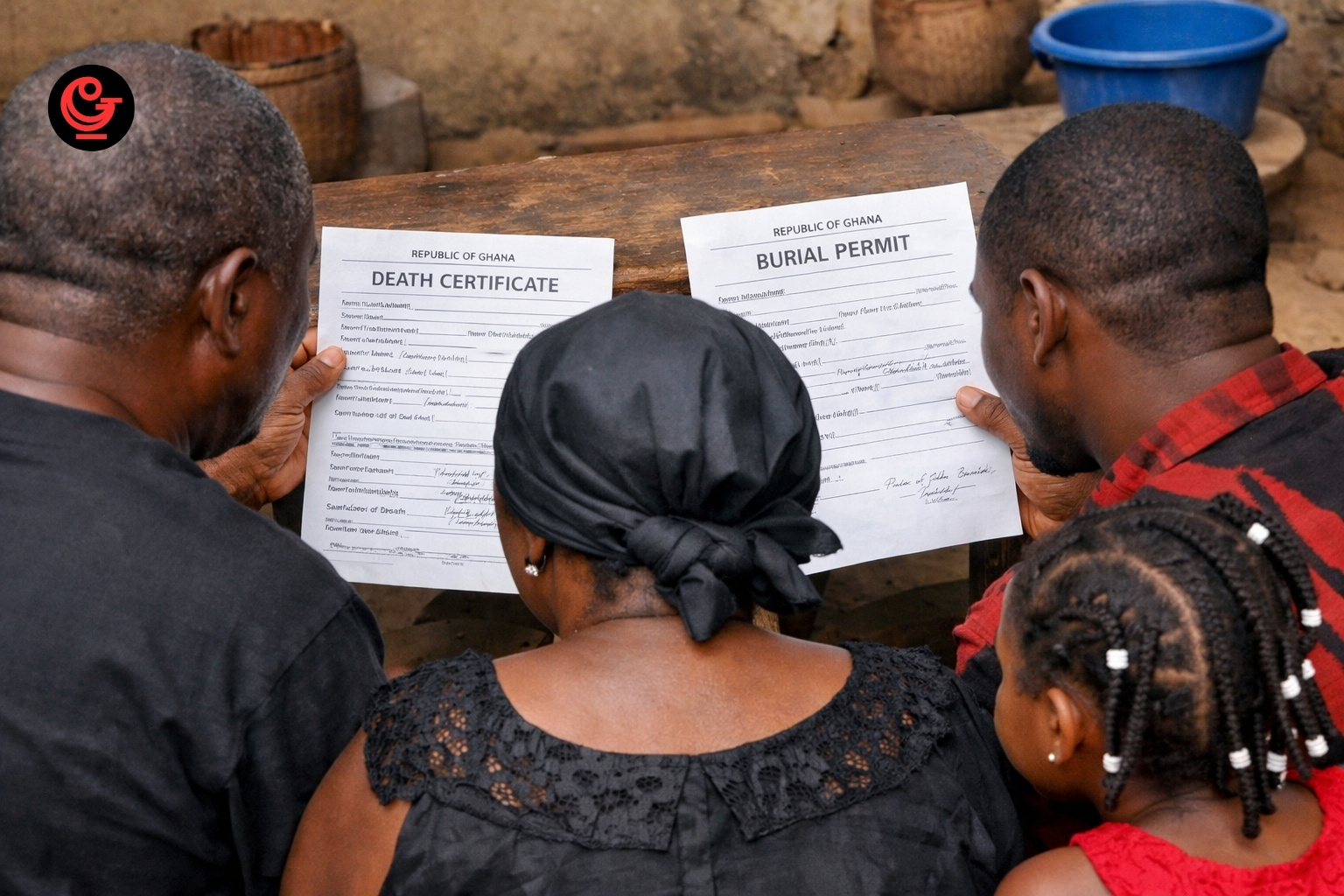
What is a burial permit?
A burial permit is the document that allows a burial to go ahead lawfully. In Ghana, this may include the burial permit issued after death registration, but families should also remember that local cemetery rules can add another step.
For example, if the burial takes place in a public cemetery, the relevant Metropolitan, Municipal, or District Assembly may require its own burial approval and fee before the burial can happen. In simple terms, families should not assume that one piece of paper settles everything. The civil registration document is essential, but the cemetery or assembly may still require its own approval process.
This is the key point: the death certificate records the death officially, while the burial permit or cemetery approval helps clear the burial itself.
If the death occurs in a hospital, at home, or in unusual circumstances
The process is not always identical.
If the death occurs in a hospital or health facility, the attending medical team usually records the death details and helps provide the documents needed for registration. If the death occurs at home, the family may need to work more directly with a recognised health professional, mortuary, or local authority before registration is completed.
If the death is sudden, violent, unnatural, or unclear, a coroner’s process may apply. In those situations, families should expect additional steps before the death is fully registered and before documents are issued. This can feel stressful, but it does not always mean something has gone wrong. It may simply mean the law requires further review first.
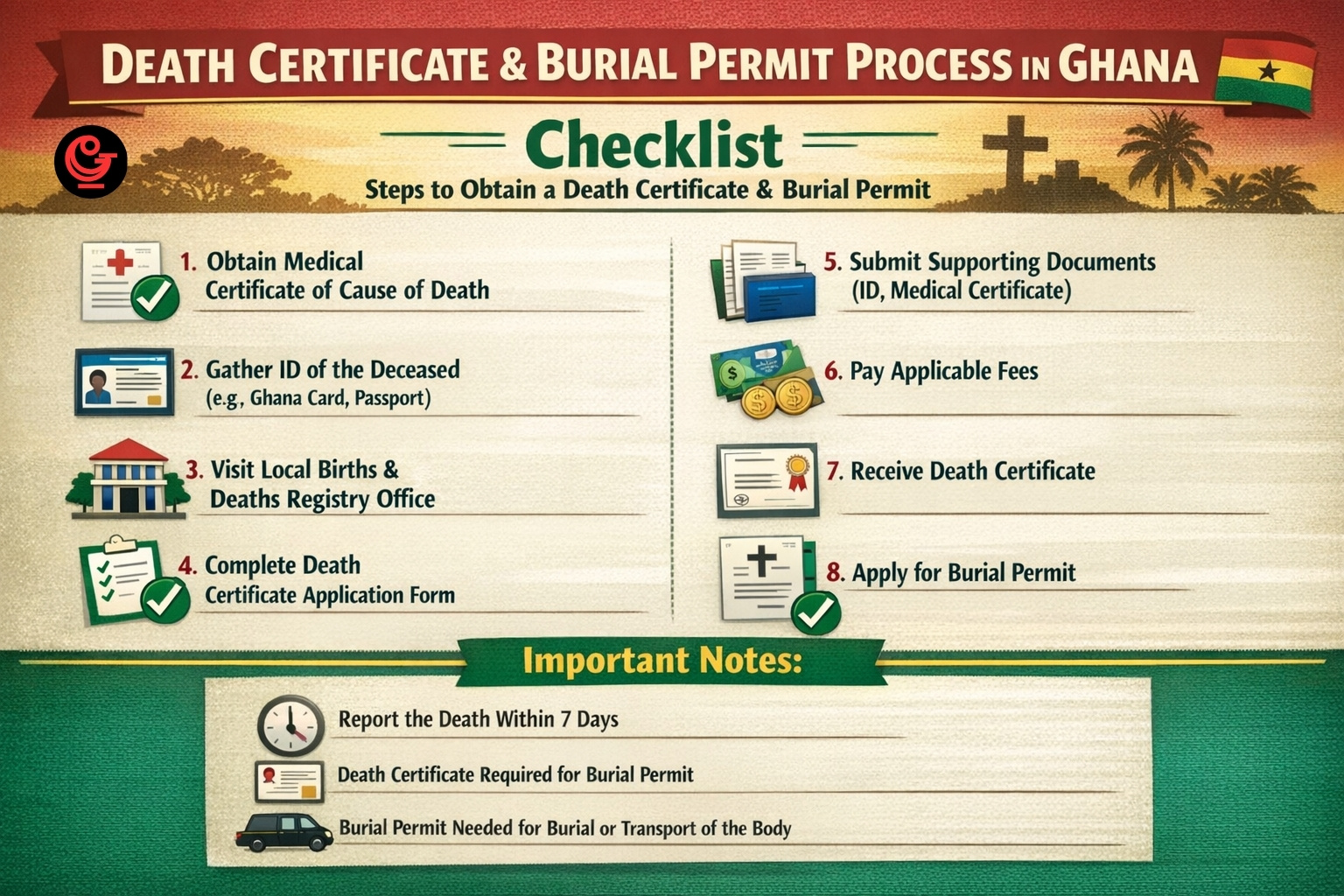
A practical guide for families
1. Obtain the medical cause of death information
Start by collecting the medical certificate or other official cause-of-death documentation from the hospital, doctor, or coroner where applicable. This is one of the first building blocks for registration.
2. Register the death promptly
Families should begin the death registration process early. Even when funeral dates are still being discussed, it helps to complete the official process as soon as possible to avoid later delays.
3. Collect the death certificate and burial permit
Once the death has been registered, collect the official documents and keep them safely. It is wise to make copies for the family file, funeral organisers, and any service providers who may need them.
4. Confirm cemetery or assembly requirements
Do not assume every district works the same way. If the burial will take place in a public cemetery, contact the relevant assembly, cemetery office, or funeral home to confirm the local requirements.
5. Verify local fees in advance
Burial-related fees can differ from one district to another. Therefore, families should confirm the exact fees in the district where the burial will take place rather than relying on what happened at a previous funeral in another town.
Ghana-specific examples that families may recognise
A family in Accra may receive hospital documents quickly, but still needs to confirm assembly cemetery procedures before the burial date is approved.
A family in Kumasi may hold several meetings with elders before settling the burial arrangements, yet the registration process still needs attention early so that funeral planning does not stall.
A diaspora family organising a funeral from London, Amsterdam, Toronto, or New York may rely on a sibling or uncle in Ghana to handle documents locally. In these cases, it helps to appoint one trusted relative to manage the paperwork and give updates to the wider family.
Common mistakes families should avoid
One common mistake is waiting too long because everyone is focused on visitors, food, transport, and family meetings.
Another is thinking that the death certificate and the cemetery approval are the same document.
A third is assuming that if one funeral followed a certain process in one district, the same steps and fees will apply in another district.
A better approach is to assign one calm and organised family member to handle documentation from the beginning. In many Ghanaian families, that may be a child of the deceased, a chief mourner, or a trusted elder working together with a funeral home.
Where digital tools can help
Once the core documents are in order, the family can communicate more clearly. This is where digital funeral tools can make a real difference.
Instead of repeating funeral details through many separate calls and WhatsApp messages, families can place key information in one organised place, share updates with relatives abroad, and keep practical details available as plans change.
This is where Ghana Memorial Products can help. Families can use digital tools to organise funeral information, share announcements respectfully, and keep remembrance lasting and accessible for relatives at home and in the diaspora.
A gentler ending to a hard process
Paperwork will never remove grief. But it can reduce panic. When the death certificate and burial permit are handled early and properly, the family gains space to focus on what matters most: honouring the person, supporting one another, and preparing a farewell with dignity.
In Ghana, funerals are moments of unity. Good documentation protects that unity. It prevents confusion, reduces avoidable delays, and helps the family move forward with more confidence.
For full step-by-step support, always refer to the Funeral Planner Guide.
Related Articles
Role of the chief mourner and family elders in Ghanaian funerals
Browse the post to know more and explore detailed insights on this topic.
Read MoreMourning attire and cultural practices in Ghana explained
Browse the post to know more and explore detailed insights on this topic.
Read More