

How to plan and control a funeral budget
April 17th 2026, 12:00 am
A funeral budget is also a peace plan
In Ghana, funerals are significant events that underscore respect, duty, and unity. They serve as a powerful occasion for reuniting relatives, engaging the wider community, and allowing the family to pay tribute to the deceased. However, this very importance often leads to rapid and substantial increases in expenditure.
A family member may focus on food. Another relative may insist on more printed items. Someone else may want extra cloth, transport, or a larger venue. These decisions are understandable, especially in grief. However, without a clear plan, the family can move from respect to financial pressure within a few days.
That is why a funeral budget matters so much. A budget is not about reducing love or lowering dignity. It is about making wise choices, staying organised, and protecting the family from unnecessary stress. A clear budget helps people know what is essential, what is flexible, and what can wait.
Why funeral costs in Ghana often rise unexpectedly
Many families do not overspend because they are careless. They overspend because funeral planning involves many moving parts, several decision-makers, and strong emotions.
A funeral budget can go out of control when:
Costs are discussed verbally but not written down
Relatives make separate promises to suppliers
Guest numbers are overestimated
The mortuary period becomes longer than expected
Several printed items are ordered without checking the volume
The family feels pressure to match the scale of another fun
For example, a family in Accra may begin with a simple church service and burial plan. Then, extra chairs, additional transport, more brochures, family cloth, refreshments, and photography are added one by one. In Kumasi, a similar pattern may happen when more extended family members become involved, and each person proposes an extra item “just to be safe.” Small decisions quickly become major costs.
Start by listing the full funeral picture
The first step in funeral planning for families can be to write down all likely expenses before paying any supplier. Many people focus first on the coffin or the food. In reality, the smaller items often create the biggest surprise.
A practical funeral budget checklist in Ghana should include:
Mortuary and body preparation
Death certificate and burial permit costs
Coffin or casket
Hearse and family transport
Church or mosque arrangements
Burial, cemetery, or grave preparation fees
Food and drinks
Funeral cloth and dress coordination
Funeral brochures, notices, and appreciation cards
Tent, chairs, décor, and sound
Photography, video, or livestream support
One-week and one-year observance costs, where relevant
Once the whole picture is visible, the family can make better decisions. It becomes easier to ask, “Do we really need this now?” rather than reacting at the last minute.
Divide the budget into three simple categories
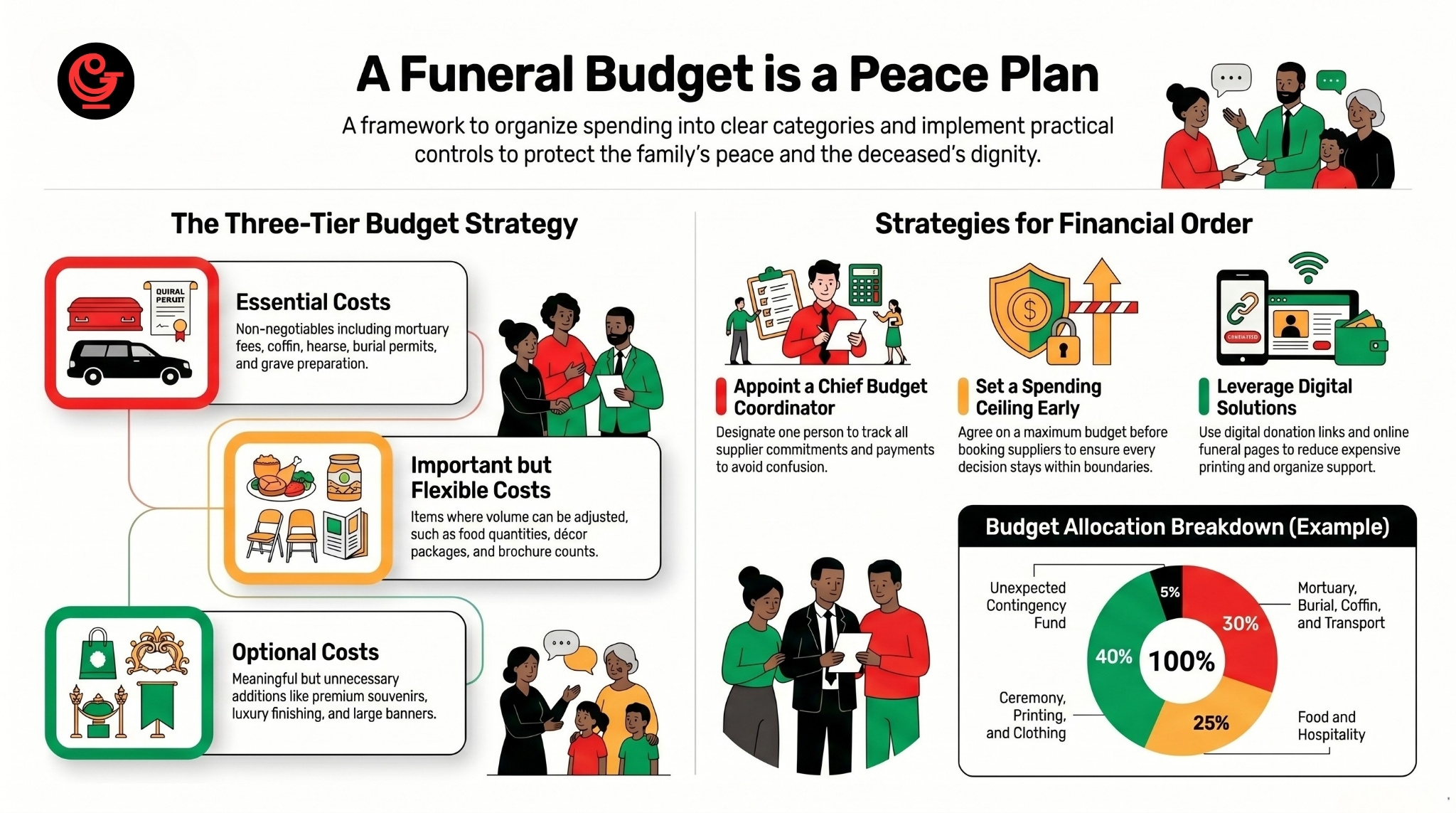
One useful way to control funeral costs in Ghana is to group spending into three categories.
1. Essential costs
These are the items that the funeral cannot happen without. They usually include body preparation, mortuary fees, coffin or casket, hearse, burial arrangements, and documentation.
2. Important but flexible costs
These matter, but the amount can be adjusted. For example, the family may reduce the quantities of food, choose a more modest décor package, or print fewer brochures.
3. Optional costs
These can be meaningful, but they are not always necessary. Examples include premium souvenirs, luxury finishing touches, very large banners, or extra hired vehicles.
This method helps the family protect the heart of the funeral while limiting costs that can quietly become excessive.
Appoint one person to track the money
In many Ghanaian families, several people contribute to the funeral organisation. That can be helpful, but it can also create confusion. One person may pay for the cloth, another for the sound, and another for the chairs. If nobody is tracking the full picture, the total spend may only become clear after the funeral.
It helps to appoint:
One chief budget coordinator
One person to record each supplier commitment
One person to confirm what has already been paid
One family representative to report back to the elders or the wider family
This approach respects family hierarchy while also creating financial order. The elders and senior family members still guide key decisions, but the numbers stay clear.
Set a spending ceiling before booking suppliers
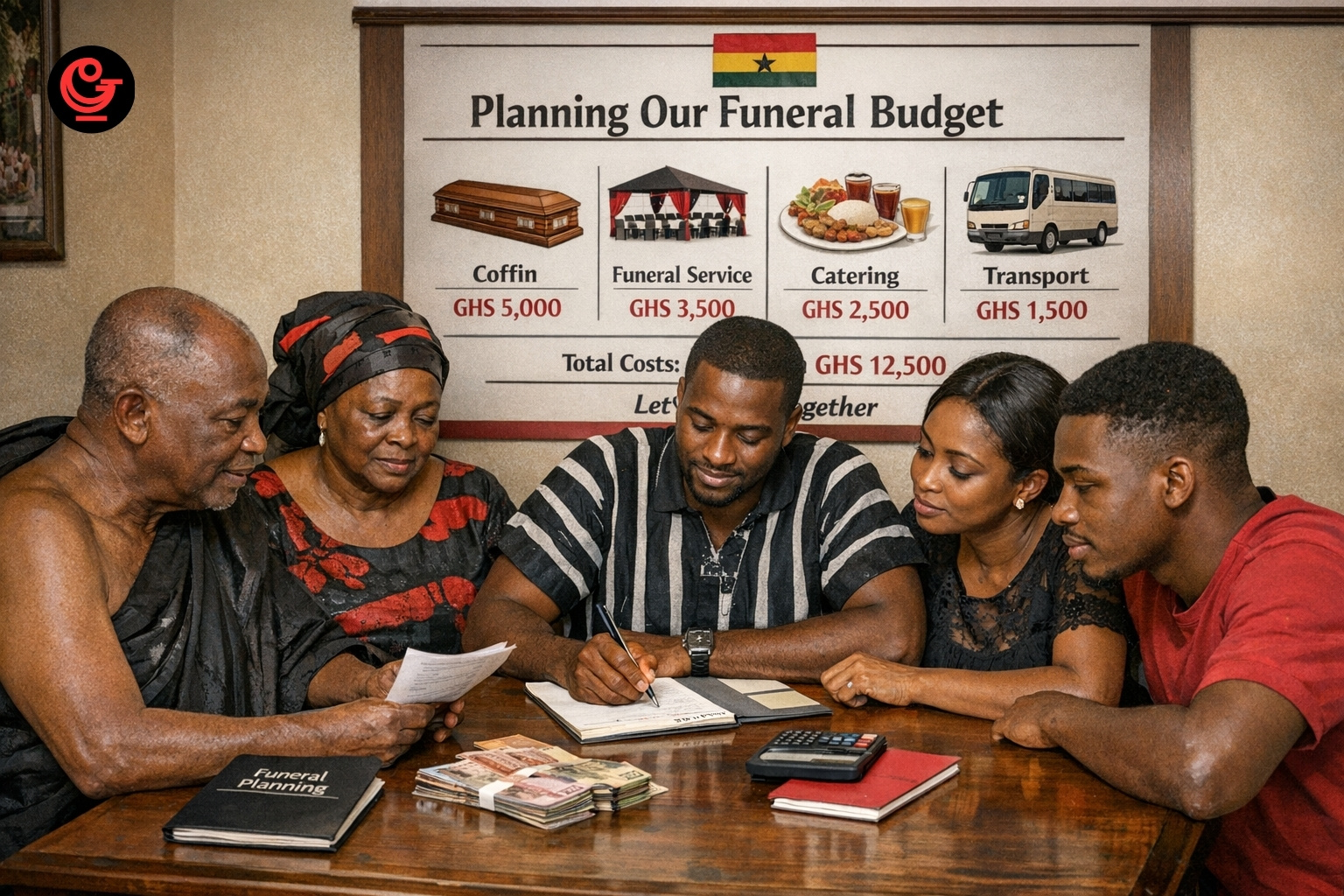
A funeral budget works best when the family agrees on a maximum amount early. This does not mean every item will be fixed perfectly. It means every decision is made within a boundary.
A family might divide its total budget like this:
30% for mortuary, burial, coffin, and transport
25% for food and hospitality
15% for the main ceremony arrangements
15% for printing and communication
10% for clothing and family presentation
5% kept aside for unexpected costs
The exact percentages will differ from one family to another. The important thing is to decide early, write it down, and return to it whenever new suggestions are made.
Practical ways to reduce funeral costs without losing dignity
A budget does not remove respect. In fact, a thoughtful budget often protects dignity better than rushed spending.
Reduce unnecessary printing
Many funerals still depend heavily on printed materials. However, families can reduce costs by sharing funeral details digitally and printing only what is truly needed for older relatives, key guests, or ceremonial use.
A digital funeral page can carry the order of service, venue information, livestream details, directions, and updates. This can reduce confusion and printing volume at the same time.
Use a donation link to organise support clearly
Contributions from relatives and friends often help cover funeral costs. Yet support becomes harder to manage when requests are informal, late, or spread across too many channels.
A digital donation link can help families collect support from people in Ghana and abroad in a more organised way. This is especially useful for diaspora relatives who want to help quickly and transparently.
Keep food planning realistic
Food is one of the most important parts of hospitality in Ghana, but it is also one of the easiest places to overspend. Estimate based on likely attendance, not the highest possible attendance. A realistic number protects the budget and reduces waste.
Separate respect from public pressure
Families sometimes feel they must “do more” because of what others may say. However, a calm, well-organised funeral often leaves a stronger impression than one built on financial strain. Dignity does not always mean bigger. Often, it means better planned.
Include diaspora relatives in a clear and useful way
Many Ghanaian funerals are supported by family abroad. A brother in London, a daughter in Toronto, or an uncle in Amsterdam may all want to help. However, they can only help well when the family shares clear information.
A simple summary can include:
The total budget
What has already been covered
Which categories still need support
The funeral date and schedule
A digital donation link or family contact person
This makes support practical. Instead of sending money without direction, relatives abroad can cover specific items such as transport, printing, or burial costs. In this way, technology supports tradition rather than replacing it.
Always include a contingency amount
Unexpected expenses are common. A supplier may request transport. The mortuary period may be extended. More chairs may be needed. A document may take longer than planned.
That is why every funeral budget Ghana families make should include a small contingency amount. Even a modest reserve can prevent stress and stop the family from pulling money from another essential category.
Review the budget after the funeral
The budget process should not end on the day of burial. After the funeral, the family should review:
What was spent
What remains unpaid
What was donated
What should be kept for one-week or one-year observance?
Which records should be shared with key family members
This creates transparency and trust. It also helps the family close the financial side of the funeral with order and respect.
A careful budget protects both dignity and family peace
A funeral should honour the departed, not leave the living under avoidable pressure. A clear budget helps the family make calm decisions, manage expectations, and protect unity during a difficult time.
The goal is not the cheapest funeral. The goal is a funeral the family can manage with dignity, clarity, and care.
Ghana Memorial Products supports this approach by helping families share funeral information clearly, organise support digitally, and reduce unnecessary printing while preserving remembrance beyond the funeral day. Because memories deserve more than paper, practical planning and lasting remembrance should go hand in hand.
For a fuller step-by-step planning process, please see the Funeral Planner Guide.
Related Articles
Purpose and decisions of a one-week funeral observance in Ghana
Browse the post to know more and explore detailed insights on this topic.
Read MoreDeath certificate and burial permit explained in Ghana
Browse the post to know more and explore detailed insights on this topic.
Read More