

Purpose and decisions of a one-week funeral observance in Ghana
April 16th 2026, 12:00 am
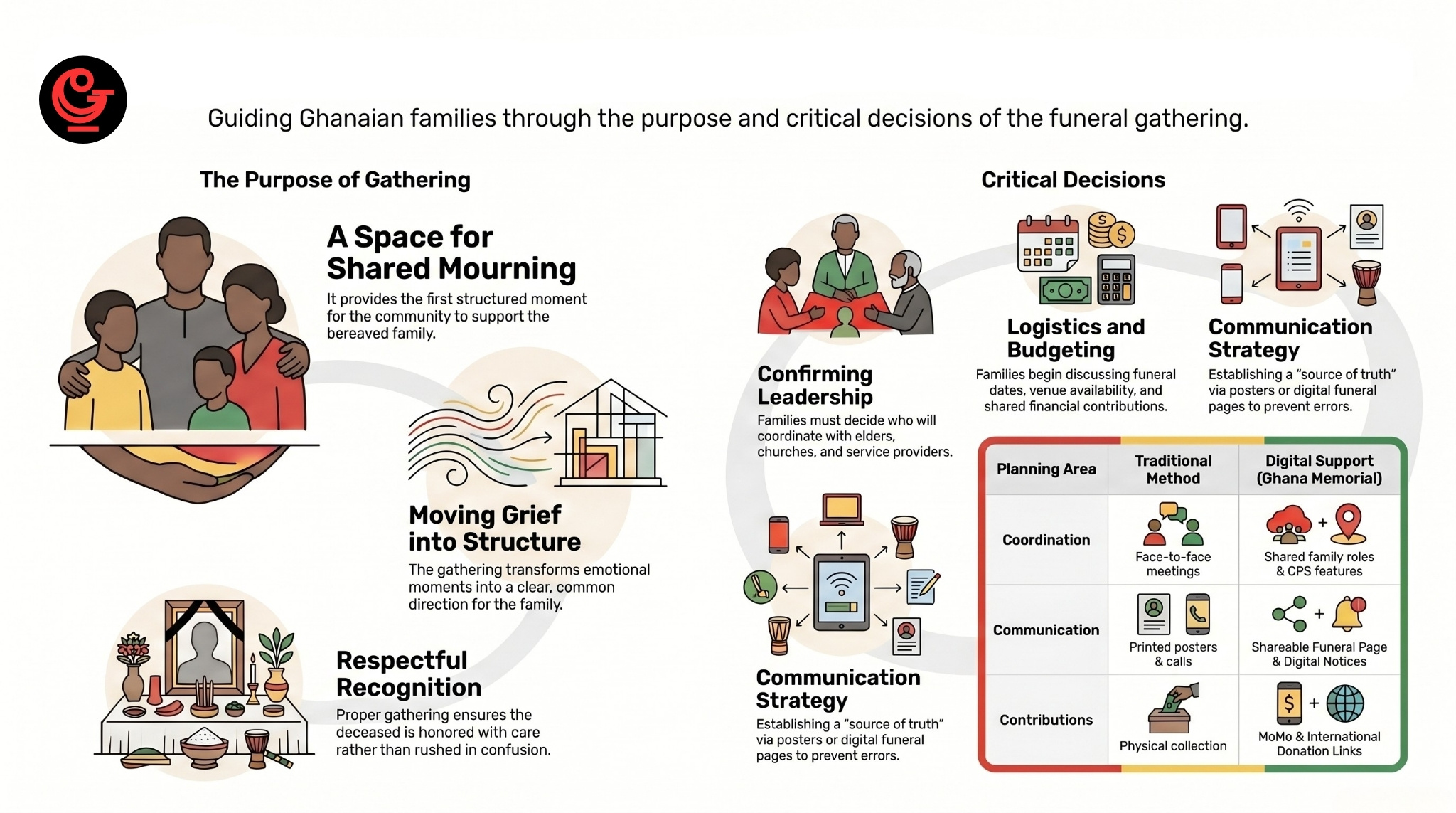
In Ghana, the one-week funeral observance is one of the earliest and most important gatherings after a death. It is not only a visit to mourn. It is also the moment when grief begins to move into structure. Family members gather, elders speak, relatives listen, and practical decisions start to take shape.
For many families, this gathering answers one big question: what happens next? That is why understanding the purpose of the one-week observance in Ghana matters. It helps families avoid confusion, reduce tension, and move forward with dignity.
What is the one-week funeral observance?
The one-week funeral observance is usually held about a week after the passing of a loved one. In many Ghanaian settings, it is a smaller and more focused gathering than the main funeral. People come together to mourn, support the bereaved family, and begin discussing the funeral arrangements. The exact form can differ by family, church tradition, ethnic background, and location, but the observance often serves as an early decision point for the wider funeral process.
In simple terms, the one-week observance has two purposes. First, it creates space for shared mourning. Second, it allows the family to make practical decisions in an organised way.
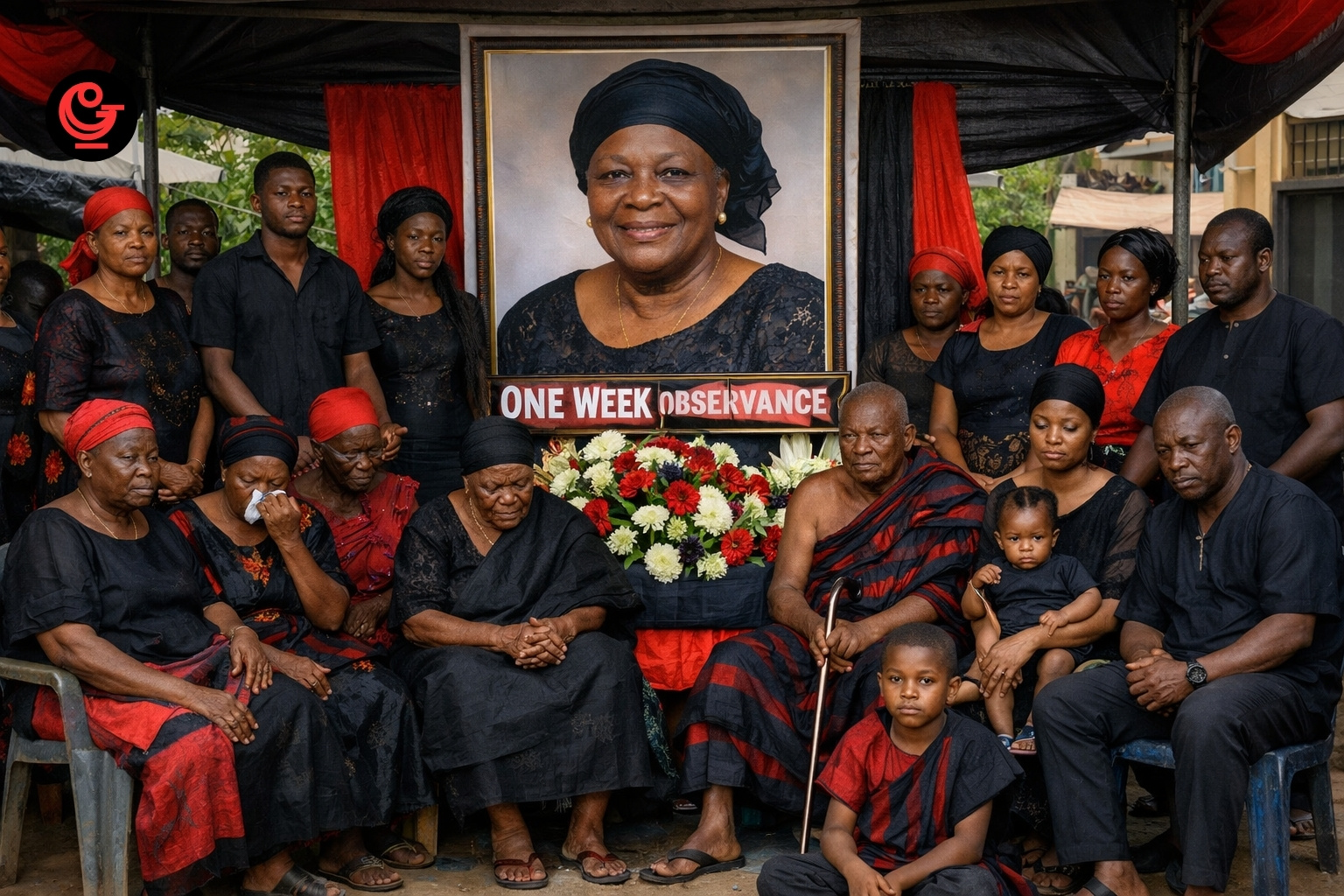
Why the one-week observance matters
When someone passes away, many things happen at once. Calls come in. Family members travel. Different opinions emerge. Costs begin to appear. In that emotional moment, the one-week observance helps the family pause and gather around a common direction.
This is important among most Ghanaian ethnic groups because funerals are rarely handled by one person alone. Decisions often involve the nuclear family, the extended family, elders, church leaders, and sometimes community leaders as well. A one-week gathering gives everyone a recognised moment to meet, hear the family’s position, and understand the next steps. That makes the funeral process smoother and helps reduce misunderstanding later.
It is also a moment of respect. By gathering people properly, the family shows that the deceased is being honoured with care, not rushed in confusion.
The main decisions usually made at the one-week observance
1. Confirming who leads the process
One of the first decisions is often about responsibility. Who will speak for the family? Who will coordinate with elders? Who will handle church contact, mortuary contact, or communication with relatives abroad?
In some families, this may be clear from the start. In others, it needs to be agreed carefully. This matters because unclear leadership can delay almost every other decision.
2. Discussing the funeral date
The funeral date is one of the biggest decisions connected to the one-week observance. Families may not always confirm it on the day, but they often begin discussing it seriously.
The chosen date may depend on several things:
Availability of close relatives
Time needed for family consultation
Church or venue availability
Mortuary arrangements
Travel plans for diaspora family members
Budget and fundraising capacity
For example, a family in Accra may want an earlier date because close relatives are nearby, while a family with key relatives coming from abroad may need more time.
3. Setting the tone of the funeral
At the one-week observance, families also begin shaping the character of the funeral. Will it be modest and private, or larger and more public? Will it follow mainly church structure, family custom, or a combination of both? What kind of dress code, design style, and programme tone feels right?
These choices later affect the funeral announcement, poster design, brochure, programme, venue planning, and budget.
4. Budget and contributions
This is often one of the most sensitive parts of the discussion. Funeral costs in Ghana can rise quickly, especially when transport, canopies, food, printing, clothing, church activities, and burial arrangements are added together.
The one-week observance is often where the family begins to discuss:
Expected costs
Who will contribute
Whether friends or extended family will assist
Whether a donation structure should be shared clearly
Handled well, this discussion reduces pressure later. Handled poorly, it can create conflict.
5. Communication with the wider public
Not every death is communicated publicly in the same way at the same time. Some families want to wait before sharing details widely. Others want to begin informing the wider network quickly after the one-week observance.
This is often the point where families decide how to communicate:
By phone and WhatsApp
By a one-week poster or a funeral poster
By church announcement
By a printed handout
By a digital funeral page that can be updated and shared easily
This decision matters because once information starts spreading, errors can spread too. A clear source of truth helps.
Ghana-specific examples of what families decide
A family in Kumasi may use the one-week observance to meet with elders first, then later confirm the funeral date after consulting the church. A Ga family in Accra may focus early on burial timing, venue coordination, and how to inform the broader network. A diaspora-connected family may use the one-week gathering to decide whether there will be livestream access, a digital condolence space, or an online donation option so relatives abroad can take part meaningfully.
The details differ. The purpose is the same: to move from shock to organised remembrance.
How digital tools can help without replacing tradition
The one-week observance is rooted in people, presence, and respect. Digital tools should not replace that. However, they can make the next steps much easier.
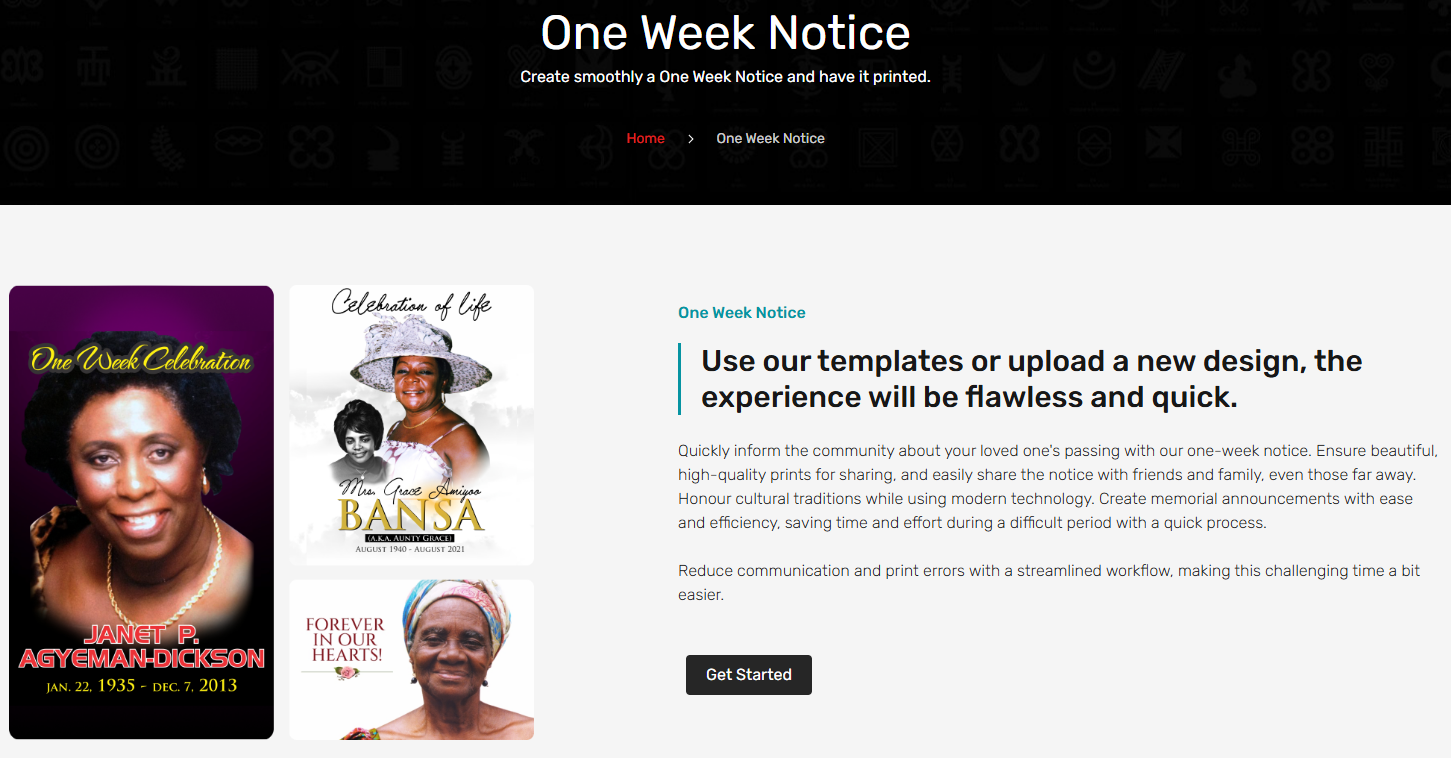
Ghana Memorial is built to support families with practical and respectful tools such as a Funeral Page, One-Week Notice and funeral communication features, an Online Condolence Book, a Donation Link, livestream support, family roles, and GPS-linked remembrance features. This wider purpose is to help families preserve memory, strengthen connection, and make funeral organisation easier in a difficult time.
This is especially helpful after the one-week observance, when decisions must be shared clearly. Instead of repeating details in many calls and messages, the family can use one page to show:
Confirmed dates
Venue details
Family contacts
Livestream information
Donation information
Updates for local and diaspora relatives
That practical support fits the Ghana Memorial goal of making funerals smoother, easier, and less expensive while extending remembrance beyond the funeral day itself.
A simple way to approach the one-week observance
Families may find it helpful to leave the one-week observance with answers to five basic questions:
Who is coordinating the funeral process?
What decisions have been made already?
What still needs family approval?
How will information be shared accurately?
How can relatives at home and abroad stay involved?
Even when every detail is not final, clarity on these points helps the family breathe.
From mourning to direction
The one-week observance in Ghana is important because it gives mourning a structure. It is where love, responsibility, culture, and planning meet. Families do not gather only to remember the dead. They also gather to decide how best to honour them.
When handled with care, the one-week observance can reduce confusion, strengthen unity, and prepare the family for the funeral ahead. And when simple digital tools are added in the right way, tradition is not weakened. It is supported.
For families who want a clearer path from one-week observance to funeral day, Ghana Memorial Products can support with a shareable Funeral Page, digital remembrance tools, and practical planning support designed for Ghanaian families and the diaspora.
For a fuller step-by-step reference, please see the Funeral Planner Guide.
Related Articles
Death certificate and burial permit explained in Ghana
Browse the post to know more and explore detailed insights on this topic.
Read MorePlanning a one-year memorial in Ghana
Browse the post to know more and explore detailed insights on this topic.
Read More