

Funeral weekend in Ghana: A practical guide for families
June 3rd 2026, 12:00 am
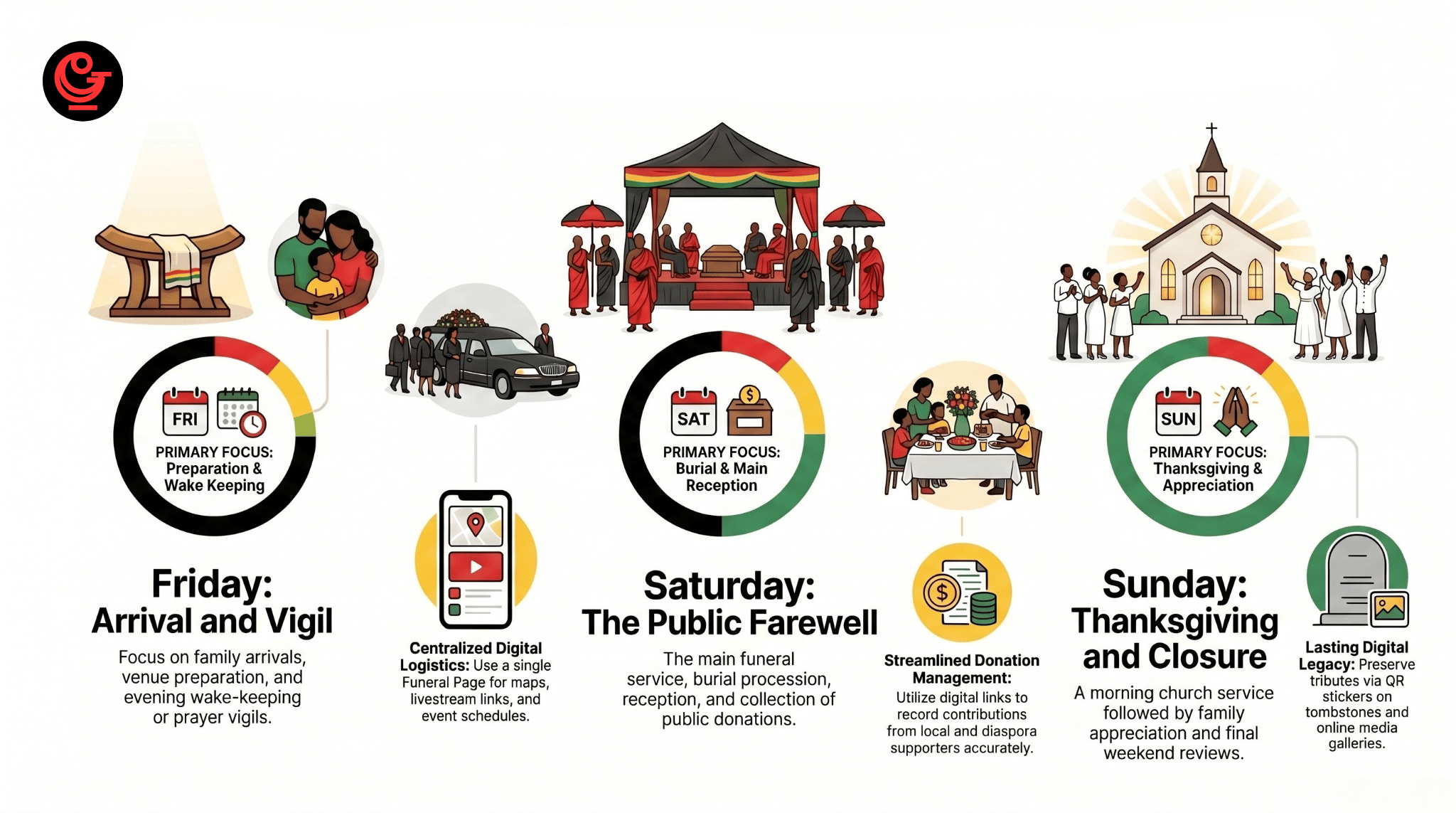
In many Ghanaian families, the funeral weekend is not just one event. It is a full journey from Friday to Sunday, bringing together mourning, burial, thanksgiving, family unity, and community support. Understanding the funeral structure in Ghana helps families plan with calm, reduce confusion, and honour their loved one with dignity.
A funeral weekend can feel overwhelming. Relatives arrive from different towns. Diaspora family members may be following online. Church leaders, chiefs, funeral committees, ushers, caterers, photographers, and transport teams may all be involved. Therefore, a clear weekend structure helps everyone know what happens, when it happens, and who is responsible.
Why the Funeral Weekend Matters in Ghana
Funerals in Ghana are moments of remembrance, respect, and family identity. They are also public events where relatives, church members, work colleagues, neighbours, old school friends, hometown associations, and community leaders come to show support.
In many communities, the weekend format allows mourners to participate fully. Friday is often for gathering and wake keeping. Saturday is usually the main funeral and burial day. Sunday is often reserved for thanksgiving, church service, and final appreciation. Sources on Ghanaian funeral customs also describe Sunday as a day for thanksgiving after the main funeral activities.
However, the exact structure can differ by religion, ethnic group, family preference, church rules, hometown custom, and budget. A funeral in Kumasi may not follow the same pattern as one in Accra, Tamale, Ho, Cape Coast, or a village in the Eastern Region. The key is to agree early and communicate clearly.
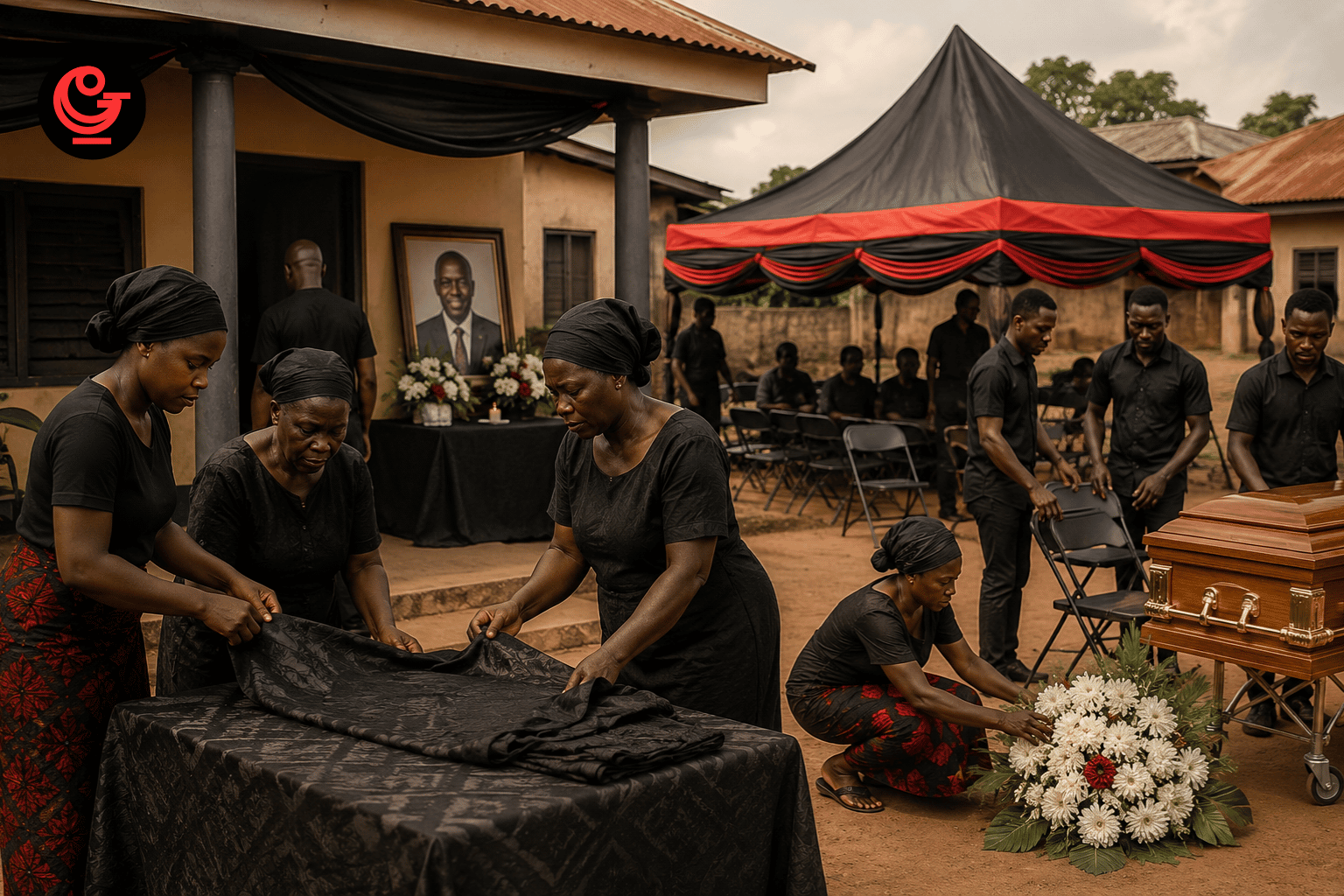
Friday: Arrival, Wake Keeping, and Family Gathering
Friday often sets the tone for the funeral weekend. Family members begin arriving. Some come from nearby communities, while others travel from abroad or other regions of Ghana.
Common Friday activities include:
Family arrival and accommodation checks
Relatives may need help with transport, lodging, food, and directions. A small hospitality team can manage this.Final venue preparation
Canopies, chairs, sound systems, lighting, signage, and family seating areas should be checked before guests arrive.Wake keeping or vigil
In many Christian families, Friday evening may include prayers, hymns, tributes, scripture readings, and quiet reflection. In some traditions, it may also include drumming, singing, and community gathering.Viewing or laying in state
Depending on family custom and mortuary arrangements, the body may be laid in state on Friday night or early Saturday morning.Committee briefing
The funeral committee should confirm Saturday’s programme, transport, pallbearers, ushers, donation table, food distribution, and protocol arrangements.
Friday should not be treated as a small detail. If Friday is poorly managed, Saturday becomes more stressful. Families should use Friday to confirm roles, not to start planning from zero.
Saturday: Main Funeral Service, Burial, and Reception
Saturday is usually the busiest and most public part of the funeral weekend in Ghana. It is the day when the largest number of mourners may attend.
The funeral service
The funeral service may take place at a church, school park, funeral grounds, family house, community centre, or private venue. For example, a family in Accra may hold the service at a church auditorium, while a family in the Ashanti Region may use a large open funeral ground with canopies and traditional seating arrangements.
The programme usually includes:
Opening prayer
Hymns or songs
Biography of the deceased
Tributes from children, spouse, family, church, workplace, or associations
Sermon or exhortation
Filing past the body
Announcements
Closing prayer
A well-prepared funeral programme helps guests follow the service respectfully. It also helps speakers, church leaders, and family representatives stay on time.
Burial or interment
After the service, the family may proceed to the cemetery or burial ground. Transport must be planned carefully. The hearse, family vehicles, buses, security, and traffic direction should be ready before the service ends.
In some communities, burial is private and limited to close family. In others, many mourners may follow the procession. The family should decide this early and communicate it clearly.
Reception and refreshment
After burial, guests may return to the funeral grounds or family house for refreshments, greetings, donation presentation, and continued fellowship.
This is where crowd control becomes important. Ushers should know where to direct elders, chiefs, clergy, family heads, work colleagues, and general guests. Food distribution should be organised to avoid pressure on the bereaved family.
Donations and records
Many Ghanaian funerals include donations from individuals, families, churches, workplaces, hometown groups, and associations. A donation team should record names, amounts, contact details, and messages carefully.
This is one area where digital support can reduce mistakes. Ghana Memorial Products allows families to use digital tools such as a Donation Link, Condolence Book, Funeral Page, and digital memorial, helping both local and diaspora supporters participate respectfully. Ghana Memorial’s mission is to make memory-sharing easier, richer, and more enduring through respectful digital innovation.
Sunday: Thanksgiving, Appreciation, and Closing the Weekend
Sunday often brings the funeral weekend to a gentle close. For Christian families, it usually includes a thanksgiving service at church. This allows the family to thank God, thank the community, and receive prayers after the burial.
After church, the family may host a small gathering at home or at the funeral grounds. This is usually calmer than Saturday. It may include:
Appreciation to mourners and supporters
Final family greetings
Food and drinks for close relatives and guests
Review of donations and expenses
Committee closing discussion
Planning for thank-you messages or appreciation cards
Sunday is also a good time to remind family members that remembrance does not end with the funeral. Photos, tributes, videos, and the funeral programme can be preserved on a digital memorial so that children, grandchildren, and diaspora relatives can revisit the story later.
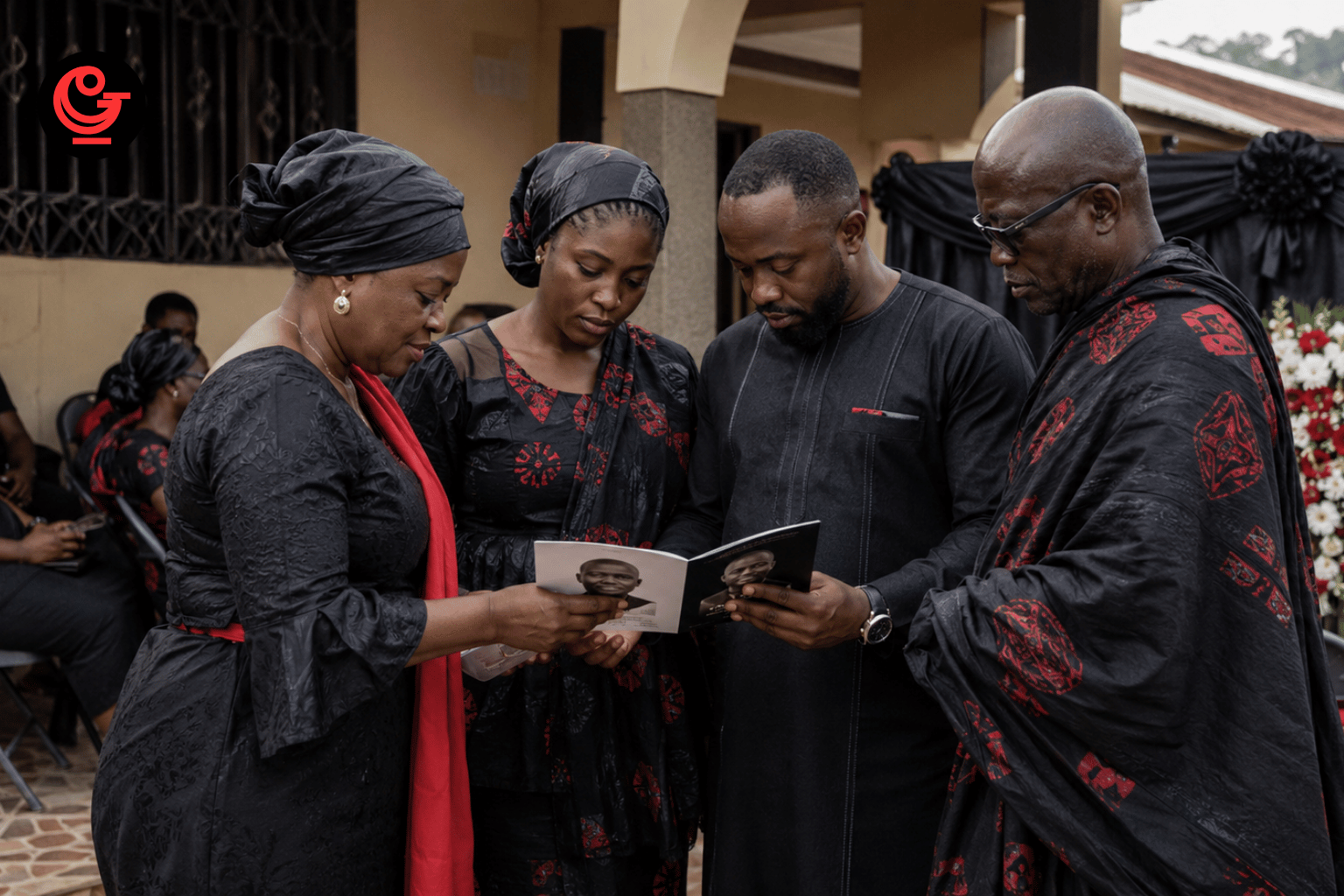
How Ghana Memorial Products Helps During the Funeral Weekend
A funeral weekend becomes easier when information is centralised. Instead of sending many separate WhatsApp messages, families can use one digital Funeral Page to share details.
Ghana Memorial Products can support families with:
Funeral Page: venue, date, time, map, livestream link, and order of service
Online Condolence Book: messages from family, friends, and diaspora mourners
Donation Link: a simple way for supporters to contribute from Ghana or abroad
Funeral Programme: digital and printable order of service
Media Gallery: photos, videos, and audio memories
GPS Grave Location: easy directions to the burial place
Tombstone QR Sticker: a lasting link from the grave to the online memorial
This supports the family before, during, and after the funeral. It also reduces pressure on one person to answer the same questions repeatedly.
Practical Tips for Families Planning a Funeral Weekend
Agree on the structure early
Decide what happens on Friday, Saturday, and Sunday before printing announcements.Use one official source of information
A digital Funeral Page helps avoid wrong dates, wrong venues, and repeated phone calls.Assign clear roles
Do not leave everything to the chief mourner. Create teams for protocol, finance, food, transport, media, and guests.Plan for diaspora participation
Add livestream details, donation options, and online tribute links early.Keep records carefully
Donations, expenses, suppliers, and thank-you lists should be documented.Preserve memories after the weekend
Upload the programme, tributes, photos, and videos to the memorial page so the memory continues beyond the funeral day.
The funeral structure in Ghana gives families a clear path through one of life’s most difficult moments. Friday prepares the family. Saturday honours the deceased publicly. Sunday brings gratitude, reflection, and closure.
With the right planning, the weekend can be less stressful and more meaningful. Tradition remains respected, while digital tools help families communicate clearly, include loved ones abroad, and preserve memories for the future.
For step-by-step planning support, families can continue with the Funeral Planner Guide from Ghana Memorial Products.
Related Articles
Funeral day logistics explained for families in Ghana
Browse the post to know more and explore detailed insights on this topic.
Read MoreChoosing the funeral date and venues in Ghana
Browse the post to know more and explore detailed insights on this topic.
Read More