

Managing funeral donations transparently in Ghana
April 21st 2026, 12:00 am
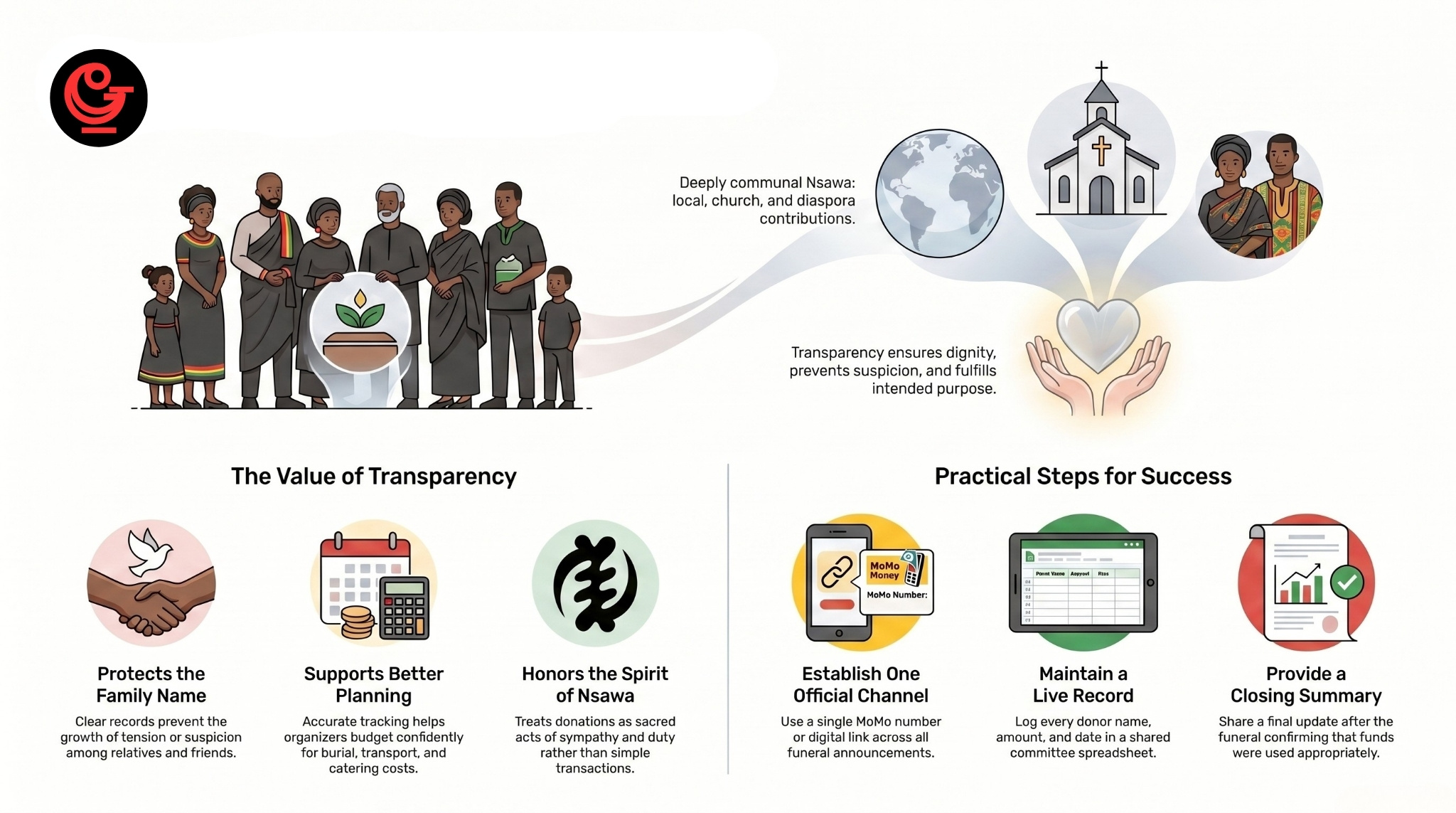
When a loved one dies, support often comes quickly. A brother in Kumasi sends mobile money. A daughter abroad shares the funeral poster in a family group. Friends, church members, workmates, and old schoolmates all ask the same question: How can we contribute? In that moment, managing funeral donations transparently becomes just as important as receiving them.
In Ghana, funeral donations, known in the Akan language as Nsawa, are deeply communal. People do not only mourn with words. They also give. However, when contributions come from many places at once, confusion can start. One person is collecting cash. Another is using a personal MoMo number. A third is answering diaspora questions on WhatsApp. Before long, the family may face stress, suspicion, or simple mistakes during an already painful time.
That is why transparent donation management matters. It protects trust. It reduces misunderstandings. And it gives every contributor confidence that their support is reaching the family for the purpose it was intended.
The need for funeral donations in Ghanaian funerals
Funerals in Ghana are moments of unity. Extended family, church members, hometown associations, old colleagues, and diaspora relatives often all contribute. In many cases, the giving is generous and heartfelt. Yet the more people who contribute, the more important the structure becomes.
Transparency matters for three simple reasons.
First, it protects the family’s name. If relatives or friends feel unsure about where money is going, tension can grow very quickly.
Second, it helps organisers make better decisions. When contributions are tracked properly, the family can plan for printing, transport, canopies, food, burial costs, or the one-week observance with more confidence.
Third, it honours the spirit of the support itself. Funeral donations are not ordinary payments. They are acts of sympathy, duty, and love.
Common problems families face
Many funeral donation issues do not begin with bad intent. They begin with urgency.
A family may announce one number on a poster, a different number in a WhatsApp group, and a bank account later through word of mouth. Some people send money with no name reference. Others send it to a cousin who forgets to report it. Diaspora relatives may ask for a safer or more official way to contribute, especially when they are sending larger amounts.
In Ghana, common challenges include:
Using personal accounts without a clear record
Multiple collectors receiving funds at the same time
No shared tracking sheet for the funeral committee
Delayed updates to contributors
Uncertainty about whether donations are for funeral expenses only or also for family support after burial
No clear closing update after the funeral
These issues can create avoidable pain. At a time when the family needs calm, poor donation handling can add pressure.
Practical steps for managing funeral donations transparently
With the challenge clear, the good news is that transparency can be built with simple habits.
1. Appoint one accountable team
Choose one lead person and one support person. In many Ghanaian families, this may be a trusted elder, a chief mourner, a sibling, or a well-organised nephew or niece. Their role should be clear: receive, record, and report.
Avoid having too many unofficial collectors. The more hands involved, the harder it is to maintain trust.
2. Use one official donation channel
Decide early whether the family will use:
One mobile money number
One bank account
One digital funeral donation link
Then repeat that same channel everywhere: on the funeral page, in WhatsApp messages, on posters, and in church announcements.
This is especially important for diaspora family members. They usually want a simple and reliable method, not a chain of forwarded messages.
3. State clearly what the donations are for
Do not assume everyone understands the purpose in the same way.
A simple note can help:
“Contributions are being received to support funeral expenses, including transport, printing, venue arrangements, and burial-related costs.”
If the family also wants support for dependents or for memorial costs after the funeral, that should be stated clearly, too.
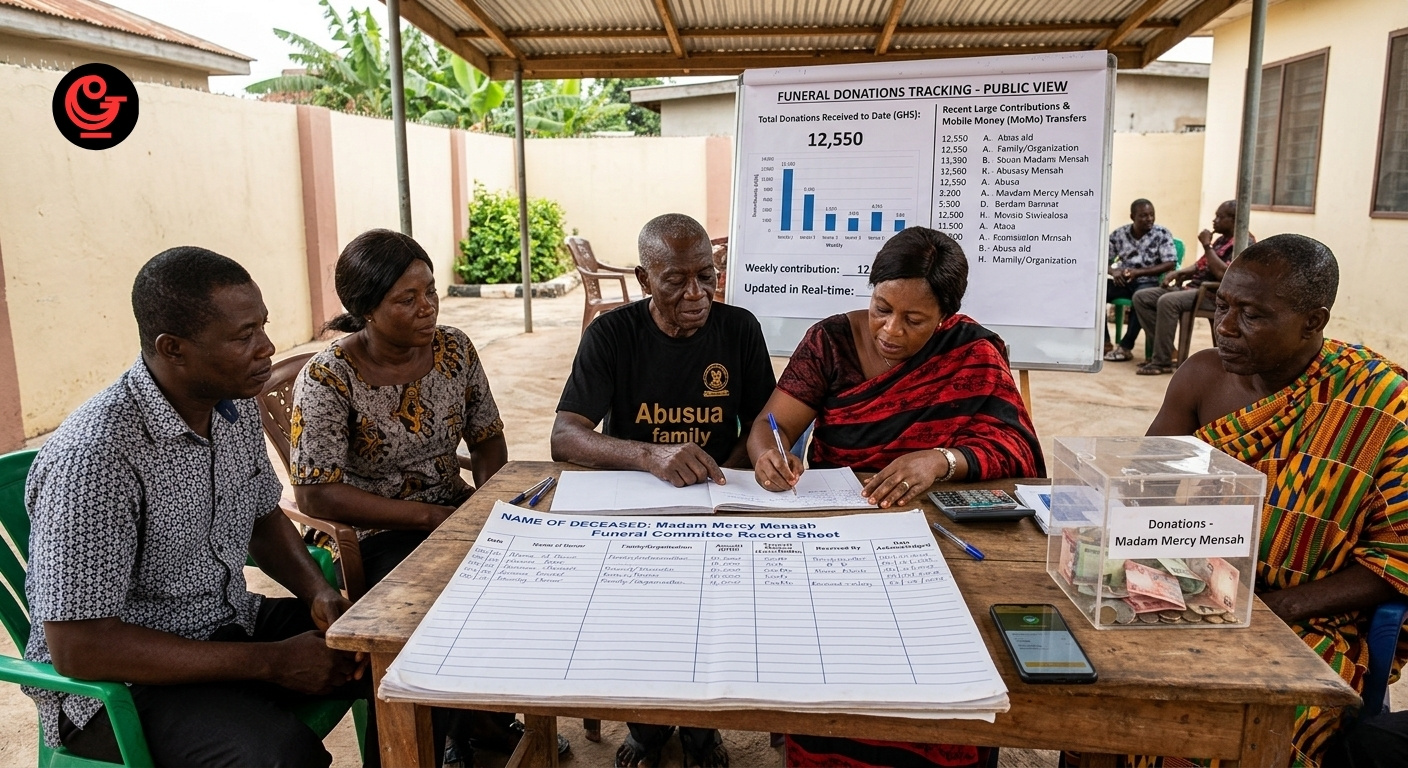
4. Keep a live record
Every contribution should be logged with:
Name of donor
Amount
Date received
Payment method
Short note if needed
Even a simple shared spreadsheet can help. The key is consistency. A family committee that knows exactly what has come in will make fewer mistakes.
5. Share periodic updates
You do not need to publish every donor amount publicly. In fact, many families may prefer privacy. But the family leadership team should receive regular summaries.
For example:
Total received so far
Major spending categories confirmed
Remaining expected costs
Any gaps still needing support
That way, everyone involved sees the same picture.
6. Separate donation money from personal money
This is essential. Funeral funds should not mix with everyday personal spending. Even when using a personal MoMo wallet for convenience, organisers should treat it as a dedicated collection point and reconcile it carefully.
7. Give a closing summary and appreciation
After the funeral, share a short thank-you update. It can be respectful and simple. It should confirm that donations were received and used for the stated purpose.
This final step matters. It closes the circle with dignity.
A Ghana-specific example
Imagine a funeral in Accra for a mother whose children live in Tema, Amsterdam, and London. The family prints posters locally, but wider support comes through WhatsApp and Facebook. Church members want to give in cedis. Diaspora relatives want a clear digital option. A few uncles prefer cash contributions during planning meetings.
Without structure, this can become scattered.
With a transparent system, the family does three things: they appoint one coordinator, publish one official donation channel, and send updates every few days to the planning group.
Now the organisers know what has come in. The children abroad feel included. Local relatives do not need to keep asking who has received what. The result is not only better accounting. It is more peaceful.
How digital tools can help families
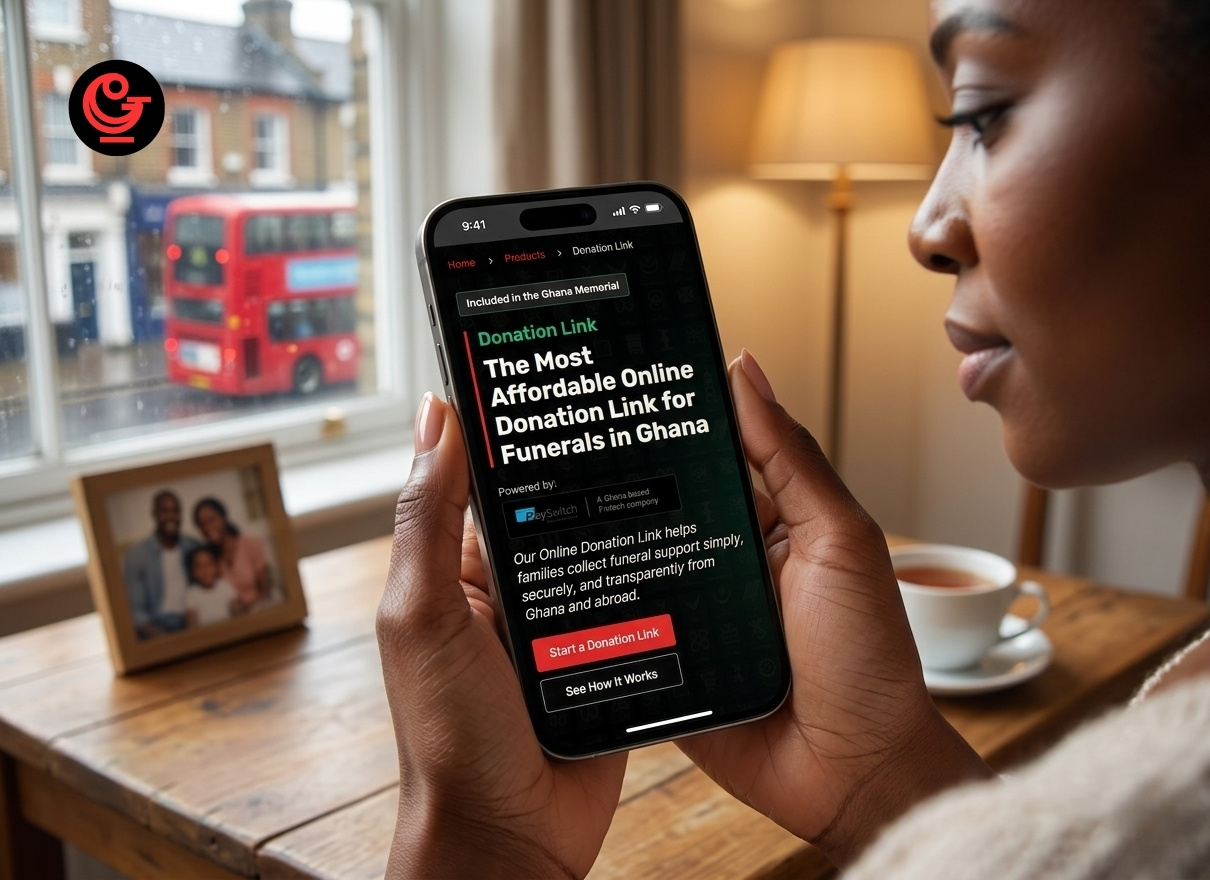
Ghana Memorial is designed to combine remembrance with practical tools, including donation links, funeral pages, livestream access, and other features that help families stay connected across Ghana and the diaspora.
For this topic, the key benefit is simple: a digital donation link provides a single place where people can contribute. Instead of many scattered messages, the family can share one trusted route. That reduces confusion and helps donors feel more secure.
This also supports a wider goal: donors and mourners can contribute from anywhere, while families keep a more organised and lasting funeral support process.
Managing funeral donations transparently is not about making grief feel like bookkeeping. It is about protecting trust during a sensitive time.
In Ghana, where funerals bring together family, faith, culture, and community, transparency is a form of respect. It shows care for contributors. It supports wiser planning. And it keeps the focus where it belongs: honouring the life that was lived.
When the donation process is clear, the family breathes easier. And that matters.
Create a clear, respectful funeral support journey with Ghana Memorial Products and always keep the wider arrangements connected to the Funeral Planner Guide.
Related Articles
How to plan and control a funeral budget
Browse the post to know more and explore detailed insights on this topic.
Read MorePurpose and decisions of a one-week funeral observance in Ghana
Browse the post to know more and explore detailed insights on this topic.
Read More