

Funeral posters in Ghana: Purpose, content and use
September 8th 2026, 12:00 am
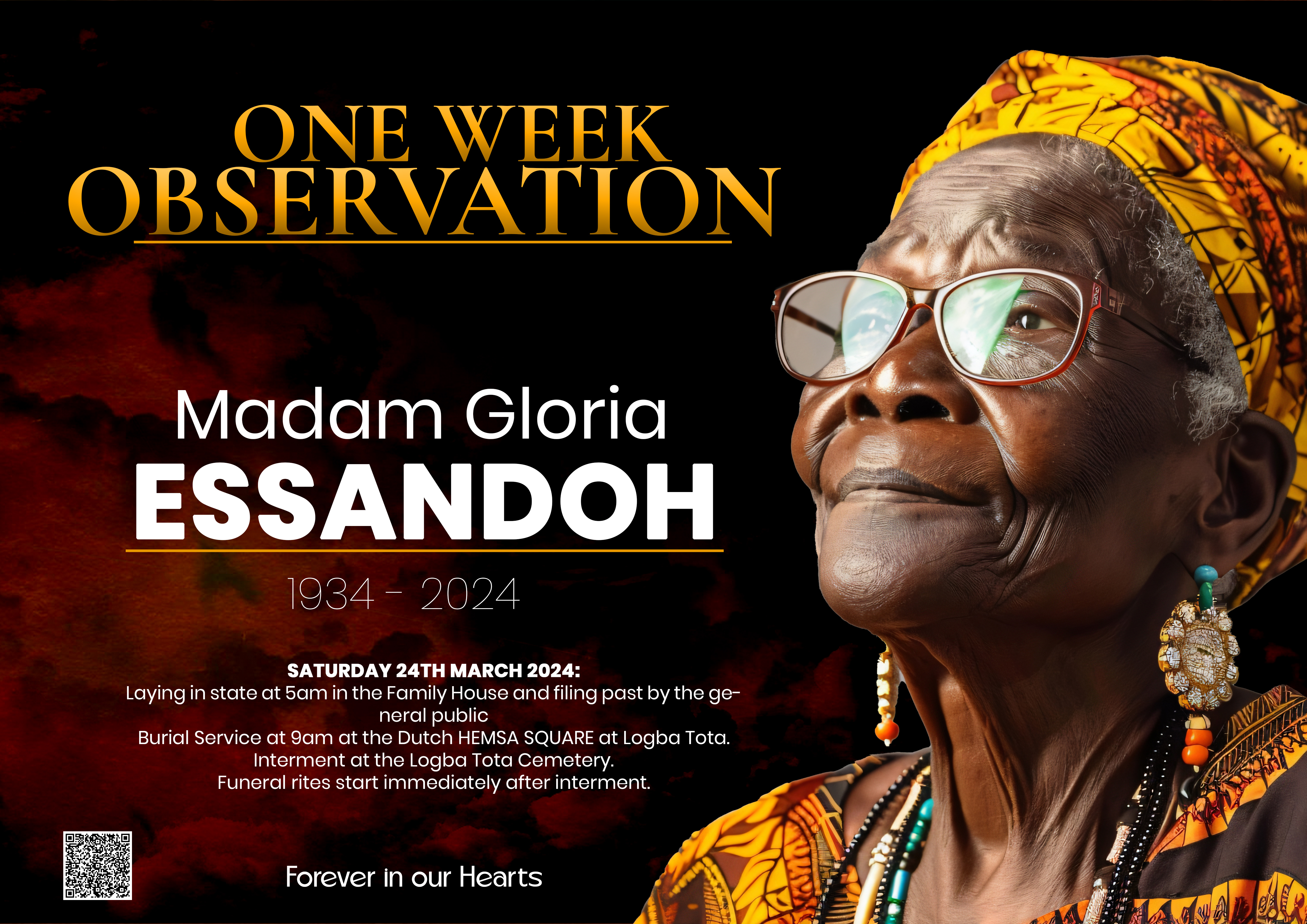
A familiar sight in many Ghanaian communities is a funeral poster carrying the portrait of someone who has died. It may appear on a wall near the family home, at a church, beside a road or in a WhatsApp family group.
For the family, however, it is more than a piece of printed paper.
Funeral posters in Ghana help announce a death, communicate funeral arrangements and publicly honour the person who has died. They connect the family with the wider community at a time when many people need clear information.
This guide explains why funeral posters matter, when they are used and what information families should include.
What is a funeral poster in Ghana?
A funeral poster is a visual notice used to communicate information about the death and funeral arrangements of a person.
It normally combines:
a photograph of the deceased;
their name;
important funeral dates;
venues and times;
family information;
a short announcement or tribute.
Traditionally, posters are printed and displayed in places where relatives, friends, neighbours and community members will see them.
Today, the same designs are also frequently shared digitally through WhatsApp, Facebook, email and family groups.
The medium has changed, but the main purpose is to make sure people know who has died and how they can join the family in paying their respects.
What information should be on a funeral poster?
The exact information depends on the stage of the funeral and the decisions of the family.
However, families should usually prepare the following details before the poster is created.
Essential information
Full name of the deceased
Preferred title or form of name
Clear portrait photograph
Funeral date
Starting time
Venue
These are the details a viewer should be able to understand quickly.
Additional information
Where relevant, the poster may also include:
date of death;
age;
one-week observance details;
wake-keeping details;
burial location;
thanksgiving service;
chief mourner;
family representatives;
church affiliation;
contact information;
dress information;
QR code or digital memorial link.
Not every poster needs all of these.
Too much information can make a poster difficult to read. The family should therefore decide what people genuinely need to know.
One Week Notice or final Funeral Announcement?
Families should also distinguish between an early notice and the final funeral announcement.
A One Week Notice is normally created early in the funeral process. At that stage, the family may not yet have confirmed every detail of the final funeral.
It may therefore contain only:
name and photograph;
information about the death;
date of the one-week observance;
time;
venue.
The later Funeral Announcement can contain the confirmed funeral arrangements.
Keeping these purposes separate reduces the temptation to place unconfirmed information on an early poster.
Check every detail before the poster is shared
Once a funeral poster reaches WhatsApp or social media, it can spread quickly.
Correcting a mistake afterwards can be difficult because older copies continue to circulate.
Before approving the poster, check:
spelling of the deceased's name;
photograph;
dates;
days of the week;
times;
venue names;
church names;
family names;
telephone numbers;
burial information;
QR codes and digital links.
It is helpful for one nominated family representative to approve the final information.
That approved version can then be used by the designer, printer and people responsible for digital communication.
The photograph carries particular importance
For many viewers, the portrait is the first part of the poster they notice.
Choose a photograph that clearly represents the deceased and has been approved by the family.
Whenever possible, use the original high-resolution photograph.
Avoid relying on:
screenshots from WhatsApp;
very small photographs;
heavily compressed social-media images;
pictures where the face is blurred;
photographs that have been enlarged far beyond their original size.
A picture can appear clear on a mobile screen but look poor when enlarged for printing.
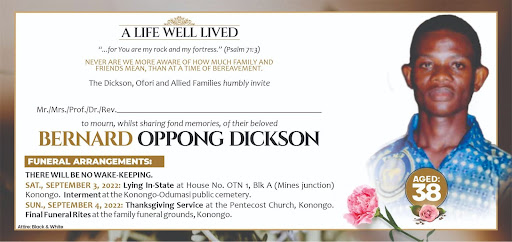
Funeral poster, funeral announcement and funeral banner
These terms are sometimes used loosely, but they can refer to different formats.
A funeral poster is usually a visual printed or digital announcement carrying the portrait and funeral information.
A Funeral Announcement describes the communication itself and can take different printed or digital forms.
A funeral banner is generally a larger-format display intended for greater visibility at roadsides, funeral grounds or other public locations.
The exact terminology can differ between families, designers and printers. What matters most is that everyone involved understands the intended size, material and purpose before production begins.
Printed posters and digital sharing can work together
Printed funeral posters continue to be useful in neighbourhoods, churches, workplaces and other physical locations.
Digital communication extends their reach.
A family can use the same approved information for:
printed posters;
WhatsApp;
Facebook;
email;
diaspora family groups;
church and association groups.
This is particularly helpful for relatives living outside Ghana.
Rather than receiving a photograph of a poster taken from a wall, they can receive the approved digital announcement directly.
Moving from a poster to the GMP Funeral Announcement
Ghana Memorial Products supports families who want to take their funeral communication from an approved design into both print and digital use.
The GMP Funeral Announcement lets families create concise or more detailed announcements, use customisable templates, share them digitally, and prepare them for print. It can also connect to the Online Condolence Book and Donation Link.
Families who already have a professionally designed poster can also work from their existing visual material rather than treating digital communication as a completely separate process.
This creates one clearer flow:
Prepare the information → approve the design → print where needed → share digitally → connect people to further funeral information.
From public announcement to lasting memory
A funeral poster has an important job, but it is usually temporary.
Paper posters eventually come down. Outdoor materials weather. WhatsApp images move further down a conversation.
The life behind the poster deserves more space.
A Ghana Memorial can preserve photographs, stories, family relationships, tributes, funeral information and other memories in one dedicated digital place. You can also connect physical funeral materials to the memorial through a QR code.
This does not replace the funeral poster but rather gives the poster somewhere lasting to lead. Because memories deserve more than paper.
A simple but important part of funeral communication
Funeral posters in Ghana bring together three important responsibilities: informing people, inviting the community and honouring the deceased.
A good poster should therefore be clear before it is elaborate.
Start with the correct name and photograph. Confirm the funeral date, time and venue. Add only information that is useful and approved. Then make sure the same version is used in print and digital communication.
Written by David Owusu Asante
Related Articles
Funeral Weekend in Ghana: A Family Guide
Browse the post to know more and explore detailed insights on this topic.
Read MoreAppreciation messages after a funeral in Ghana
Browse the post to know more and explore detailed insights on this topic.
Read More